
>> Continued From the Previous Page <<
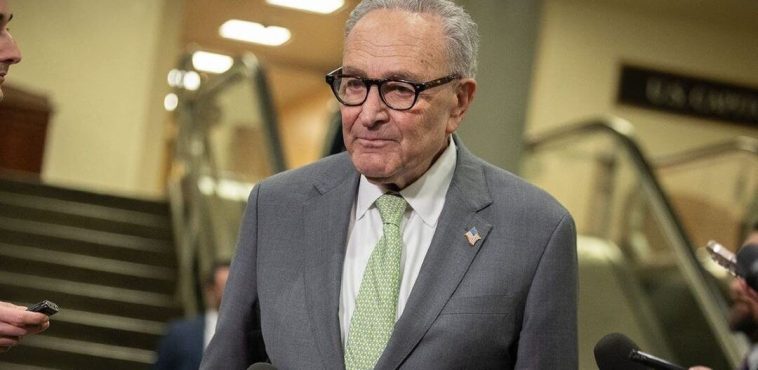
Mullin didn’t stop there. He pivoted to what he described as a glaring contradiction in Schumer’s stance, highlighting the Senate leader’s reliance on taxpayer-funded security while criticizing the very agencies tasked with protecting American communities.
“How about he walks around these city streets without a detail?” Mullin asked. “I wonder how safe he would feel.”

The challenge struck a nerve across conservative circles, where critics argue that elected officials often underestimate the risks faced daily by immigration agents and border personnel.
Republicans say Schumer’s comments reflect a broader ideological shift within the Democratic Party. According to GOP lawmakers, recent standoffs over federal funding have revealed a willingness among Democrats to reduce or condition support for immigration enforcement agencies.
The dispute comes amid a prolonged government funding crisis that has placed immense pressure on the Department of Homeland Security. With emergency funding measures nearing expiration, officials warn that essential operations could face disruption if new appropriations are not secured.
Mullin, speaking during his interview, emphasized the scale of the financial strain. He noted that DHS payroll obligations alone total billions of dollars each month, and without congressional action, the agency could soon face difficult choices impacting personnel and operations.
Reports have already surfaced indicating that some federal workers are struggling under the uncertainty. Transportation Security Administration employees, in particular, have been cited as facing financial hardship as delays in funding continue to ripple through the system.
Meanwhile, Senate Republicans have moved forward with their own plan to address the situation. Using the reconciliation process, which allows passage with a simple majority, lawmakers approved a budget resolution allocating tens of billions of dollars toward immigration enforcement through the remainder of President Donald Trump’s term.
The measure passed without Democratic support, highlighting the deep partisan divide on the issue.
Republican leaders were quick to frame the vote as a necessary step to maintain law and order. They argue that agencies like ICE and Border Patrol play a critical role in combating crime, human trafficking, and illegal entry, often under dangerous conditions.
Outside Washington, voices from within the law enforcement community echoed similar concerns. Former officials stressed that agents are tasked with enforcing laws created by Congress, not shaping policy, and should not be undermined for carrying out their duties.
The controversy also drew a response from Trump, who used social media to condemn Schumer’s remarks and call for an apology to federal agents. His statement added fuel to an already heated debate that shows no signs of cooling down.
At its core, the dispute reflects a fundamental disagreement over how immigration enforcement should be handled in the United States. For critics of Schumer, the issue is about respect for those on the front lines. For his allies, it is part of a broader discussion about policy priorities and government spending.
But Mullin’s challenge continues to resonate: if those responsible for national security are not respected, what message does that send to the people risking their lives to enforce the law?
As the funding deadline approaches, that question may soon shift from political rhetoric to real-world consequences.

