
>> Continued From the Previous Page <<
“Chuck Norris doesn’t do push-ups. He pushes the Earth down.”
“Death once had a near-Chuck Norris experience.”

That last line has taken on a chilling new meaning.
Just days before his passing, Norris posted a video of himself sparring on his 86th birthday. There was no sign of slowing down. No hint that the legend was nearing its final chapter. In fact, the clip reinforced exactly what made him a cultural icon for decades. He looked sharp. Focused. Unbothered by time.
The internet loved that version of him. But what made the phenomenon truly powerful was that the real man behind the jokes was just as impressive.
Norris was not a fictional hero. He was a self-made American success story.
Born in Ryan, Oklahoma, he came from humble beginnings and a broken household. He found inspiration in classic American figures like John Wayne and Gene Autry. His path took a decisive turn when he joined the U.S. Air Force and was stationed in South Korea. That is where he discovered martial arts, a discipline that would shape the rest of his life.
After returning home, Norris built a legitimate legacy in combat sports. He became a six-time undefeated World Professional Middleweight Karate Champion and later founded his own martial arts system, Chun Kuk Do. This was not Hollywood hype. This was real-world achievement.
That credibility is exactly why the jokes landed so hard.
“There is no theory of evolution, just a list of animals Chuck Norris allows to live.”
The humor worked because there was truth behind the toughness. The audience knew he was the real deal.
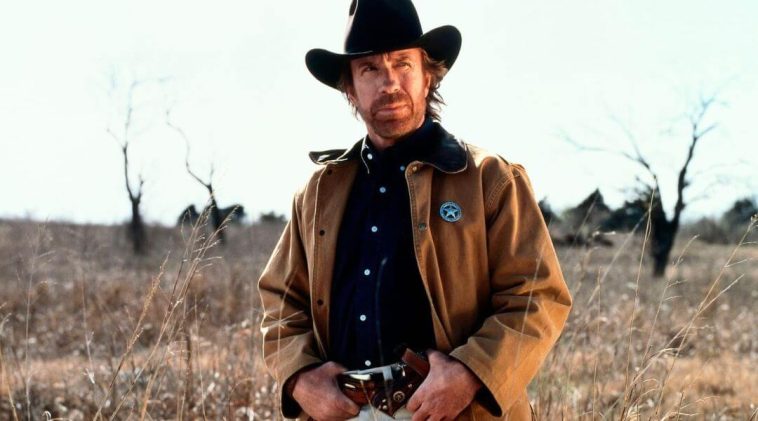
From there, Norris transitioned into Hollywood, starring alongside Bruce Lee in The Way of the Dragon. He went on to headline action films like Delta Force and Missing in Action, eventually cementing his place in American pop culture with Walker, Texas Ranger.
Even late-night television played a role in keeping the legend alive. Conan O’Brien famously turned Norris clips into recurring comedy bits, fueling another wave of viral attention.
Unlike many public figures, Norris embraced the joke. He leaned into it. He delivered lines with the same deadpan seriousness that made the memes work in the first place.
“They wanted to put Chuck Norris’s face on Mount Rushmore, but the granite wasn’t hard enough for his beard.”
He understood something most celebrities never do: the joke was never against him. It was a celebration of him.
Beyond entertainment, Norris stood firmly for his beliefs. He was outspoken about faith, patriotism, and American values. He supported conservative causes, advocated for gun rights, and publicly backed Donald Trump and America First policies. Leaders like Greg Abbott praised him as someone who inspired generations and gave people a voice rooted in principle.
But the memes never told the full story. They were only a gateway.
For many younger Americans, the jokes introduced them to a man they might never have discovered otherwise. A veteran. A martial artist. A man of faith who lived with discipline and purpose.
In his final days, Norris stayed true to form. On March 10, he posted a video from Hawaii with a simple message: “I don’t age… I level up.”
Nine days later, he was gone.
Reports say he spent his final hours peacefully, surrounded by family. Even that detail feels strangely consistent with the legend. No chaos. No spectacle. Just quiet strength.
And almost instantly, the internet responded the only way it knew how.
“After 86 years of careful negotiation. . . Death finally accepted Chuck’s terms.”
It is hard to think of another figure who blurred the line between myth and reality so completely. Chuck Norris did not just become a meme. He became the foundation for how modern internet culture communicates humor, power, and identity in a single sentence.
The world may have lost the man. But the legend is not going anywhere.

