>> Continued From the Previous Page <<
Taking to social media, Kent formally announced his resignation and attempted to frame it as a matter of personal principle.
“After much reflection, I have decided to resign from my position as Director of the National Counterterrorism Center, effective today.

I cannot in good conscience support the ongoing war in Iran. Iran posed no imminent threat to our nation, and it is clear that we started this war due to pressure from Israel and its powerful American lobby.
It has been an honor serving under @POTUS and @DNIGabbard and leading the professionals at NCTC.
May God bless America.”
But Kent didn’t stop there. In a separate letter addressed to Donald Trump, his tone grew even more pointed, suggesting that the president—once known for resisting prolonged foreign conflicts—had been manipulated into a war he otherwise would have avoided.
Kent wrote that Trump “understood better than any modern President how to decisively apply military power without getting us drawn into never-ending wars,” before claiming that “high-ranking Israeli officials and influential members of the American media” played a role in steering the administration toward confrontation.
He continued with a deeply personal appeal:
“As a veteran who deployed to combat 11 times and as a Gold Star husband who lost my beloved wife Shannon in a war manufactured by Israel, I cannot support sending the next generation off to fight and die in a war that serves no benefit to the American people nor justifies the cost of American lives.
I pray that you will reflect upon what we are doing in Iran, and who we are doing it for. The time for bold action is now. You can reverse course and chart a new path for our nation, or you can allow us to slip further toward decline and chaos. You hold the cards. It was an honor to serve in your administration and to serve our great nation.”
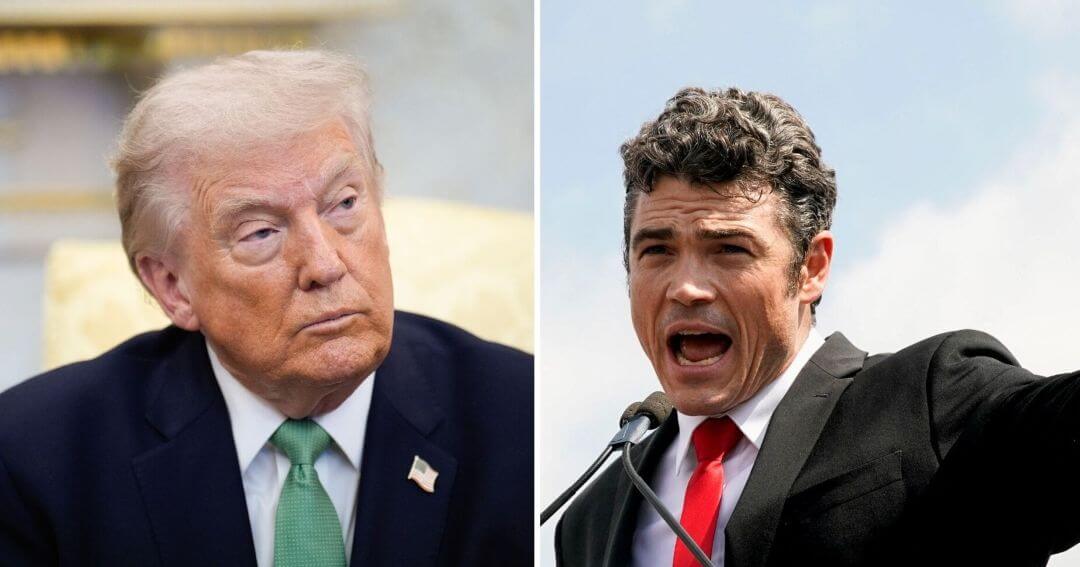
The response from President Trump was swift—and blunt. Speaking during an Oval Office meeting alongside Irish Prime Minister Micheál Martin, Trump dismissed Kent’s criticisms outright.
“I always thought he was weak on security. Very weak on security.”
The president doubled down after reviewing Kent’s public remarks, saying:
“When I read his statement, I realized that it’s a good thing he’s out because he said Iran was not a threat.”
But perhaps the most damaging blow came shortly after, when Trump took to Truth Social to highlight what many are now calling a glaring contradiction in Kent’s record.
The president shared a screenshot of Kent’s own post from January 8, 2020—just days after the U.S. eliminated Iranian General Qasem Soleimani. At the time, Kent had urged aggressive action, writing:
“@realDonaldTrump We should not sit and wait for the next attack, wipe Iran’s ballistic capability out and get our troops out of Iraq – they are only targets now. No US WIA/KIA is a tribute to the professionalism of our military and intel professionals not Iranian restraint.”
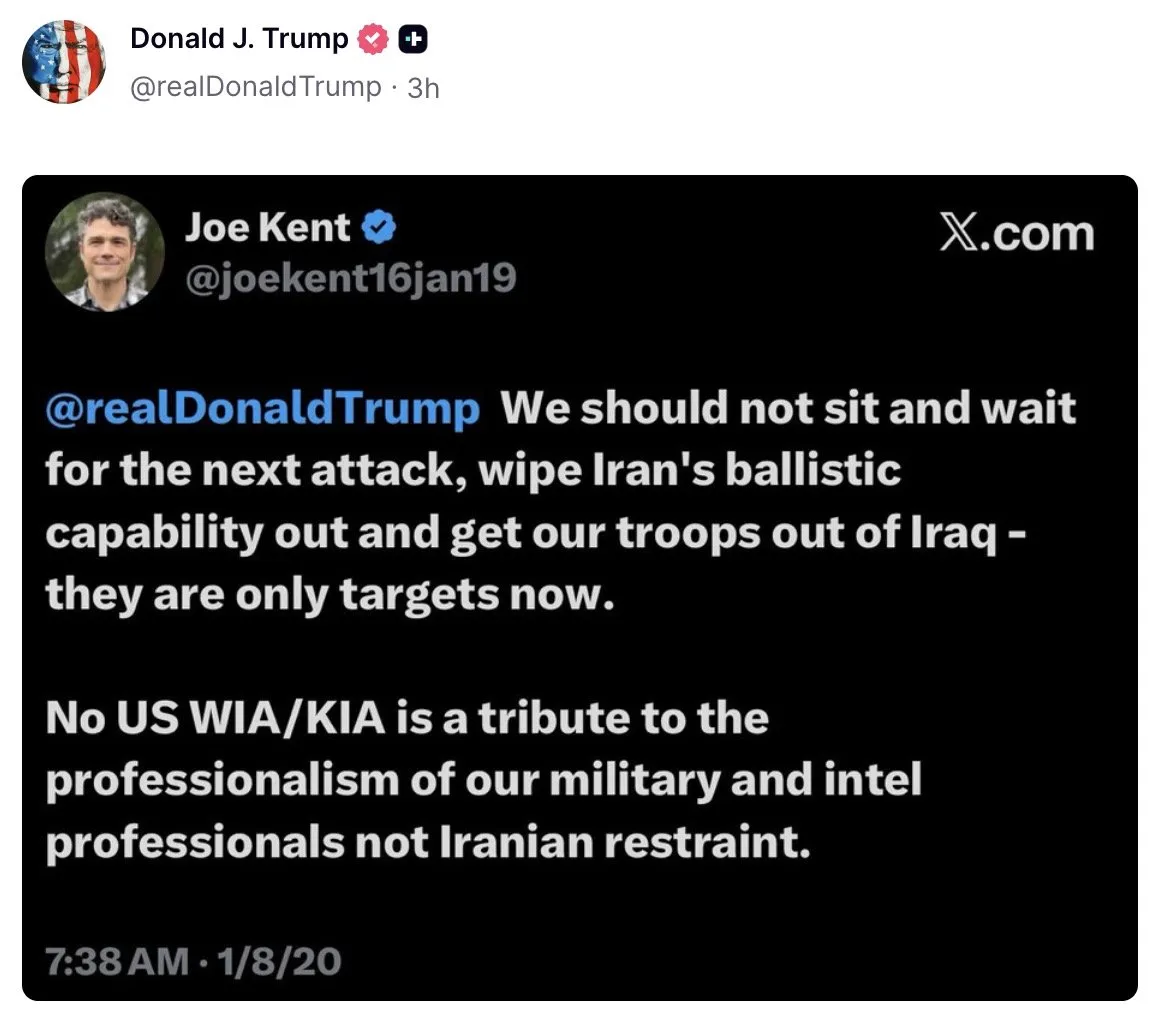
The contrast is difficult to ignore. Years ago, Kent pushed for decisive military action against Iran. Today, he claims the nation poses no meaningful threat.
Further digging into his past statements only adds to the confusion.
In April 2024, Kent warned that Iran was on the verge of launching attacks and criticized Washington leadership for leaving American forces exposed. Months later, in September, he acknowledged that Iran had been actively targeting Trump since 2020, describing the threat as ongoing and serious.
Even earlier, Kent publicly backed policies aimed at countering Iran’s influence, including strong support for Israel and opposition to Tehran’s nuclear ambitions.
Taken together, the record paints a picture of a dramatic shift in position—one that critics argue raises serious questions about credibility and judgment.
For many observers, this sudden reversal reinforces the president’s criticism. Whether Kent’s resignation was driven by principle or pressure, the inconsistencies are now front and center.
And in Washington, where credibility is currency, that kind of reversal rarely goes unnoticed.