
>> Continued From the Previous Page <<
The Trump administration, however, appears to be taking a cautious but firm approach to that possibility.
White House envoy Steve Witkoff revealed over the weekend that American officials had already communicated directly with Moscow on the issue. According to Witkoff, Russian officials were warned against sharing intelligence with Iran during the conflict.

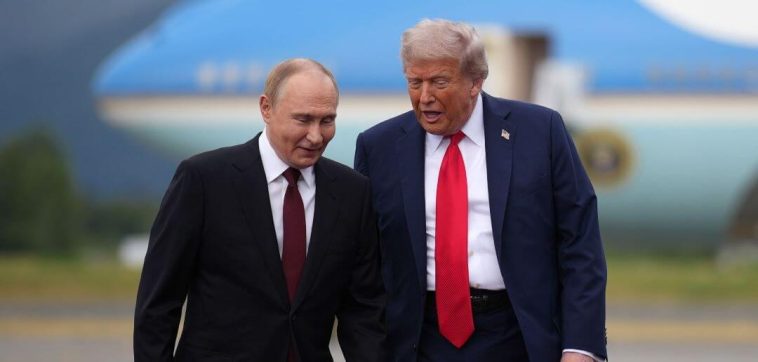
Despite those concerns, Trump signaled after the call that he believes Putin may still play a constructive role in easing tensions.
Speaking to reporters several hours later, the president struck an optimistic tone about the conversation.
“He wants to be helpful [with Iran]. I told him you can be more helpful by ending the war in Ukraine,” Trump said.
Meanwhile, diplomatic maneuvering surrounding the Iran conflict appears to be expanding beyond Washington and Moscow. Iranian Deputy Foreign Minister Kazem Gharibabadi stated on state television that several major powers have already initiated contact about a possible ceasefire framework.
According to reporting cited by Axios, France, China, and Russia have all reached out to explore potential conditions that could halt the fighting.
As international negotiations quietly develop behind the scenes, the conflict itself continues to generate intense debate in Washington — particularly after a controversial U.S. military strike inside Iran sparked outrage from Democrats and media outlets.
The strike, which occurred on February 28, involved a Tomahawk missile hitting the Shajarah Tayyebeh elementary school building in Minab, located in southeastern Iran.
Iranian officials claim that at least 175 people were killed in the attack, many of them children.
A preliminary U.S. military review later indicated the strike resulted from faulty targeting intelligence. According to early findings, outdated information provided by the Defense Intelligence Agency may have caused the missile to hit the school rather than the intended target, which was reportedly an Iranian military facility located nearby.
The tragedy immediately triggered calls from Democratic lawmakers for a formal investigation.
Nearly every Senate Democrat signed a letter demanding a “swift investigation” into the incident. One notable exception, however, was Pennsylvania Senator John Fetterman.
Fetterman became the lone Democrat who declined to sign the letter — and he defended that decision during a tense interview Wednesday night on CNN with host Kaitlan Collins.
Collins pressed the senator directly on his refusal to join the letter.
“Every Senate Democrat except you signed a letter today… asking for an investigation into that strike on a girls’ school in Iran,” she said. “Why did you not sign that letter, senator?”
Fetterman acknowledged that the loss of life was deeply troubling but made clear he still supports the broader military campaign.
“Well, because we all agree that it is a tragedy having that school hit, absolutely,” Fetterman said. “And we all agreed now for an investigation. What I don’t agree with the rest of my colleagues… is that it’s a war of choice or it’s dumb… I think it’s a good thing and I support that.”
He also noted that the Pentagon had already indicated it may bear responsibility for the strike and said that an apology would be appropriate if the findings confirm the military’s involvement.
However, the Pennsylvania senator sharply criticized what he sees as a double standard in media coverage surrounding the conflict.
“And I would remind everybody listening right now, the United States never, ever targets civilians,” he said. “Iran does… and they massacred 35,000 of them just a couple of weeks ago.”
When Collins attempted to interrupt during the interview, Fetterman pushed back forcefully.
“The left media is much more angry… about this hospital. And it is a tragedy. But they didn’t seem to be as concerned about the Iranians massacring tens of thousands of their young people just a couple of weeks ago.”
Collins countered that CNN had extensively covered protests and unrest within Iran.
Fetterman dismissed the point with a blunt response.
“Well, I don’t watch, so I don’t know.”
He went on to argue that broader media coverage — particularly from outlets such as The New York Times — has consistently framed the war effort as a failure, a narrative he strongly rejects.
As tensions abroad continue to rise and political divisions deepen at home, Trump’s diplomatic outreach to Putin highlights the high-stakes balancing act now facing global leaders attempting to prevent a wider regional war while simultaneously confronting ongoing geopolitical rivalries.

