
>> Continued From the Previous Page <<
Yet despite the committee action, the legislation has gone nowhere since.
That lack of momentum has angered several rank-and-file Republicans who believe the issue should be a priority. Their frustration intensified after President Donald Trump brought the topic directly into the national spotlight during his State of the Union address Tuesday night.

Trump called on Congress to take action quickly, urging lawmakers to approve reforms “without delay.”
Rep. Brian Fitzpatrick (R-PA) voiced the concerns shared by many lawmakers who feel leadership is dragging its feet on an issue with widespread support among both parties and the public.
“If you have a strong bipartisan majority in Congress (supporting the issue), if you have overwhelming support from the public. You have the president of the United States specifically referencing it in the State of the Union, why pray tell is it not put on the floor?” Fitzpatrick said.
The Pennsylvania Republican argued the reform should have been tackled immediately.
“It’s very frustrating,” Fitzpatrick said. “This should have been the first thing we took up.”
Fitzpatrick previously backed a bipartisan effort introduced by Rep. Chip Roy (R-TX) and Rep. Seth Magaziner (D-RI). Their legislation, titled the Restore Trust in Congress Act, goes significantly further than the Steil proposal.
Instead of merely blocking future stock purchases, the Roy-Magaziner plan would prohibit lawmakers and their families from owning individual stocks altogether. The bill would also apply to spouses, dependent children, and trustees—closing potential loopholes critics say lawmakers could otherwise exploit.
Florida Republican Rep. Anna Paulina Luna attempted to force action on the legislation by launching a discharge petition. That procedural move would have allowed the bill to bypass leadership and go directly to the House floor for a vote if enough members signed on.
However, leadership ultimately opted to move forward with Steil’s more limited proposal, known as the Stop Insider Trading Act.
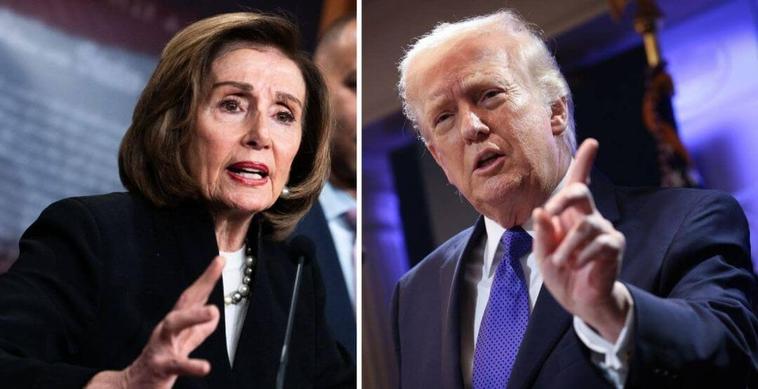
Even as Congress debates the issue, critics point to the remarkable stock performance of one prominent political figure: former House Speaker Nancy Pelosi.
Pelosi, who is preparing to retire from Congress, has become a lightning rod in the debate over congressional stock trading due to the extraordinary returns generated by her family’s investments.
During a recent appearance at the University of Virginia’s Center for Politics, Pelosi attempted to downplay financial motivations behind her decades-long career in Washington.
“At the time, I was too, the highest paid person on Capitol Hill. As a woman, that was a big deal. Not that I was there for the money,” Pelosi said.
Despite that claim, financial data suggests Pelosi’s wealth has skyrocketed during her time in public office.
According to investment tracking firm Quiver Quantitative, Pelosi’s estimated net worth now sits around $270 million as of early 2026. Over her 37 years serving in Congress, her personal fortune has reportedly increased by more than 2,200 percent.
Her investment performance has drawn even more scrutiny in recent years.
In 2024, Pelosi’s portfolio reportedly outpaced the S&P 500 by nearly 200 percent—an eye-popping margin that fueled renewed calls for stricter rules governing lawmakers’ financial activities.
Data from financial platform Unusual Whales highlighted just how dramatic those gains were. According to its 2024 Congress Trading Report, Pelosi’s portfolio surged by 70.9 percent between December 29, 2023 and December 30, 2024.
During that same period, the S&P 500 delivered a return of 24.9 percent.
In other words, Pelosi’s investments not only beat the broader market—they also surpassed the performance of numerous major hedge funds.
Such results have prompted serious questions about whether lawmakers may benefit from access to privileged information tied to congressional actions.
Last July, Trump publicly called for Pelosi to face an insider trading investigation.
The broader issue extends far beyond one lawmaker, according to policy experts examining congressional trading patterns.
Jaimie Erker, communications director for the Centennial Institute at Colorado Christian University, warned that the scale of congressional trading activity should concern Americans.
Writing in the Washington Examiner, Erker pointed out that more than 100 members of Congress collectively conduct roughly 10,000 trades every year. Many of those transactions occur ahead of legislative decisions that could move markets.
She also noted that penalties for members of Congress caught violating insider trading laws remain extremely small compared to punishments faced by ordinary Americans.
The unequal enforcement, she warned, risks undermining public trust in government institutions.
“Obviously, there is a double standard in the deterrence of insider trading. What happens to a society that holds its elected officials to a different standard than the very people they represent?” she wrote.
With public trust in Congress already near historic lows, the pressure is mounting for lawmakers to finally address a controversy that has lingered for years. Whether leadership will act—or once again allow reform to stall—remains an open question on Capitol Hill.

