
>> Continued From the Previous Page <<
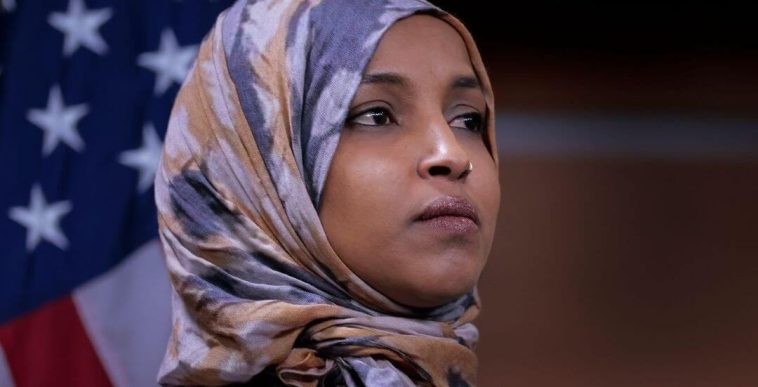
His criticism traces back to comments Omar made in a 2018 interview with Al Jazeera in which she argued that Americans should be “more fearful of white men.” Critics have pointed to crime statistics and demographic realities to challenge the claim, arguing that the remarks unfairly generalized millions of people.
Carville made clear he believes that type of rhetoric is politically self-defeating.

“About 33% of the people that are gonna vote are gonna be white males,” Carville said. “Well, it’s stupid to attack 33% of the voters!”
The veteran strategist went on to suggest that Omar might be better suited operating as part of an ideological faction rather than as a central figure within the Democratic Party’s electoral coalition.
“And so what I would say to Congresswoman Omar, ‘Why don’t you be a Democratic Socialist of America?’ Do what AOC did, and then if they win, the truth of that is, I share a lot of ideological issues in common with Congressman Omar, but maybe you should do like a parliamentary government. We’ll let you in the governing coalition, but not the electoral coalition,” Carville said.
He then emphasized what he believes is a basic political reality that Democrats cannot ignore.
“But we cannot- we have to get this mentality out that we can win national elections [without] White people, because you can’t,” Carville continued. “That we can somehow or another win an election without white males. It’s just insanity. It’s literally mathematical insanity, cultural insanity.”
Carville also stressed that reducing voters to demographic categories is a dangerous strategy that undermines political unity.
“All white people are not the same. All black people are not the same. All Hispanic people are not the same, all right? ” Carville added. “And I don’t like generalizing about someone’s gender or their race or their sexual preference or anything else. All gay people are not the same. They’re very different personalities. They’re very different values, very different everything.”
The renewed criticism of Omar also comes amid controversy surrounding recent remarks she posted on the social media platform X. In the post, Omar claimed the United States intentionally targets Muslim nations during the Islamic holy month of Ramadan.
“Iraq was attacked by the US during Ramadan and it is sickening to know that the US is again going to attack Iran during Ramadan,” Omar wrote on X as tensions escalated ahead of a U.S. strike on Iran.
“The US apparently loves to strike Muslim countries during Ramadan and I am convinced it isn’t what these countries have done to violate international law but about who they worship,” she added.
Critics quickly pushed back, arguing the claim was historically inaccurate and potentially damaging during a period of rising geopolitical tensions. Some national security observers warned that statements like that could be exploited by hostile regimes for propaganda purposes during active conflicts.
Despite the controversy, legal experts note that political speech, even when highly controversial, rarely crosses the constitutional threshold for criminal conduct.
Under the U.S. Constitution, treason is narrowly defined as levying war against the United States or providing direct assistance to the nation’s enemies. Scholars have long emphasized that the “aid and comfort” clause requires intentional and tangible support to adversaries, not simply political rhetoric or criticism of U.S. policy.
Still, Carville’s renewed criticism highlights the ongoing ideological tug-of-war inside the Democratic Party, where moderates and establishment strategists continue to clash with the progressive wing over messaging, strategy, and the coalition needed to win national elections.
And judging by Carville’s latest remarks, that battle is far from over.

