
>> Continued From the Previous Page <<
No one is even close to breaking 20 percent in a serious way. No dominant figure. No consensus choice. No excitement.
Enten summed it up bluntly, describing the primary lineup as a “downright clown car” and a “total mess.”

He added historical context that should make Democratic strategists nervous. You have to go back to 1992 to find a similar moment where no Democrat cleared 25 percent at this stage. That was Bill Clinton’s year. A wide-open scramble.
But in 1992, Democrats were calculating how to challenge an incumbent president who had just won the Gulf War. Today, they are staring at internal confusion after a bruising 2024 cycle.
Newsom’s Big Rollout Goes Sideways

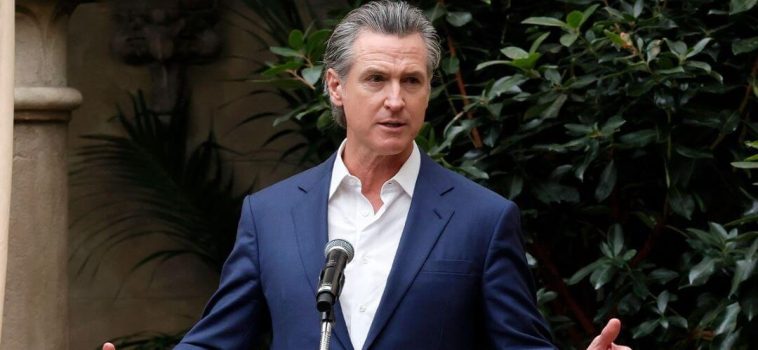
This week was supposed to be Gavin Newsom’s soft launch into the 2028 race.
He released his memoir, “Young Man in a Hurry,” and began a multi-state book tour that conveniently included early primary territory like Atlanta, South Carolina, and New Hampshire.
Instead of momentum, he got controversy.
In Atlanta, standing alongside Mayor Andre Dickens, Newsom tried to connect with the audience by referencing his SAT score and learning challenges. The moment quickly exploded online.
Sen. Tim Scott responded with a statement that went viral: “Black Americans aren’t your low bar. We’ve built empires, created movements, outworked, outhustled and outsmarted people like you.”
That line alone reframed the entire week.
Rather than talking about policy or vision, Newsom was forced into damage control. The controversy dominated headlines and social media feeds.
And then came another self-inflicted wound.
When a reporter asked Newsom’s team for medical records to support his dyslexia claim, his communications director reportedly responded with a two-word email telling her to “f— off.”
That response only fueled criticism that Democrats cannot preach civility while practicing something very different.
Steve Forbes issued a public warning to the governor’s team: “If you claim the moral high ground, act like it. Democrats can’t condemn Donald Trump’s tone while copying his tactics.”
Markets Slide and Buzz Fades
The political damage appears to be more than cosmetic.
According to CNN’s analysis, prediction market odds for Newsom winning the Democratic nomination have fallen from 37 percent three months ago to 28 percent.
Online interest has also cooled. Google searches for Newsom reportedly dropped 63 percent from their August peak, when his anti-Trump messaging was drawing attention.
Even at campaign-style stops, enthusiasm seemed muted. At one South Carolina event held in a 750-seat auditorium, tickets were still available shortly before showtime.
That is not the picture of a party coalescing around its next standard-bearer.
A Party Without a Compass
Behind all of this is a larger issue Democrats do not want to discuss publicly.
After the 2024 election fallout, the party is still searching for its identity. It forced President Biden out. It handed Kamala Harris a compressed 107-day sprint. It then watched Republicans dominate key battlegrounds.
Now the Democratic bench looks fractured and uncertain.
In 1992, the lack of a frontrunner reflected strategic caution. Big names stayed out because George H.W. Bush looked formidable.
In 2028, the absence of a clear leader looks more like confusion than calculation.
Every Democrat who steps forward seems to trigger backlash from within their own coalition. Cultural landmines, messaging misfires, and online storms erupt almost instantly.
That is not just a candidate problem.
It is a party problem.
CNN may have intended its segment as neutral data analysis. Instead, it delivered a brutal reality check. When your own network describes your presidential lineup as a “downright clown car” and a “total mess,” you are not projecting strength.
Gavin Newsom was supposed to be the fresh face who consolidated the field and energized the base.
Instead, his launch week turned into a case study in how quickly political momentum can evaporate.
If this is what the Democratic bench looks like in the opening stretch of the 2028 cycle, Republicans are not the only ones asking questions.
Democratic voters are, too.

