
>> Continued From the Previous Page <<
The Part That Keeps Breaking
The toe link is a small but critical piece of the rear suspension system. Its job is to keep the rear wheels aligned and tracking correctly with the front wheels. When it fractures, the rear end can suddenly stop following the front. In plain terms, the vehicle can become uncontrollable.
According to federal filings, the failure can lead to “a loss of steering control” and raises the risk of a crash.

That phrase comes straight from the National Highway Traffic Safety Administration.
Ford has acknowledged 26 reported fractures in this latest batch of vehicles, along with two crashes. Drivers have described hearing clunking noises, noticing strange handling, or seeing a visibly crooked rear wheel before total failure. But in some cases, the first warning is simply a vehicle that refuses to travel in a straight line.
Imagine that happening during an emergency response.

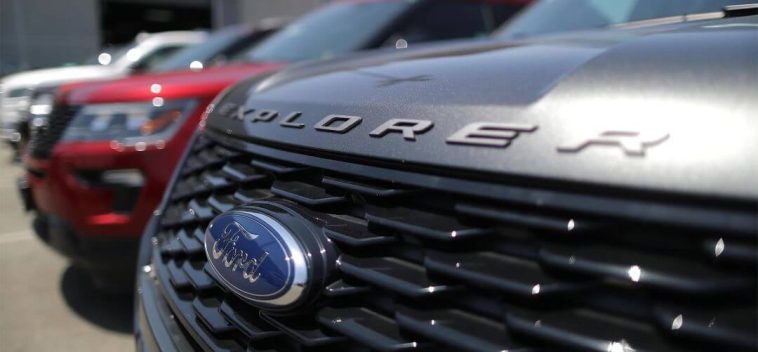
The Ford Explorer is the most widely used patrol SUV in America. Officers rely on it for high speed pursuits, rapid response calls, and daily patrol operations. It is designed to withstand extreme conditions. Yet here it is again, facing scrutiny over a part that has now been recalled multiple times.
Dealers are expected to replace the defective toe links with a redesigned version at no charge. Owner notification letters are scheduled to begin going out on March 9. But critics argue that letters and promises have been sent before.
A Pattern That Raises Questions
This is not the first time Ford has faced this issue.
In fact, this marks the fifth recall campaign related to Explorer toe link failures.
The problem first surfaced years ago, with tens of thousands of vehicles pulled back for repairs. In 2019, the recall ballooned to 1.2 million Explorers spanning earlier model years after it was determined that road salt corrosion was causing parts to snap.
In 2020, another 375,000 vehicles were recalled because the previous fix proved inadequate.
In 2021, additional campaigns were launched after regulators received reports that vehicles already repaired were failing again.
Now, in 2026, Ford is back with yet another recall, this time linked to a revised ball joint supplied by a company called SAF. The updated joint was meant to correct corrosion issues. Instead, Ford has now determined that if the new joint seizes, it can place stress on the toe link and cause it to fracture anyway.
In other words, one failure mode was addressed, only to introduce another.
For law enforcement agencies that depend on these vehicles every single day, that revelation is troubling. Departments chose the Explorer Police Interceptor because it was promoted as purpose built, rigorously tested, and engineered for the demands of police work.
The brand was built on trust.
Now, that trust is being tested.
Owners are being urged not to wait for official mail notifications. If you own a 2017, 2018, or 2019 Explorer, especially one used in fleet service, experts recommend contacting a dealer immediately to confirm whether your vehicle is affected.
For a vehicle that carries officers into danger and families down the interstate, reliability is not optional. It is essential.
And after five recall attempts tied to the same fundamental component, Americans are left asking a simple question.
How many fixes does it take before the fix finally works?

