
>> Continued From the Previous Page <<
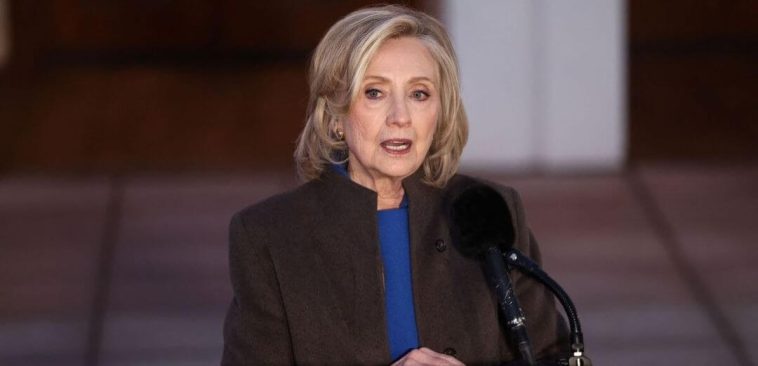
Clinton responded briefly.
“She came as the plus-1 — the guest of someone who was invited,” Clinton responded.

That answer did not settle the matter. Reporters pressed for clarification. And within seconds, the former Secretary of State turned and left the scene.
For someone who had recently dared Republicans to conduct their inquiry in full public view, the moment stood out.
On social media, Clinton had projected confidence. “For six months, we engaged Republicans on the Oversight Committee in good faith,” she posted. “We told them what we know, under oath. They ignored all of it. They moved the goalposts and turned accountability into an exercise in distraction.”

She doubled down: “So let’s stop the games. If you want this fight, [Oversight Chairman Rep. James Comey], let’s have it—in public. You love to talk about transparency. There’s nothing more transparent than a public hearing, cameras on. We will be there.”
Those are strong words. They suggest readiness for scrutiny. They signal defiance.
But transparency is not tested in prepared statements. It is tested in unscripted moments.
The question about Maxwell was not shouted by a fringe activist. It was not a wild theory tossed into the air. It was a direct inquiry about a documented guest at one of the most high-profile weddings in American political circles. The timing matters. The context matters. And the American public has every right to ask how someone so closely tied to Epstein found herself at that celebration.
The optics were unavoidable. After months of insisting on public accountability, Clinton exited after a few follow-ups. Critics quickly argued that the contrast between her online posture and her in-person response speaks volumes.
This episode arrives against the backdrop of renewed attention on Epstein’s network and the powerful names associated with him over the years. Lawmakers, journalists, and citizens continue to demand clarity. Trust in institutions is already fragile. Each evasive moment adds strain.
The broader issue is bigger than one wedding or one guest list. It is about credibility. When leaders call for transparency, Americans expect consistency. They expect the same openness when the spotlight turns uncomfortable.
Moments like this resonate because they tap into a deeper frustration. Many voters believe that political elites operate by different rules. They see closed-door hearings, carefully worded denials, and selective memory lapses. And when a straightforward question prompts an abrupt exit, it reinforces that suspicion.
If Hillary Clinton wants the conversation “in public,” as she declared, then the public conversation has begun. It does not always come neatly packaged. It does not always arrive with friendly framing. But that is the nature of accountability.
Transparency is not a hashtag. It is not a press release. It is the willingness to stay at the microphone when the questions grow sharper.
And on this day, four seconds made all the difference.


“They Moved the goalposts”?? “Turned Accountability into an exercise in distraction”?? No!! THIS is what ‘Accountability’ looks like!! Simple, Strait questions, and an expectation of Strait Answers. And You have a problem with that!! Why!? Because you’re not in control of the questions anymore! Thank God And Donald Trump for Winning the 2016 Presidential Election!! You would have broken this country beyond repair!! America First!!! 🇺🇸