
>> Continued From the Previous Page <<
He further warns about state level legislation introduced across the country.
“In 2025, 1,022 anti-trans bills across 49 states and the federal government were introduced. As of January of this year, there are 648 active anti-trans bills that seek to restrict health care, ban LGBTQ+ inclusive curricula in schools, exclude trans youth from athletics, and otherwise endanger and harm trans people. These anti-trans bills harm the mental health and physical safety of LGBTQ+ youth, particularly trans youth who have been the primary target of these attacks. In the United States, trans people are four times more likely to face violent attacks than their cisgender peers and more than 40 percent of trans people have attempted suicide.”

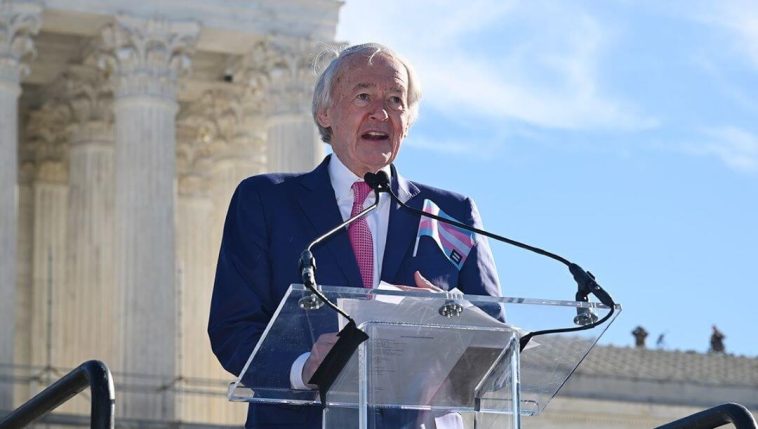
Supporters of the measure argue that it is about guaranteeing equal treatment under the law and protecting vulnerable youth. Markey has emphasized that transgender Americans deserve to live without fear, stating that basic civil rights protections should apply to everyone.
Critics, however, see something very different. They argue that the proposal goes beyond protecting individuals from violence and discrimination and ventures into mandating controversial medical interventions for minors. Many states have moved to restrict or ban puberty blockers, cross sex hormones, and irreversible procedures for children, citing long term health concerns and lack of comprehensive data.
Hospitals in several parts of the country have reportedly scaled back or ended pediatric gender transition programs, reflecting both legal changes and growing public debate. Opponents of Markey’s plan say the American electorate already weighed in during the last national election, signaling discomfort with expansive policies in this area.
The legislation is backed by a group of Senate Democrats and one Independent, including Jeff Merkley of Oregon, Elizabeth Warren of Massachusetts, Mazie Hirono of Hawaii, Ron Wyden of Oregon, Martin Heinrich of New Mexico, Alex Padilla of California, Bernie Sanders of Vermont, and Peter Welch of Vermont. The lineup underscores how strongly the party’s progressive wing is aligning around the issue.
For many Massachusetts residents, though, the disconnect feels jarring. Energy costs have climbed sharply in recent years, and homeowners are grappling with property taxes, grocery prices, and economic uncertainty. Critics argue that instead of focusing on kitchen table concerns, Markey is prioritizing a niche cultural fight to energize activist donors ahead of reelection.
Supporters counter that civil rights do not pause for economic downturns and that protecting marginalized groups is a core responsibility of federal lawmakers.
The debate over Markey’s “Transgender Bill of Rights” now sets up another flashpoint in the ongoing culture war dividing Washington and much of the country. As state legislatures, courts, medical institutions, and voters continue to wrestle with questions surrounding minors and medical treatment, this latest push from a senior Democrat ensures the issue will remain front and center heading into the next election cycle.
Whether Massachusetts voters see this as principled leadership or political calculation could determine how long Markey continues to represent them in the United States Senate.

