
>> Continued From the Previous Page <<
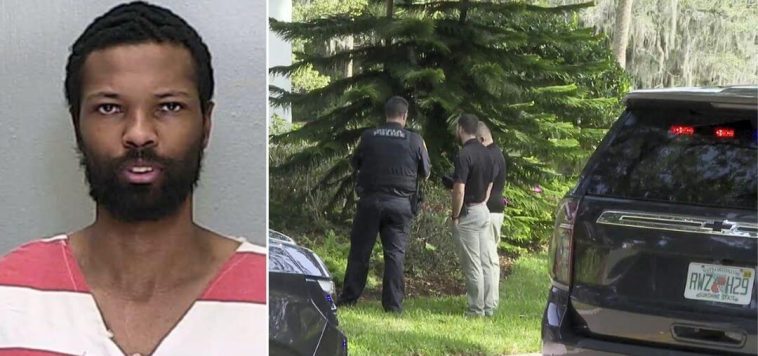
Police quickly located a suspect just a short distance from the crime scene. According to investigators, Toye was found carrying a loaded 9mm handgun tucked inside his hoodie. Officers also recovered additional ammunition on his person.
A single shell casing discovered next to Harper’s body matched the firearm Toye was carrying, according to police statements.

The Ocala Police Department made clear that the killing did not appear to be the result of a dispute or prior relationship. Investigators said Harper and Toye did not know each other, leading police to label the shooting a random act of violence.
That detail has only deepened concerns among local residents and across the state. If a man can be killed in broad daylight while working in his own yard by a stranger, many are asking who is truly safe.
Toye has since been charged with second-degree murder, along with two counts of aggravated assault. While authorities said he does not have a known criminal history in Ocala, they confirmed he does have prior criminal charges in Tampa.
Local media outlet WCJB reported that police continue to investigate Toye’s background and movements leading up to the shooting, as well as what may have motivated the attack.
In its coverage, WCJB stated:
“A Florida man is dead after being shot while gardening, and the suspected shooter has been charged with his murder.”
The outlet also noted that police have classified the killing as a random act, a phrase that offers little comfort to a grieving family or a shaken community.
The brutality of the crime has sparked outrage among residents who say the media response has been muted compared to other high-profile cases. Some locals are questioning why the execution-style killing of an elderly man has not drawn wider national attention.
As violent crime continues to plague cities and suburbs alike, critics argue that stories like Harper’s are being ignored because they do not fit a preferred narrative. To them, this tragedy highlights the human cost of soft-on-crime policies and the failure to take repeat offenders seriously.
Harold Harper was not a statistic or a headline. He was a husband, a neighbor, and a man enjoying a peaceful moment outside his home before his life was taken without warning.
For his family, especially his wife who was forced to witness the aftermath, the loss is permanent. For the community, the sense of safety has been shattered.
And for many Americans watching yet another senseless killing unfold, the question remains: how many more innocent people must die before something changes?

