
>> Continued From the Previous Page <<
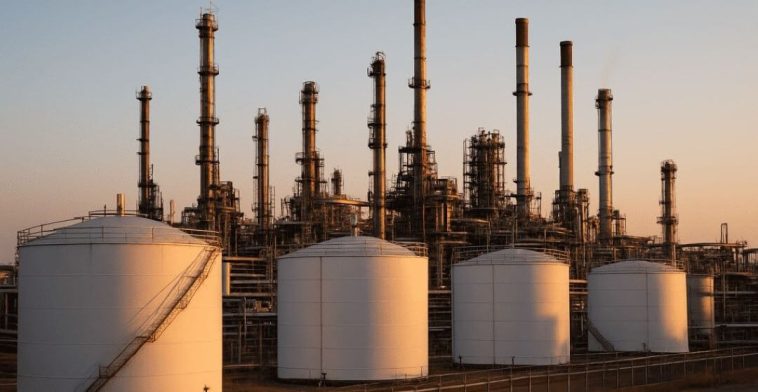
The $1.1 billion loss includes $337 million in expected cleanup costs, which Valero would rather absorb than continue battling California’s hostile business environment. The company cited years of regulatory pressure and a record $82 million fine from the Bay Area Air Quality Management District for air quality violations.² That fine is the largest in the district’s history.
Lane Riggs, Valero’s Chairman and CEO, acknowledged the impact: “We understand the impact that this may have on our employees, business partners, and community.”³ In plain terms, California’s political climate has made it impossible to operate profitably.

The closure immediately affects 400 employees and another 200 contractors, while the city of Benicia stands to lose 17% of its municipal budget. But the real fallout hits drivers—who will soon face dramatically higher gas prices.
Valero’s departure comes on the heels of Phillips 66’s announcement last October that it would close its 139,000 barrel-per-day Wilmington refinery by the end of 2025.⁴ That decision came just two days after Governor Gavin Newsom signed legislation granting the state sweeping new powers over refinery operations, including mandating minimum fuel inventories.
Combined, California will lose 284,000 barrels of daily refining capacity within months—roughly 17% of the state’s total production.⁵ Economists at UC Davis estimate that Phillips 66’s shutdown alone will add 40 cents per gallon, with Valero’s exit adding another 81 cents, pushing total price increases to $1.21 per gallon by August 2026.⁶
Gasoline in California isn’t just regular fuel—it’s CARBOB, a specialized reformulated blend that can’t easily be replaced by imports from other U.S. states. Only a handful of refineries globally, mainly in South Korea, India, and Singapore, can produce it.¹⁰ “This is not regular gasoline,” energy analysts warn.
Shipping delays further compound the risk. Tankers take 30 to 40 days to cross the Pacific, while California holds only 11–12 days of gasoline inventory. Any disruption—storms, equipment issues, or spikes in demand abroad—could trigger immediate shortages and price spikes.¹¹
Governor Newsom’s war on the oil industry laid the groundwork for this crisis. In October 2024, he attacked the sector as “the polluted heart of this climate crisis. They continue to lie and they continue to manipulate and they’re taking advantage of you.”¹² His subsequent legislation imposed unprecedented regulatory oversight and extended cap-and-trade requirements, forcing refineries to either absorb crushing costs or leave.¹³
Republican Congressman Vince Fong condemned the closures as a direct result of “Newsom’s unworkable energy policies” and “costly mandates and suffocating regulations.”¹⁴ “This is about deliberate political choices that are driving refineries and needed domestic energy production out of the state,” Fong added.
By late 2025, Newsom tried to backtrack. After Valero’s closure announcement, he pushed Senate Bill 237 to boost local oil production and streamline permits, a move environmental groups labeled a betrayal after years of antagonism toward the industry.¹⁵
Even if California ramps up imports, infrastructure limits will keep supplies tight. Benicia’s port can unload just half the refinery’s output from a single tanker over several days, and expanding capacity requires years of new pipelines, storage, and harbor upgrades.¹⁶
Valero’s general counsel, Rich Walsh, confirmed in October 2025 that closure plans would continue despite discussions with state officials: “We have been in discussion with California, but nothing has materialized out of that. Our plans are still moving forward.”¹⁷
The lesson is clear: California’s relentless regulatory assault on domestic energy is now a direct tax on drivers. When ideology meets economics, it’s ordinary consumers who pay the price at the pump.

