
>> Continued From the Previous Page <<
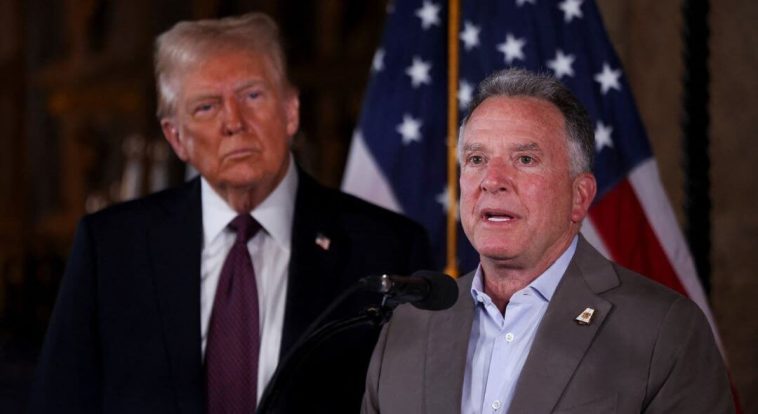
Witkoff and Kushner had a tough call: trust the bureaucrats in Washington or believe the people who were actually talking to Hamas. They chose the latter.
“Jared and I had to make a decision as to where we thought this was going,” Witkoff explained. “And both of us… we really felt that this was going in a positive way. And sure enough, Hamas came out and said, ‘we accept the president’s plan.’”
This isn’t the first time the CIA has completely misread Hamas — or the Middle East in general.

The agency’s track record is littered with high-profile intelligence failures stretching back decades.
In 1973, both American and Israeli intelligence missed the signs of the Yom Kippur War — one of the most devastating intelligence oversights in modern history. Even the CIA later admitted it was a textbook case of “intelligence failure.”
Fast forward to 2006, and Washington was once again blindsided when Hamas unexpectedly won elections in Gaza — a victory U.S. analysts claimed would never happen.

Then came the October 7, 2023 massacre in Israel, which left over 1,200 dead and once again exposed catastrophic blind spots.
“This is Israel’s 9/11. Not since 1973 has there been such a catastrophic intelligence failure in Israel,” said former CIA official Marc Polymeropoulos.
A senior U.S. official even admitted, “We were not tracking this.”
Now, the CIA’s failure to recognize Hamas’s willingness to negotiate a ceasefire fits right into that long, troubling pattern.
Not everyone believes this was an innocent mistake.
Former Trump adviser Steve Bannon didn’t mince words when reacting to the revelation.
“The CIA briefed Witkoff three times a day, and they LIED TO HIM,” Bannon said. “They told him Hamas wouldn’t negotiate, pushing Bibi’s line to sabotage peace. That wasn’t bad intel; THAT WAS TREASONOUS DECEPTION.”
Bannon alleged that Israel’s intelligence service, Mossad, may have been feeding the CIA biased information designed to block Trump’s peace efforts — suggesting a coordinated effort to undermine negotiations.
The suspicion grew even deeper when, right before Trump’s team was set to present their peace framework in Qatar, Israel launched a surprise assassination strike on Hamas leadership in Doha — effectively derailing the talks.
“We woke up the next morning to find out that there had been this attack,” Witkoff recalled. “I just feel we felt – a little bit betrayed.”
Trump himself was reportedly furious with Prime Minister Benjamin Netanyahu after the strike nearly collapsed the progress they had made.
“I think he felt like the Israelis – were getting a little bit out of control in what they were doing, and that it was time to – be very strong and stop them from doing things that he felt were not in their long-term interests,” Kushner said.
The implications are massive.
If Trump’s team had trusted the CIA instead of relying on their own intelligence from trusted mediators, the ceasefire deal could have fallen apart — and American hostages might still be in Hamas captivity.
The fact that the CIA was wrong again about Hamas isn’t just embarrassing — it’s dangerous.
A White House official later defended CIA Director John Ratcliffe, saying, “The White House is grateful for CIA Director Ratcliffe’s critical support throughout the process… it is the responsibility of the intelligence community to provide full scopes of assessments… to achieve the best possible outcome.”
But that statement sidestepped the real issue: why did the CIA get it so spectacularly wrong?
Was it incompetence — or deliberate sabotage?
Trump’s team succeeded in spite of the intelligence community, not because of it. Their decision to rely on personal relationships and direct diplomacy over bureaucratic briefings proved right — and it may have saved countless lives.
The entire ordeal exposes something far deeper: if the CIA can’t (or won’t) give honest intelligence to a sitting president’s team, what else are they hiding?

