
>> Continued From the Previous Page <<
“Everytown has spent the last month diving in front of every camera they can find to expose the ‘dangers of 3D-printed firearms,’” NAGR wrote. “But what’s the truth?”
The truth, it turns out, is that the actual threat is minuscule.

The Numbers Simply Don’t Add Up
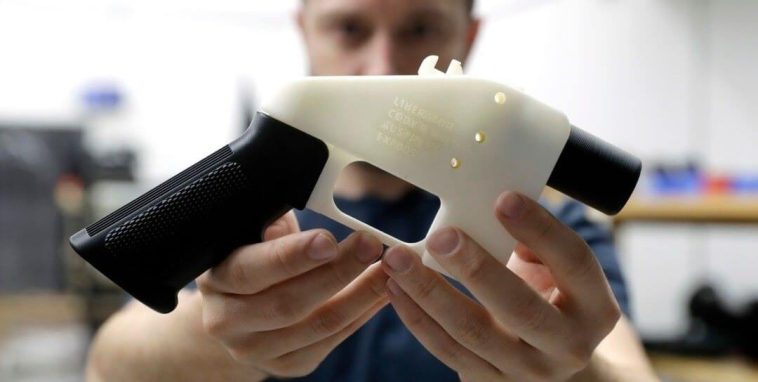
NAGR’s deep dive into the available data revealed a striking fact: “in over a decade, globally, only a tiny handful of 3D-printed firearms have been used in crimes beyond simple possession.”
They emphasized just how rare such incidents truly are: “you can count the instances on one hand.”
This reality stands in stark contrast to Everytown’s relentless depiction of 3D-printed weapons as an imminent danger lurking on America’s streets.

Playing Games With Definitions
When confronted with evidence that 3D-printed gun crime is exceedingly rare, gun control activists don’t admit error—instead, they pivot.
Everytown has been deliberately lumping 3D-printed firearms into the much larger and unrelated category of “ghost guns” to inflate the numbers and stoke fear.
“They try to bury this reality by using the broader term ‘ghost guns,’” NAGR pointed out.
“However, when you dig into the statistics, the overwhelming majority of ‘ghost guns’ used in crime are stolen firearms with the serial numbers filed off.”
That’s a far cry from some hobbyist in his garage printing plastic gun parts.
The Stolen Gun Shell Game
Consider what NAGR highlights: many so-called “ghost guns” are simply standard firearms stolen from lawful owners and later altered to hide their origins.
“Think about that for a second. We’re talking about regular guns that thugs stole and then scratched the numbers off with a file or sandpaper.”
Yet Everytown continues to portray the problem as driven by new technology, hoping to generate public panic—and justify new restrictions.
What the Research Actually Shows
Academic studies reinforce NAGR’s findings, concluding that “reported incidents of 3D printed guns used in criminal activity have generally been low and scattered globally.”
One of the earliest known criminal uses was “a 3D printed gun was used in a 2016 murder in the U.S., marking one of the first such instances.”
These isolated examples hardly justify Everytown’s portrayal of 3D printers as a looming menace.
Ghost Guns: A Separate Issue Entirely
Meanwhile, the broader category of “ghost guns” indeed shows a rise in numbers. The ATF has reported that “ghost gun recoveries have increased by more than 1,000% since 2017.” But this includes everything from stolen firearms with serial numbers defaced, to weapons assembled from legal parts kits.
Critically, the majority of these cases involve “homemade firearms that can be built from parts bought online” rather than objects emerging from 3D printers.
The Real Motive: Control, Not Safety
NAGR sees the real agenda lurking beneath the rhetoric—and it has little to do with public safety.
“This has nothing to do with safety. It’s about control,” they declared.
“And they tell on themselves with the very ‘solutions’ they recommend.”
Everytown’s proposed solutions expose their true goal: clamping down on technology itself.
Targeting Technology and Free Speech
Instead of targeting criminals who misuse firearms, Everytown wants sweeping restrictions on software and hardware. They’re pushing for measures requiring “3D printer manufacturers and software companies develop and implement algorithms that detect and block the printing of firearms and accessories.”
They also propose that “public institutions like schools, libraries, and community tech labs should implement clear policies and software restrictions to block the printing of firearm components.”
This is censorship of technology and information under the guise of safety.
Bureaucratic “Solutions” That Miss the Mark
The Biden administration attempted to tackle the so-called ghost gun crisis through regulation, implementing rules in 2022 that demand “all firearms made by federally licensed firearms dealers and gunsmiths, including 3D printed guns, must be serialized.”
Dealers are also required to “run background checks before selling kits that contain parts needed to assemble homemade firearms.”
But regulations mean little to criminals who ignore laws by definition. As experts have pointed out, “even with the new ghost gun rule in place, people will not stop building their firearms at home.”
Meanwhile, law-abiding citizens are left navigating a growing maze of red tape.
The Facts Deflate Everytown’s Narrative
Actual crime figures expose just how overblown Everytown’s claims are. Between 2013 and 2019, only 15% of global arrests for crimes involving 3D-printed guns occurred. Even in 2023, while there were 108 arrests in the first half of the year, these numbers remain minuscule when placed alongside the total landscape of violent crime.
The technology itself is not the enemy.
It’s About Criminal Behavior, Not Printers
Studies consistently show that when 3D-printed guns are linked to crime, motivations vary and often involve “drug trafficking or gang crime.”
It’s not law-abiding citizens with hobby printers that pose the threat—it’s criminals who exploit any tool they can find.
Restricting technology because a few criminals misuse it makes as much sense as outlawing cars because some people drive drunk.
Politicians Eager to Jump In
Democrat lawmakers are only too happy to ride Everytown’s fear campaign for political gain. Senator Kirsten Gillibrand has introduced the “3D Printed Gun Safety Act,” which would “ban online distribution of blueprints for the 3D printing of firearms.”
Such proposals effectively criminalize the sharing of information—a slippery slope toward broader censorship.
Several states, including Delaware, Hawaii, New Jersey, and Rhode Island, have enacted outright bans on 3D-printed firearms, driven by fear rather than evidence.
Americans Aren’t Buying It
At the end of the day, the real story is about freedom versus control.
NAGR puts it plainly: By calling for technological restrictions and censorship, Everytown shows its true colors. Their crusade has far less to do with protecting the public than it does with expanding government power—and limiting Americans’ Constitutional rights.
Groups like NAGR stand ready to keep fighting for the Second Amendment. As they remind the country, “The Second Amendment doesn’t come with an asterisk saying ‘except for scary new technology.’”
President Trump’s return to the White House has Everytown and other gun-control activists in full panic mode. But more Americans are waking up to the scare tactics—and demanding truth over fear.

