
>> Continued From the Previous Page <<
Following the alert, one of the Black Hawk pilots requested “visual separation” clearance — a standard aviation practice that lets pilots handle avoidance maneuvers themselves instead of relying solely on controllers. “Visual separation approved,” came the swift response from the tower.
While common, this maneuver is fraught with risk. Experts have long cautioned that one small miscalculation during visual separation can trigger disaster. Unfortunately, January 29 became a chilling validation of those fears.

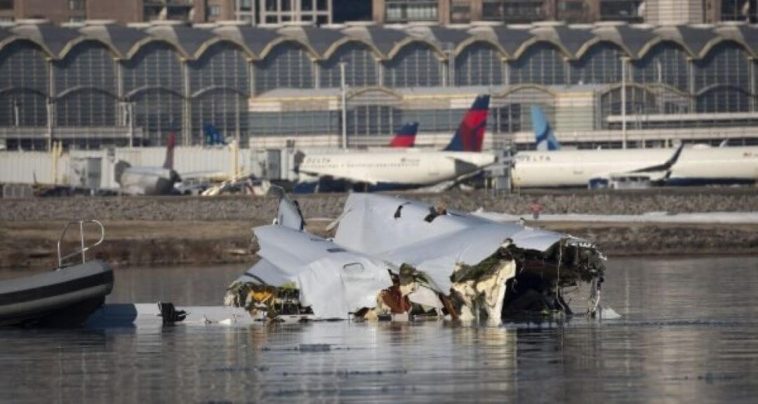
Investigators determined that the Black Hawk crew either misidentified the jet they were supposed to avoid or failed to maneuver in time. Just one second before 8:48 p.m., disaster struck.
Interviews with over 50 aviation experts and officials familiar with the probe paint a devastating picture. “Not only was the Black Hawk flying too high, but in the final seconds before the crash, its pilot failed to heed a directive from her co-pilot, an Army flight instructor, to change course,” the Times reported.
Compounding the crisis, radio communications — the bedrock of safe flight operations — broke down catastrophically. Critical instructions were “stepped on,” meaning they were lost when the helicopter crew keyed their microphone mid-transmission, causing vital warnings to go unheard.
Even more troubling, the Black Hawk’s onboard equipment that would have helped air traffic controllers track it more accurately had been switched off. Army procedures require stealth during sensitive missions in D.C., but that policy left controllers virtually blind to the helicopter’s exact movements that night.
Raise a Toast with the Bulletproof Trump Whiskey Glass – A Patriotic Statement Piece
The failures weren’t limited to the Black Hawk crew. Fault lines within air traffic control were also exposed. Despite issuing a traffic advisory and approving visual separation, the controller “did not issue clear, urgent instructions to the Black Hawk to avert the crash,” multiple aviation experts told the New York Times.
Brigadier General Matthew Braman, director of Army aviation, summarized the heartbreaking reality: “I think what we’ll find in the end is there were multiple things that, had any one of them changed, it could have well changed the outcome of that evening.”
This deadly chain of errors shows the grave consequences of split-second mistakes in an environment where precision is everything. As the investigation continues, families mourn and a nation looks for answers on how an avoidable tragedy slipped through so many cracks.

