
>> Continued From the Previous Page <<
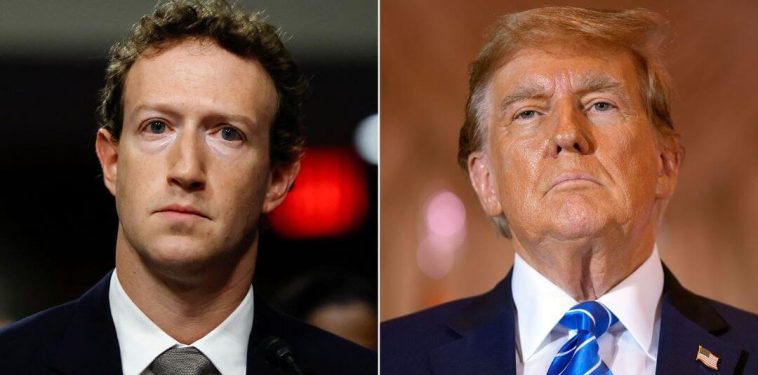
Zuckerberg, who has historically faced scrutiny from Washington over Facebook’s role in the 2016 elections, seemed to take a different tone in his interactions with Trump. The former president continued, “I think what I did, to me it was a normal response. But I was called by Mark Zuckerberg yesterday, the day before on this same subject. And he actually apologized. He said they made a mistake, et cetera et cetera, and they corrected the mistake.”
This acknowledgment of error by Zuckerberg contrasts sharply with the silence from other tech giants, particularly Google, which Trump criticized for similar censorship issues. “Unlike Facebook, Google has been very bad, very irresponsible,” Trump stated, hinting at possible repercussions for the tech giant. He went further to speculate, “and I have a feeling that Google’s going to be close to shut down, because I don’t think Congress is gonna take it. I really don’t think so.”

WATCH:
The political dynamics in Silicon Valley appear to be shifting, with Zuckerberg’s recent call being a notable example. Historically, Zuckerberg has been a vocal advocate for reducing misinformation and political rhetoric on his platforms, a stance that often put him at odds with conservative voices. Following the 2016 elections, Facebook was criticized for allowing Russian intelligence operatives to disseminate disinformation, a revelation that led to congressional hearings and promises from Zuckerberg to tighten regulations on political content.
Zuckerberg’s new stance, which seems to align more with Trump’s approach, places him alongside tech moguls like Elon Musk, owner of X (formerly Twitter). Musk has also shown support for Trump, marking a notable deviation from Silicon Valley’s typically liberal leanings. This shift is significant, given the recent endorsement of Vice President Kamala Harris by over 100 tech investors, including influential figures like Reid Hoffman and Vinod Khosla, as reported by the New York Times.
Brutal “Pocket Weapon” Stops Hearts (discounted for next 78)
Zuckerberg’s perceived support for Trump suggests a possible ideological shift within some segments of the tech industry. The balance between aligning with business-friendly Republicans like Trump and maintaining traditional liberal values, represented by figures like Harris, is becoming increasingly complex. This tension underscores the evolving relationship between politics and technology, as companies navigate the challenges of shareholder expectations and political affiliations.
While Zuckerberg and Musk’s positions might seem at odds with the broader tech community, their decisions reflect the unique pressures faced by leaders of publicly traded companies. These decisions could influence the political landscape leading up to the 2024 election, with potential ramifications for how tech platforms manage content and engage with political discourse.
The unexpected alliance between Trump and Zuckerberg marks a significant moment in the intersection of politics and technology. As the 2024 election approaches, the evolving relationships between tech leaders and political figures will undoubtedly shape the narrative and strategies of both parties. With the tech industry divided, the coming months are likely to reveal more about the shifting allegiances and the impact of these developments on the political landscape.

