
>> Continued From the Previous Page <<
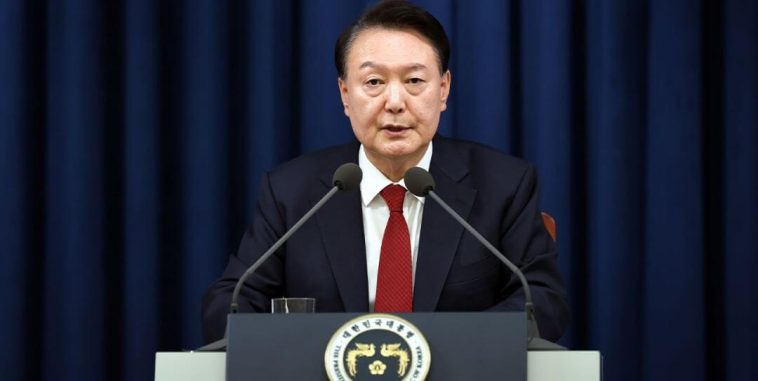
The emergency decree came as Yoon accused the opposition Democratic Party of attempting to derail government operations. According to the president, the opposition’s actions—including a motion to impeach top prosecutors and reject the government’s budget proposal—constituted “clear anti-state behavior aimed at inciting rebellion.”
In a fiery statement, Yoon described these acts as “paralyzing state affairs and turning the National Assembly into a den of criminals.” He labeled the opposition as “shameless pro-North anti-state forces,” justifying his decision as necessary to protect national security and uphold the freedoms of South Korea’s citizens.

Yoon’s sweeping declaration suspended habeas corpus, allowing for arrests without warrants—a move critics argue undermines civil liberties. These actions have raised alarms among international observers and citizens alike, with many questioning the long-term implications for South Korea’s democratic institutions.
As the parliament speaker rushed to convene an emergency session, reports emerged that the entrance to the National Assembly had been physically blocked. Lawmakers were reportedly unable to enter, further heightening tensions in an already volatile situation. Local broadcaster YTN TV and Yonhap News Agency both confirmed the blockade, but details remain unclear as to who ordered the action.
This chaotic scene underscores the gravity of the current political crisis, with both sides digging in for what promises to be a protracted standoff.

Watch:
Despite the legislature’s unanimous vote, it remains unclear how Yoon plans to proceed. The president has made no indication that he will lift the decree, leaving the nation in a precarious position. His cabinet must now deliberate on the decision, a process that could either defuse tensions or escalate them further.
Meanwhile, South Korean journalist Yejin Gim has shed light on the legal process, explaining that the president is bound by law to accept the National Assembly’s decision. Yet, given the high stakes and the president’s combative rhetoric, compliance is far from guaranteed.
What are the best concealed carry holsters for ultimate security?
The declaration of martial law has drawn sharp criticism both domestically and internationally. Human rights advocates warn that Yoon’s actions could erode democratic norms in a country long regarded as a beacon of democracy in Asia. The unprecedented nature of this political crisis has sparked widespread protests and intensified scrutiny of Yoon’s leadership.
As South Korea faces this pivotal moment, the nation and the world watch closely. Whether Yoon steps back from the brink or doubles down on his stance will determine not only his political fate but also the future of South Korea’s democracy.
This unfolding drama showcases the delicate balance of power in South Korea’s constitutional framework, as lawmakers, the executive branch, and the public grapple with the weight of this historic decision.

