
>> Continued From the Previous Page <<
Bowman’s statement, originally made at the Massachusetts Bankers Association Annual Convention in May 2024, aligns closely with Vance’s argument. She underscored the strain immigration can place on local housing markets, especially in areas already experiencing shortages. Vance used this quote to highlight that immigration is more than just a social issue; it has tangible economic consequences, particularly when it comes to housing affordability.
In addition to Bowman’s remarks, Vance shared further evidence, including a study from the Journal of Housing Economics. This research concluded that “immigration inflows into a particular Metropolitan Statistical Area (MSA) is associated with increases in rents and with house prices in that MSA.” The study noted that the influx of immigrants into certain regions creates new demand for housing, causing prices to rise, particularly in areas with limited housing availability. The impact is not isolated to the specific regions where immigration spikes occur; the ripple effect often extends into surrounding areas, driving up costs for entire regions.

Vance’s data didn’t stop there. He also referenced a report from the Congressional Budget Office (CBO), which found that immigration not only affects housing prices but also places financial burdens on state and local governments. According to the report, “increases in immigration raise state and local governments’ spending—particularly on education, health care, and housing—more than their revenues.” The CBO’s findings support Vance’s claim that while immigration may have some economic benefits, it comes with additional costs, particularly in terms of public services and housing infrastructure.
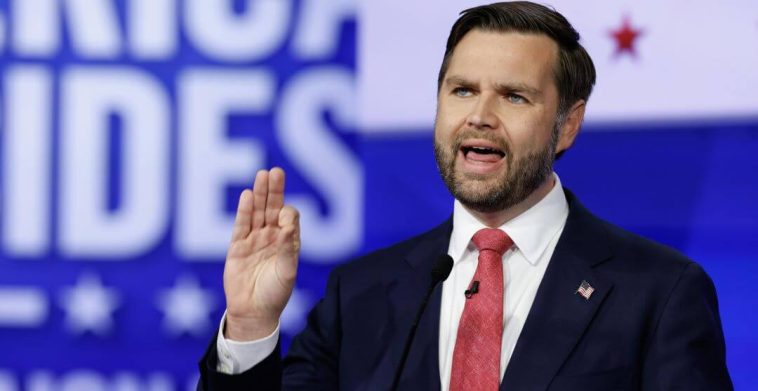
The evidence Vance presented was enough to back up his statements, despite the moderators’ attempts to cast doubt. The debate highlighted ongoing concerns within the Republican Party about perceived media bias during such events. Vance, much like other GOP figures, found himself frequently interrupted and fact-checked throughout the debate, while his Democratic opponent, Tim Walz (D-MN), faced far fewer challenges.
This trend of uneven treatment is not new. In last month’s vice presidential debate hosted by ABC, former President Donald Trump faced similar treatment from moderators David Muir and Linsey Davis. Many conservative commentators have argued that the aggressive questioning and fact-checking disproportionately target Republican candidates. Tuesday’s CBS debate seemed to follow this same pattern, with Vance facing a series of pushbacks, some of which, he argued, were based on incorrect or incomplete information.

TRUMP LOVES IT: Get the Presidential Blanket FREE Today! Supplies Running Out – Grab Yours NOW! 🕒👇
As the debate season progresses, this incident serves as yet another reminder of the growing frustrations within the Republican Party over what they see as unfair moderation practices. For Vance, however, the night ended on a high note, as he was able to substantiate his immigration claims with robust data, turning the spotlight on the broader issue of media fairness and the economic realities surrounding immigration.
In an era where political debates are not just about policies but also about media narratives, Vance’s handling of the immigration issue could resonate strongly with conservative voters, many of whom share his concerns about housing costs and media bias. His ability to present hard evidence in the face of challenges underscores his determination to tackle difficult issues head-on, regardless of the pushback he faces on the debate stage.

