
>> Continued From the Previous Page <<
Cuba’s economic collapse and decades of mismanagement
While the congressional delegation focused on criticizing U.S. policy, analysts point to Cuba’s internal economic breakdown as the primary driver of its crisis.
After more than six decades under communist rule, the island nation continues to suffer from collapsing infrastructure, chronic shortages, and a failing energy grid built on outdated Soviet-era systems.

The situation worsened after the flow of subsidized oil from Venezuela was disrupted, further straining Cuba’s already fragile energy network and contributing to widespread blackouts and fuel shortages.
The result, experts say, is a system unable to sustain basic public services — a consequence of long-term economic mismanagement rather than external pressure alone.
Marco Rubio: Cuba’s crisis is self-inflicted
Secretary of State Marco Rubio offered a blunt assessment earlier this year, pointing directly to Cuba’s governance model as the root cause of its economic collapse.

“The reason why Cuba doesn’t have oil and fuel is because they want it for free,” the Secretary of State said. Cuba’s economic system, he added, is the reason the country is a disaster.
His remarks reflect a broader argument among critics of the Cuban government: that scarcity is not simply imposed from abroad, but also generated internally by state policy and centralized control.
The disputed “2,010 prisoner release” claim
The most explosive claim made by Jayapal and Jackson involved an announcement that Cuba had released 2,010 prisoners over Easter — presented by the lawmakers as evidence of humanitarian reform and political opening.
However, that interpretation has been directly challenged by Prisoners Defenders, a human rights organization that tracks detainees across the island.
According to the group’s president, Javier Larrondo, detailed checks across multiple prisons revealed no political prisoners among those released.
“Forced labor prison Toledo 2, Marianao, Havana, they have freed 41 prisoners, all common. Not a single one is a political prisoner,” Larrondo told Breitbart News.
He added that similar findings were confirmed elsewhere on the island.
He checked El Yabú. Same result.
He checked El Típico de Las Tunas. Common inmates only.
“We can confirm in the whole country that only common prisoners have been freed, no political prisoners in any prison for now,” he said.
Political prisoners remain behind bars
Critically, Cuba’s official decree reportedly excluded individuals convicted of “crimes against authority” — a charge widely used to imprison dissidents and protestors.
That means well-known political detainees remain incarcerated, including artist and activist Luis Manuel Otero Alcántara, who has reportedly been on hunger strike since December.
Meanwhile, Prisoners Defenders documented 1,214 political prisoners as of February — a number that activists say remains largely unchanged despite the announced “amnesty.”
Even more troubling to critics, a 16-year-old protester, Jonathan David Muir Burgos, was reportedly arrested on March 13 and remains detained.
“Prison drainage” rather than reform
Human rights observers argue the mass release announcement reflects a recurring pattern in Cuba’s penal system.
“This is not new,” Larrondo explained, describing the practice as “prison drainage” — periodic releases of non-political inmates when the state cannot sustain prison populations economically.
“Prison drainages in Cuba happen every four years,” he said.
According to critics, these measures are less about reform and more about administrative necessity during periods of economic stress.
A broader political network behind the visit
The congressional trip has also reignited debate over coordinated efforts by activist networks to normalize relations with Havana.
Internal documents from the Democratic Socialists of America (DSA) reportedly describe long-term efforts to cultivate political allies sympathetic to the Cuban government and build a “pro-Cuba block of elected officials.”
The organization has also backed initiatives designed to fund international delegations and promote pro-Cuba messaging through influential media figures.
Among those who previously visited Havana as part of similar outreach efforts was Twitch streamer Hasan Piker, along with political activists and international figures including Jeremy Corbyn, Code Pink members, and representatives from socialist-aligned organizations.
Critics argue that the presence of sitting U.S. lawmakers following such visits signals a structured pipeline of ideological influence rather than isolated diplomatic engagement.
A familiar Cold War-era pattern repeats
This is not the first time American political figures have been criticized for engaging warmly with the Cuban regime.
From Jesse Jackson’s visits to Jimmy Carter’s post-presidency trip in 2002, to the Obama administration’s push for normalization in 2015, U.S. engagement strategies have repeatedly been justified as pathways to reform.
Yet critics point out that the expected political liberalization never materialized.
Instead, Cuba’s ruling Communist Party has remained firmly in control, continuing to restrict dissent while selectively announcing prisoner releases during moments of international pressure.
Conclusion: optics versus reality
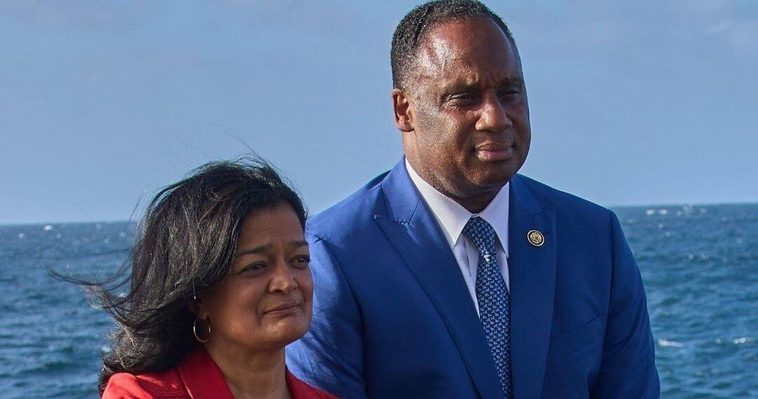
As Jayapal and Jackson returned from Havana praising reform and condemning U.S. policy, human rights investigators were reporting a far different reality — one in which political prisoners remain behind bars, economic collapse continues, and carefully timed announcements serve diplomatic optics more than substantive change.
The lawmakers’ Easter weekend trip may have been framed as a humanitarian engagement effort. But for critics, it instead delivered something else entirely: political legitimacy for a regime that, they argue, has changed far less than its supporters claim.
