
>> Continued From the Previous Page <<
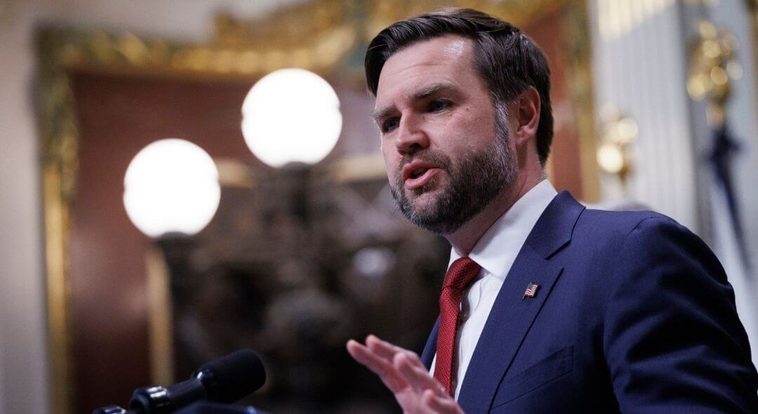
But Vance didn’t mince words about what’s at stake. “That’s not gonna happen if the Iranians are engaged in acts of economic terrorism,” he warned. The administration, he added, still has powerful options on the table. “They’ve got to know, we’ve got tools in our toolkit that we so far haven’t decided to use. The president of the United States can decide to use them, and he will decide to use them if the Iranians don’t change their course of conduct.”
WATCH:

Meanwhile, Donald Trump pointed to what he described as a breakthrough in recent days. Speaking aboard Air Force One, Trump revealed that Iran had agreed to allow additional oil tankers to pass through the vital Strait of Hormuz—a move he portrayed as a sign that pressure from Washington is working.
“They gave us… 20 boats of oil. Big, big boats going through the Hormuz Strait,” Trump said. “That’s taking place starting tomorrow morning.” The former president framed the development as a direct result of American strength and negotiation leverage.
This latest concession builds on an earlier agreement involving 10 vessels, which Trump had already described as a “gift.” The expansion to 20 more tankers, he suggested, signals a shift in Iran’s posture—even as skepticism remains about Tehran’s long-term intentions.

The stakes surrounding the Strait of Hormuz cannot be overstated. Before hostilities erupted earlier this year, roughly one-third of the world’s oil supply passed through the narrow waterway. Since the conflict escalated, traffic has reportedly plummeted—sending shockwaves through global markets and raising alarms among U.S. allies.
While administration officials have cautiously welcomed Iran’s decision to allow limited tanker movement, they remain wary. Iranian leaders, for their part, have attempted to downplay the development, insisting the shipments are routine and not tied to American pressure. That claim, however, is being met with skepticism in Washington.
Over the weekend, Trump raised the stakes dramatically, issuing a blunt ultimatum to Tehran. “Remember when I gave Iran ten days to MAKE A DEAL or OPEN UP THE HORMUZ STRAIT,” he wrote on Truth Social. “Time is running out — 48 hours before all Hell will reign down on them. Glory be to GOD!” The message left little doubt: patience is wearing thin.
In a follow-up post, Trump added another layer of suspense, writing simply, “Tuesday, 8 P.M. Eastern Time!”—a cryptic signal that many interpreted as a final deadline for Iranian compliance.
The crisis stems in part from Iran’s decision to shut down the Strait of Hormuz following recent U.S.-Israeli military actions. That move disrupted one of the world’s most critical energy corridors, triggering volatility and uncertainty across international markets.
Trump has previously indicated he was willing to delay military action to give diplomacy a chance, extending a deadline earlier in March. But more recently, his rhetoric has hardened. Last weekend, he warned that failure to reopen the waterway could result in devastating strikes on Iran’s energy infrastructure.
Complicating matters further, Iran reportedly shot down two U.S. aircraft late last week. Despite the alarming incident, Trump confirmed that all American personnel were successfully recovered—a rare piece of good news amid escalating tensions.
Now, all eyes are on Tehran. With the clock ticking and Washington signaling readiness to act, the coming hours could determine whether the world steps back from the brink—or moves closer to a major international confrontation.

