
>> Continued From the Previous Page <<
Bessent pointed to the court’s recent decision to uphold a key Affordable Care Act provision as further evidence that the justices are reluctant to disrupt long standing federal policies with sweeping consequences. That ruling allowed a panel that recommends preventive care services to remain in place, a move widely seen as avoiding upheaval in the health insurance market.
The legal debate intensified after Trump announced a dramatic escalation in his pressure campaign on Europe. On Saturday, the president unveiled plans to impose new tariffs on European goods unless “a Deal is reached for the Complete and Total purchase of Greenland.”

Under Trump’s plan, imports from Denmark, Norway, Sweden, France, Germany, the United Kingdom, the Netherlands, and Finland would face an initial 10 percent tariff starting February 1. Those duties would then rise sharply to 25 percent by June 1 if negotiations fail to produce what Trump wants.
While Trump did not publicly cite the exact statute authorizing the move, the approach mirrors earlier tariffs he has already imposed on dozens of countries under emergency economic powers. The administration argues that Greenland’s strategic importance makes the situation a legitimate national security concern.
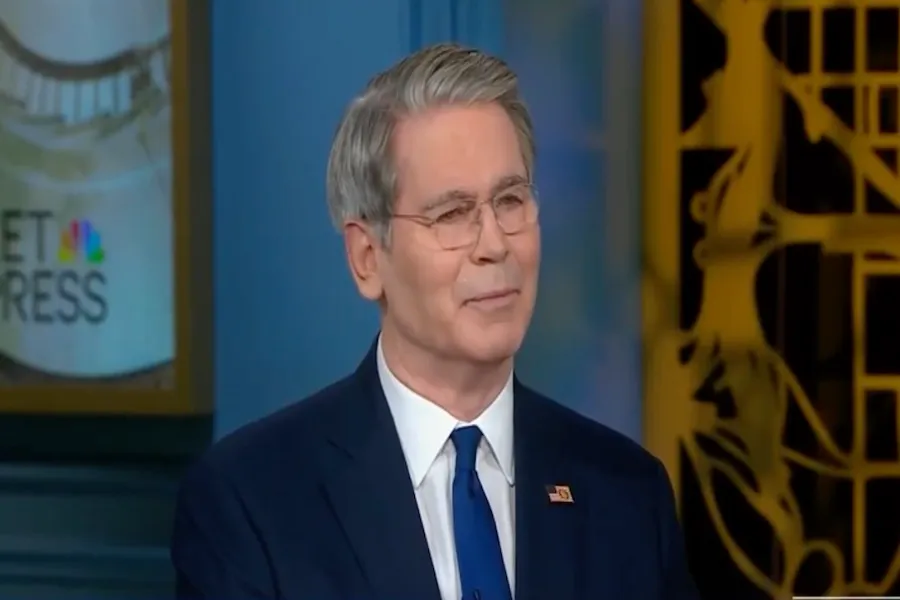
Bessent framed the move as a preventative action aimed at avoiding future conflict.

“The national emergency is avoiding a national emergency,” Bessent said. “It is a strategic decision by the president … he is able to use the economic might of the U.S. to avoid a hot war.”
The Trump administration has long argued that Greenland is critical to American security interests, especially as Russia and China expand their military and economic presence in the Arctic. Control over shipping lanes, rare earth minerals, and missile defense positioning are all part of the strategic calculus, according to officials.
European leaders, however, reacted with sharp resistance. Officials from the targeted countries released a joint statement warning that Trump’s tariff threats could destabilize long standing alliances.
“Tariff threats undermine transatlantic relations and risk a dangerous downward spiral. We will continue to stand united and coordinated in our response,” the leaders said.
They also reaffirmed their support for Denmark’s sovereignty over Greenland, emphasizing that any discussions about the island’s future must respect territorial integrity.
Despite the public tension, diplomatic engagement continues behind closed doors. Vice President JD Vance and Secretary of State Marco Rubio met last week at the White House with Danish Foreign Minister Lars Lokke Rasmussen and Greenland Foreign Minister Vivian Motzfeldt.
Rasmussen later described the talks as “frank but constructive,” signaling that while disagreements remain, lines of communication are still open.
Following the meeting, both sides announced plans to establish a high level working group tasked with mapping out Greenland’s future and addressing security and economic concerns.
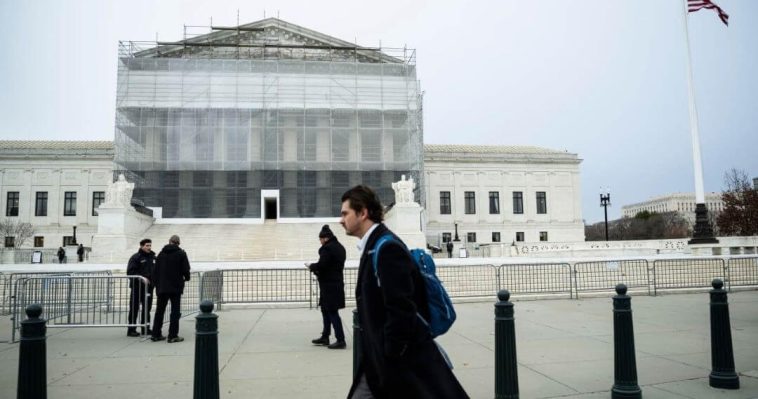
As the Supreme Court considers the legality of Trump’s tariff authority, the stakes could hardly be higher. A ruling in favor of the president would cement expansive executive power over trade and signal judicial deference to national security claims. A ruling against him could dramatically curtail a central pillar of Trump’s economic strategy.
For now, the administration is betting the court will stay out of the way, leaving Trump free to use tariffs as both an economic weapon and a negotiating tool on the global stage.
