
>> Continued From the Previous Page <<
China Turns Its Back on German Luxury
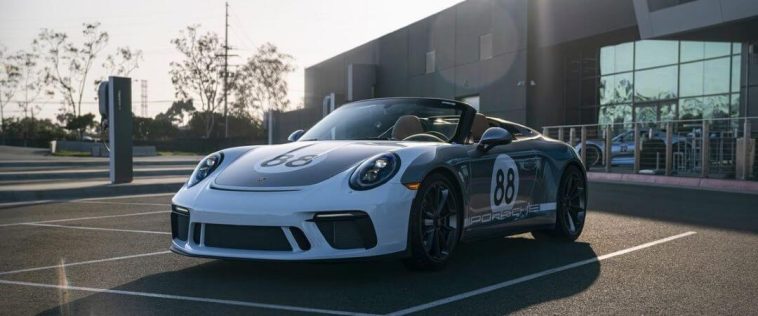
Porsche’s China sales collapsed by 26% in 2025, delivering a devastating blow to what was once its most important growth engine. China had long been the cash machine that funded expansion, innovation, and electric vehicle ambitions for European automakers.
Now that machine has stalled.

Other German brands are suffering the same fate. Mercedes-Benz saw China sales plunge 27% in just the third quarter of 2025. BMW and Mini combined posted an 11% drop in the first nine months of the year.
These are not short-term dips or seasonal slowdowns. They represent a structural collapse of German dominance in the world’s largest auto market.
Chinese Automakers Take Control
Just five years ago, Chinese carmakers held slightly more than one-third of their domestic market. Today, they control nearly 70%.

Foreign automakers have lost roughly 33 percentage points of market share since 2020, and the losses continue to mount.
BYD overtook Volkswagen as China’s top-selling brand in 2024 by a wide margin. The company now controls 28% of China’s electric vehicle market and is launching new models at a pace legacy automakers cannot match.
In the year leading up to October 2025, Chinese regulators approved 83 new passenger vehicle models from domestic manufacturers. Volkswagen received approval for six. Nissan managed just two.
Speed is no longer a competitive advantage. It is a survival requirement.
Better, Faster, Cheaper
Porsche attempted to explain its China collapse by citing “challenging market conditions in the luxury segment” and “intense competition for fully electric models.”
That corporate language masks a harsher truth.
Chinese electric vehicles are not just cheaper. They are better.
In the premium segment above 300,000 yuan, where Porsche and Mercedes once printed money, Chinese brands now command more than 80% of sales. Companies like BYD, Geely, and Xiaomi are delivering advanced battery systems, faster charging, and smarter in-car technology at prices European brands cannot touch without destroying their margins.
Financial Damage Reaches Crisis Levels
The financial fallout has been staggering.
Porsche generated more than 4 billion euros in operating profit during the first nine months of 2024. In 2025, that figure collapsed to just 40 million euros, a staggering 99% drop.
Mercedes-Benz reported net profit down 55.8% in the first half of 2025. Audi fell 37.5%. BMW dropped 29%.
These companies need massive capital to fund their electric vehicle transitions. Instead, the profits that were supposed to pay for that transformation are vanishing.
Retreat, Not Recovery
China’s premium car segment has been shrinking for three consecutive years. It fell from 15% of total sales between 2017 and 2023 to just 13% in the first nine months of 2025.
Porsche has already begun scaling back its dealer network in China and shifting focus back toward combustion engine models after its electric strategy failed to resonate with buyers. Several all-electric launches were delayed, costing the company 1.8 billion euros in earnings.
That is not adaptation. That is retreat.
A Grim Outlook for Europe’s Auto Giants
North America remains Porsche’s lone bright spot, with sales holding steady while Mercedes and Audi both declined 12% in 2025. But flat sales are not growth. They are survival.
Some analysts suggest Porsche benefited from dealers rushing inventory registrations to avoid Trump-era tariffs, not real consumer demand.
Former Stellantis CEO Carlos Tavares recently predicted that only five or six major automakers will survive the next 10 to 15 years. His list includes Toyota, Hyundai, BYD, and Geely.
Volkswagen, Mercedes, and BMW were notably absent.
According to Tavares, they represent “Europe’s inability to change” in an industry where speed now matters more than legacy.
German automakers once taught China how to build world-class vehicles. Today, the lesson runs the other way.
If Europe’s luxury brands refuse to learn quickly, they may soon find themselves remembered not as industry leaders, but as museum pieces from a bygone era.
