
>> Continued From the Previous Page <<
Players Allegedly Paid Thousands to Tank Games
Investigators say participating players were paid between $10,000 and $30,000 per game to deliberately underperform, miss shots, or influence point spreads without fully throwing games.
For athletes who are prohibited from earning outside income beyond scholarships, the financial temptation was enormous. Federal filings describe repeated payments routed through gambling intermediaries and overseas accounts.

One game cited in the indictment occurred on February 17, 2024, when two Nicholls State players delivered performances that immediately raised red flags. Both were regular scorers. One fell well below his season average, while the other failed to score at all. McNeese State went on to easily cover the spread in a lopsided 74–47 win.
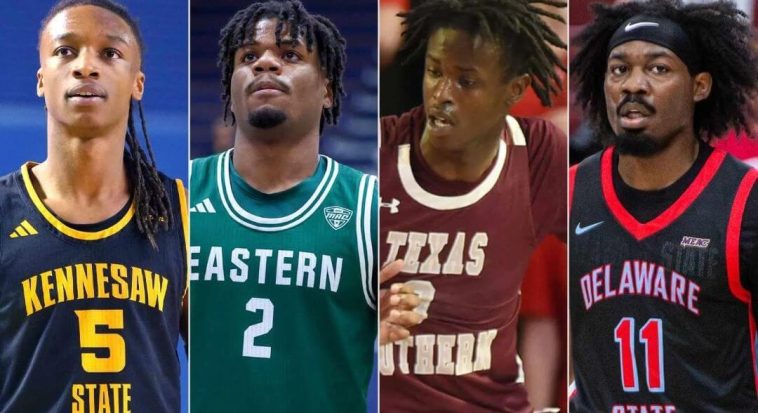
That game was not an outlier. Prosecutors allege 29 manipulated contests across 17 schools.
Programs named include Western Michigan, Butler, St. John’s, Tulane, East Carolina, McNeese State, Nicholls State, Saint Louis, Duquesne, La Salle, Fordham, Buffalo, Kent State, Ohio, Georgetown, and DePaul.

Former NBA Player Accused of Recruiting College Athletes
Former Chicago Bulls guard Antonio Blakeney is accused of acting as a key recruiter for the scheme. Prosecutors say he previously earned as much as $200,000 fixing games in China’s professional basketball league before helping expand the operation into NCAA competition.
The indictment paints a picture of experienced gamblers who understood how to manipulate betting markets without triggering immediate suspicion.
A Modern Echo of the Boston College Scandal
Veteran sports fans will recognize disturbing similarities to the infamous 1978 Boston College point shaving scandal involving mobster Henry Hill.
That scheme collapsed when Hill was arrested and began cooperating with authorities. BC player Rick Kuhn eventually received a 10 year prison sentence. The scandal later became immortalized in the film Goodfellas and an ESPN 30 for 30 documentary.
But prosecutors say this case dwarfs that disgrace in both scale and coordination.
Instead of one program and a handful of athletes, federal authorities allege 39 players across 17 Division I teams fixed games over several seasons.
That is not an isolated incident.
That is systemic corruption.
Repeat Gambling Figures Tied to Multiple Sports Leagues
Two alleged ringleaders, Shane Hennen and Marves Fairley, were already known to federal investigators. Both men have been linked to separate NBA gambling investigations involving players such as Jontay Porter and Terry Rozier.
According to prosecutors, these were not reckless amateurs. They were seasoned operators who expanded from league to league once they learned how to exploit legalized betting markets.
NCAA Admits Widespread Investigations
NCAA President Charlie Baker has repeatedly touted what he calls the largest integrity monitoring system in the world. That system did flag unusual betting activity. But it did not prevent the corruption.
Baker has publicly urged states to ban prop bets on individual college athletes, a move critics say is long overdue. Only 17 states currently restrict those wagers.
More than 20 states still allow gamblers to bet on whether individual players hit specific statistical benchmarks.
Baker admitted Thursday that the NCAA has opened investigations into approximately 40 student athletes from 20 schools in just the past year.
Former Temple guard Hysier Miller allegedly placed dozens of bets on games involving his own team, including wagers against Temple.
Trump DOJ Sends a Clear Message
The explosion of legal sports betting traces back to the Supreme Court’s 2018 decision in Murphy v. NCAA, which dismantled federal restrictions and opened the floodgates nationwide.
Since then, 39 states plus Washington D.C. and Puerto Rico have legalized sports betting, generating nearly $3 billion in tax revenue in 2024 alone.
This prosecution comes under President Trump’s Department of Justice, where Attorney General Pam Bondi has prioritized corruption cases tied to organized gambling.
The timing is no coincidence.
Federal authorities have recently pursued cases involving NBA players and even Major League Baseball pitchers accused of manipulating individual outcomes.
The message from prosecutors is unmistakable.
Organized gambling rings have burrowed into American sports at every level.
And Thursday’s indictment suggests the public may only be seeing the beginning.
The biggest question now is simple and unsettling.
Can fans trust that the games they are watching are still real?
