
>> Continued From the Previous Page <<
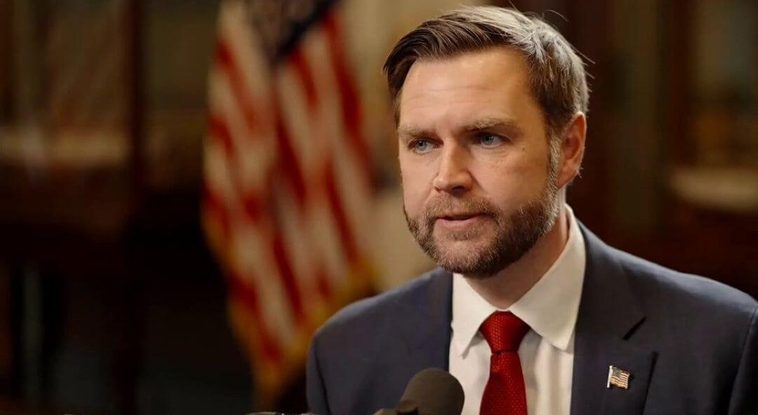
“Trust me, anybody who’s curious about this, I’m more curious than anybody,” Vance said. “I’ve got three years of the very tippy-top of the classification. I’m going to get to the bottom of it.”
That alone would have been enough to generate headlines. But what came next sent shockwaves far beyond the usual political chatter.

When pressed on what he personally believes is behind these unexplained sightings, Vance didn’t default to the usual talking points. He didn’t cite foreign adversaries, experimental aircraft, or extraterrestrial visitors.
“I don’t think they’re aliens,” Vance said. “I think they’re demons anyway, but that’s a longer discussion.”
It was a moment few in Washington would dare risk—an admission rooted not in scientific consensus, but in personal belief. Rather than backpedal, Vance expanded on his perspective, pointing to religious traditions that acknowledge forces beyond human understanding.

“Every great world religion, including Christianity, the one that I believe in, has understood that there are weird things out there, and there are things that are very difficult to explain,” Vance said.
The vice president also revealed that his curiosity isn’t just rhetorical. He had previously attempted to visit classified sites such as Area 51 and locations in New Mexico, though scheduling conflicts prevented those trips. His remarks suggested a level of personal investment that goes beyond politics—a desire to examine the evidence firsthand.
While Vance’s comments grabbed attention, they are unfolding alongside a broader push from the Trump administration. In February, President Donald Trump issued a directive on Truth Social ordering federal agencies to identify and release all records related to UFOs, UAPs, and extraterrestrial life.
Defense Secretary Pete Hegseth confirmed that the Pentagon is actively working on the directive.
“We’ve got our people working on it right now,” Hegseth said. “I don’t want to oversell how much time it will take, but we’re digging in.”
Adding to the intrigue, the White House quietly registered two new domains—Alien.gov and Aliens.gov—through the Cybersecurity and Infrastructure Security Agency. No content has been published yet, and officials have offered little explanation. When pressed, the administration’s response was simple: “Stay tuned,” accompanied by an alien emoji.
Meanwhile, Lara Trump hinted that the president may already be preparing a major announcement. She claimed Trump has “played a little coy” when discussing UFOs privately and suggested a prepared speech could be delivered when the timing is right. Press Secretary Karoline Leavitt described the possibility as “very exciting,” though she stopped short of confirming specifics.
All of this stands in stark contrast to previous administrations. Leaders like Ronald Reagan, George H. W. Bush, Bill Clinton, and Barack Obama were all briefed on unidentified aerial phenomena. Some even pushed for deeper investigations into alleged recovered materials. Yet each ultimately left office without presenting definitive answers.
Journalist Ross Coulthart summed it up bluntly: “Multiple presidents have promised over many, many decades to get to the bottom of the UAP mystery, and all of them have failed miserably.”
Whether that failure was due to a lack of evidence or carefully controlled information remains an open question.
What makes this moment different, supporters argue, is the willingness to confront the issue head-on. Trump has already overseen the release of high-profile government records in other cases, and Vance now occupies a position that grants him access to the highest levels of classified intelligence.
Critics in the mainstream media have seized on Vance’s “demons” comment as fodder for ridicule. But for many Americans, his remarks signal something else entirely—a rare instance of a national leader speaking candidly about what he truly believes, rather than sticking to a scripted narrative.
The bigger story may not be the theory itself, but the shift in tone. After decades of evasiveness, the possibility of real disclosure—whatever it may reveal—appears closer than ever.
With investigations underway, digital infrastructure quietly being prepared, and top officials hinting at more to come, one thing is clear: something is happening behind closed doors in Washington.
And if the administration follows through, the public may soon get answers that generations were promised—but never received.

