
>> Continued From the Previous Page <<
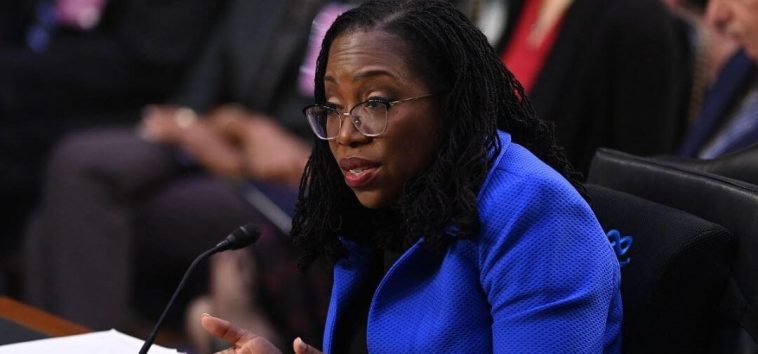
“It is baffling that we could now be standing on the edge of a precipitous drop in the quality of healthcare services in America,” Jackson wrote.
“But the Court sees fit to bring us one step closer to that fate today. Stranger still is the fact that this possibility looms in the 21st century—given what science now enables us to know about medical conditions and treatments, what our cases say, and what we all should have learned by now from history.”

But Jackson’s sweeping warnings did not persuade even the Court’s liberal wing. In a notable moment, Elena Kagan, joined by Sonia Sotomayor, pushed back directly in a concurring opinion that underscored how firmly the majority viewed this case as a straightforward First Amendment issue.
Kagan described the case as a “textbook” example of viewpoint discrimination, emphasizing that constitutional protections apply regardless of political or cultural perspective.
“Consider a hypothetical law that is the mirror image of Colorado’s,” she wrote.

“Instead of barring talk therapy designed to change a minor’s sexual orientation or gender identity, this law bars therapy affirming those things. As Ms. Chiles readily acknowledges, the First Amendment would apply in the identical way.”
Her reasoning struck at the heart of Jackson’s argument. Kagan suggested that Jackson’s dissent blurred a long-standing legal distinction between viewpoint-based restrictions and other forms of content regulation.
“JUSTICE JACKSON’s dissenting opinion claims that this is a small, or even nonexistent, category,” Kagan wrote.
“But even her own opinion, when listing laws supposedly put at risk today, offers quite a few examples. Her view to the contrary rests on reimagining—and in that way collapsing—the well-settled distinction between viewpoint-based and other content-based speech restrictions.”
Jackson, however, remained unconvinced and warned of uncertain consequences ahead.
“The decision could have ‘potential long-term and disastrous implications,’” she speculated.
“[T]o be completely frank, no one knows what will happen now,” she wrote.
“This decision might make speech-only therapies and other medical treatments involving practitioner speech effectively unregulatable—not to be reached via licensing standards, medical-malpractice liability, or any other means of state control. Who knows? Certainly not the majority.”
Her dissent leaned heavily on what she described as a medical consensus opposing “conversion therapy,” arguing that such practices cause psychological harm.
“Ultimately, scientific evidence supports the conclusion that the anticipated harms from conversion therapy are twofold,” Jackson claimed.
“First, conversion therapy stigmatizes the patient, telling them that their gender identity or sexual orientation is something to be fixed, rather than accepted. This rejection can lead to shame and guilt, which in turn can cause long-term emotional distress. Second, conversion therapy sets patients up to fail by giving them an unattainable goal.”
Yet the majority appeared unmoved by these arguments, focusing instead on the constitutional principle at stake rather than the policy debate surrounding the therapy itself.
The ruling arrives amid a shifting landscape in medical guidance. Notably, the American Society of Plastic Surgeons recently updated its position, opposing surgical interventions for minors and recommending delays until adulthood.
That broader context adds another layer to an already contentious issue, as debates over gender-related treatments continue to evolve both legally and medically.
In the end, what makes this decision remarkable is not just the ruling itself, but the sharp divide it exposed. Even within the Court’s liberal bloc, Jackson’s dire predictions failed to gain traction.
Instead, the majority treated the case as a clear-cut constitutional matter.
A “textbook” one, as Kagan put it.
And in Washington, when even allies won’t sign on to your dissent, that may be the biggest headline of all.

