
>> Continued From the Previous Page <<
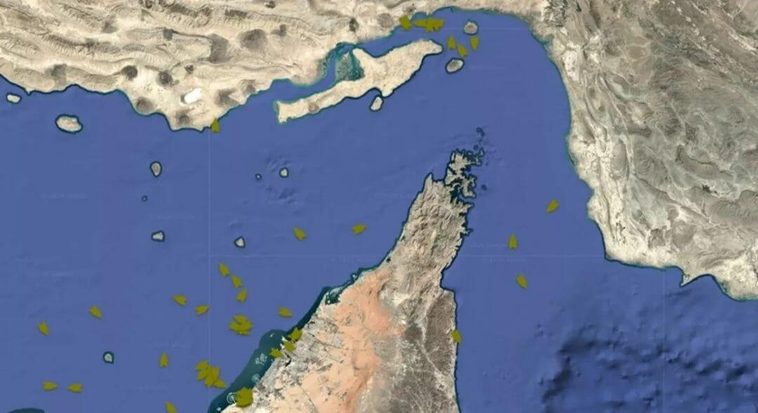
The Strait of Hormuz has long been recognized as one of the most strategically significant passages in the world, with a substantial portion of global oil shipments flowing through its narrow corridor. Any disruption there has immediate and far-reaching consequences, and Iran’s latest actions appear designed to maximize pressure not only on the United States but also on its regional allies.
At the same time, attacks across the region intensified. Saudi Arabia’s key East-West oil pipeline—an essential route transporting crude from the Persian Gulf to the Red Sea—was reportedly hit in a drone strike around midday, according to the Financial Times. The strike underscores the growing vulnerability of energy infrastructure in the region.

Meanwhile, Kuwait found itself under sustained assault. The country’s military confirmed that its air defense systems intercepted 28 drones targeting critical infrastructure, including oil facilities, power plants, and desalination systems. Officials said the attacks began early Wednesday morning and continued throughout the day, highlighting the scale and coordination of the offensive.
As chaos spreads across the Middle East, political tensions are also boiling over back in Washington. President Trump is facing mounting criticism from within his own political base over the ceasefire deal and reports of a broader 10-point peace framework currently under discussion with Iran.
Some of the loudest concerns are coming from traditionally hawkish voices within the Republican Party. Senator Lindsey Graham has called for Vice President JD Vance to testify before Congress, particularly after reports that Vance played a key role in last-minute negotiations reportedly brokered through Pakistan.

“The supposed negotiating document, in my view, has some troubling aspects, but time will tell,” Graham posted on X.
“I look forward to the architects of this proposal, the Vice President and others, coming forward to Congress and explaining how a negotiated deal meets our national security objectives in Iran.”
Representative Don Bacon also weighed in, offering measured praise for Trump’s leadership while expressing serious concerns about the long-term implications of the agreement.
“The government’s still in place and we should be negotiating from a position of strength, not a position that’s good for them,” he told CNN.
“They will work with Russia and China as soon as they can to start rebuilding their military. And they will be a threat five, six, seven, eight years down the road. And so, as long as this government’s in place, total victory has not been earned.”
Outside of Congress, influential conservative voices are sounding the alarm as well. Activist Laura Loomer, a close ally of Trump, warned that the ceasefire is unlikely to hold.
“The negotiation is a negative for our country. We didn’t really get anything out of it and the terrorists in Iran are celebrating,” she wrote on X. “I don’t know why people are acting like this is a win.”
Prominent radio host Mark Levin echoed those concerns, cautioning against any illusion of trust when dealing with Tehran.
“This enemy is still the enemy; they’re still surviving,” he said, reiterating his long-standing position that Iran’s regime must be completely dismantled.
In a further escalation, Iran later released what it claims is the framework for a potential peace agreement. The proposal reportedly includes sweeping demands: recognition of Iran’s control over the Strait of Hormuz, acceptance of its right to enrich uranium, the lifting of all sanctions, financial compensation, and a full withdrawal of U.S. forces from the region.
Taken together, the developments paint a deeply troubling picture. While a ceasefire may be in place on paper, the reality on the ground tells a very different story—one of rising aggression, strategic maneuvering, and a growing sense that the conflict is far from over.

