
>> Continued From the Previous Page <<
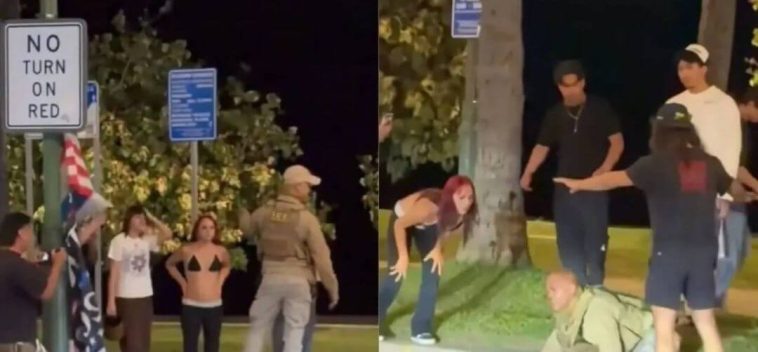
Witnesses say liquid was thrown at the man before multiple individuals rushed him. He was reportedly dragged to the ground, held down, and repeatedly struck.
One attacker focused on his face while others restrained him. The assault continued until the man stopped moving.

He later managed to get up and leave the scene, visibly injured and bleeding.
Authorities confirmed that a 15-year-old suspect has been charged in connection with the attack. The charge was initially second-degree assault but has since been reduced to attempted assault.
Key Detail Changes Everything
After the incident gained attention online, the Department of Homeland Security issued a statement clarifying that the victim had no affiliation with ICE.

That revelation adds a troubling dimension to the case.
Officials also warned that impersonating a federal immigration officer is a serious crime and said anyone caught doing so would face prosecution.
A spokesperson emphasized that such impersonation “endangers public safety and erodes trust in law enforcement.”
Both facts are significant.
But they do not fully explain why the attack happened in the first place.
A Larger Pattern Emerging
The Honolulu assault did not occur in isolation.
It happened during a weekend marked by protests, including demonstrations branded under themes like “No Kings” and “No Dictators.”
At the same time, in Los Angeles, graffiti appeared on a federal building reading: “Kill your local ICE agent,” accompanied by target symbols.
Taken together, these incidents point to a broader trend of escalating hostility toward immigration enforcement.
Recent data from DHS underscores the concern.
During 2025, ICE agents were assaulted 275 times, a dramatic increase from just 19 incidents during the same period the previous year.
Officials have also reported sharp spikes in other threats, including vehicular attacks and explicit death threats targeting agents.
Political Rhetoric Under Scrutiny
The rising tensions are fueling debate about the role of political language.
Several prominent Democratic figures have made highly charged statements about ICE and federal immigration enforcement.
House Minority Leader Hakeem Jeffries urged supporters to “fight” the Trump administration “in the streets.”
Minnesota Governor Tim Walz referred to ICE agents as “modern-day Gestapo.”
Boston Mayor Michelle Wu compared the agency to a neo-Nazi group.
Representative Pramila Jayapal described obstruction of immigration enforcement as “inspiring,” while Representative Becca Balint labeled ICE officers “vigilantes” engaged in “kidnapping.”
Critics argue that such rhetoric risks inflaming already volatile situations.
A Teen’s Split-Second Decision
What makes the Honolulu attack especially alarming is how quickly it unfolded.
There was no investigation into who the man was. No attempt to verify his identity.
Instead, the reaction appears to have been immediate and violent.
A teenager saw a vest marked “ICE” and acted.
That moment is now at the center of a growing national conversation.
Warnings Ignored?
Security analysts and policy experts have been raising concerns for months.
The Heritage Foundation analyst Lora Ries has pointed to years of inconsistent enforcement as a factor emboldening activist groups.
Meanwhile, Manhattan Institute fellow Charles Fain Lehman has observed that recent political violence trends have increasingly targeted specific institutions, including ICE.
Federal officials have also issued repeated warnings about rising threats tied to anti-ICE sentiment.
A Turning Point
The Honolulu incident may become a defining example of how rhetoric, perception, and real-world consequences intersect.
A man wore a vest.
A teenager reacted.
And within seconds, a situation turned violent.
As investigations continue, one thing is clear: the stakes surrounding political messaging and public perception have never been higher.
The question now is whether leaders on all sides will take notice before the next incident unfolds.
