
>> Continued From the Previous Page <<
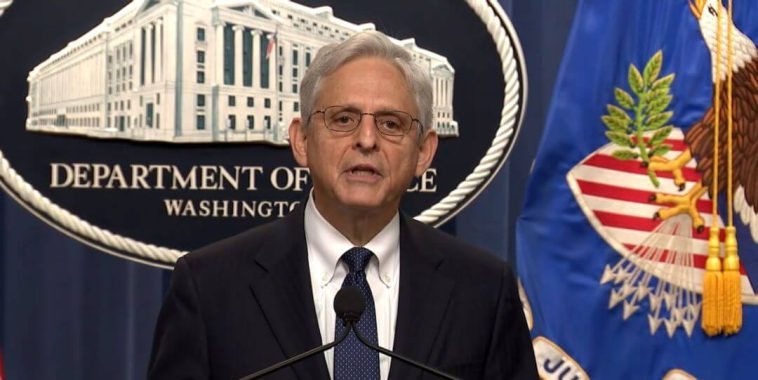
Garland’s comments come at a time when the term “democracy” has taken on a more ambiguous meaning, especially in light of recent events. Many Americans are left wondering if the DOJ’s focus will extend to other potential threats, such as the rumored “soft coup” against President Joe Biden, where some speculate that Vice President Kamala Harris, who did not receive a single vote in the 2024 Presidential Primary, might be positioned to take over.
What Garland didn’t mention was the nature of many of these prosecutions. A significant number of those charged in connection with January 6th opted for plea deals, a choice often made to avoid the daunting legal expenses and severe sentencing that could result from facing a trial in a predominantly Democrat district, where venue change requests were uniformly denied. The legal reality for these defendants was stark: face trial in a district where 93% of voters supported Joe Biden in 2020, or take a plea deal.

Moreover, one of the prominent felony charges used in these prosecutions—a law stemming from the ENRON scandal—was recently struck down by the Supreme Court. This leaves many questioning the fairness of these cases and the true intent behind them.
Garland’s message was clear: the DOJ will not tolerate any interference with the peaceful transfer of power. But this declaration leaves many unanswered questions about the events of January 6th and the broader implications for the upcoming election.
Critical questions remain about January 6th itself. How many FBI agents or assets were embedded in the crowd that day? What’s the full story behind the pipe bombs allegedly planted at the DNC and RNC? And why does evidence continue to surface that challenges the official narrative?

There are even more questions surrounding the actions of law enforcement on that day. For instance, what role did the Metropolitan Police Department play when they deployed tear gas and concussion grenades into the crowd? How did these actions contribute to the chaos that ensued? The police line only broke after a Metropolitan Police Officer’s poorly aimed “short round” caused chaos among their own ranks.
Carry 46 rounds concealed? (comfortably)
There are also questions about exculpatory evidence that was potentially withheld, such as the presence of government assets in the crowd and whether the situation would have escalated as it did if law enforcement had been appropriately prepared.
And then there’s the issue of the prosecutions themselves. Were they conducted fairly, or were they influenced by the highly publicized hearings from the January 6th Committee? The media, which has persistently labeled the events of that day as an “insurrection,” has yet to acknowledge that not one person has been charged under the federal statute for insurrection, 18 USC 2383.
Meanwhile, some Democrats have already made clear their intentions to challenge the results of the 2024 election. Jamie Raskin has openly discussed his plans to disqualify former President Donald Trump from running, believing that this could lead to another “insurrection.” This rhetoric also serves as a warning to attorneys involved in election cases and the alternate electors currently facing prosecution in states like Georgia, Michigan, and Arizona.
It’s worth noting that the legitimacy of these alternate electors has been supported by legal experts, such as Todd Zywicki, a professor at George Mason University’s Scalia Law School. Even Politico’s Kyle Cheney acknowledged that alternate electors played a crucial role in preserving the option to seat different electors if legal challenges were successful in past elections.
And let’s not forget that before the 2020 election, prominent figures like CNN’s Van Jones discussed the possibility of “competing electors.” Is that not a form of election interference? And what about the Hollywood elites who, in 2016, called on electors to vote against their state’s results? Were they not interfering in the election?
As we head into the 2024 election, these questions will only become more pressing. Merrick Garland’s remarks may have been intended to reassure the public that the DOJ is committed to upholding democracy. However, his words also serve as a stark reminder that the battle over the peaceful transfer of power is far from over.
All this is happening while the DOJ is embroiled in a lawsuit over alleged price control efforts by the federal government. The situation is complex, and the stakes could not be higher as we approach what promises to be a contentious election season.
One thing is certain: Karl Marx would be proud of the current state of affairs.

