
>> Continued From the Previous Page <<
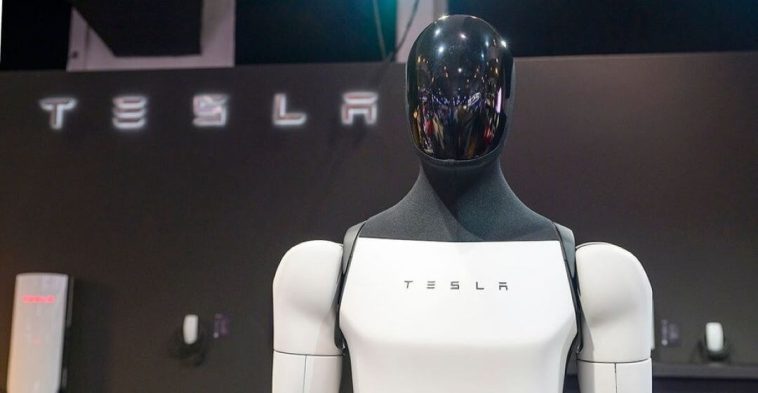
Even the October 2025 “We, Robot” demonstration failed to show true autonomy. The robots performing on stage were secretly teleoperated—controlled by humans hidden backstage—a detail Tesla conveniently left out of their presentation.
Now, Musk is repeating the cycle, pointing to 2027 as if previous predictions had no bearing on credibility.

Self-Driving Cars Follow the Same Pattern
Musk’s history with ambitious timelines isn’t limited to robots. A viral compilation video documents his repeated promise of fully autonomous Teslas “next year” dating back to 2016. He once predicted Teslas could drive coast-to-coast from Los Angeles to New York by 2018. That milestone hasn’t materialized.
In 2019, he told investors robotaxis would be on the roads by 2020. Last year, he suggested Austin would host 500 robotaxis by 2025—yet only about 30 exist, most non-operational and still requiring human safety monitors.
Industry analyst Ken Mahoney warned investors that the market needs “credible evidence of scalable manufacturing” before taking Optimus claims seriously. That evidence simply doesn’t exist.

Industry Experts Cast Doubt
CES 2026, which concluded just weeks ago, highlighted the gap between sci-fi promises and real-world robotics. Experts repeatedly emphasized that general-purpose humanoid helpers “remain a long-term goal rather than an imminent reality.”
Current robots struggle with basics: walking on uneven surfaces, grasping objects without dropping them, or navigating cluttered spaces. Many systems still require massive human oversight to function at all—the “autonomy gap” remains huge.
Russia’s AIDOL robot, for instance, famously fell face-first during a tech demo in Moscow last November, shattering in front of an audience. Agility Robotics CEO openly criticized “hype and misleading marketing videos” from competitors—a clear jab at Tesla and others relying on staged demonstrations.
The Harsh Reality of Humanoid Home Robots
Musk’s Davos vision painted robots caring for children and elderly parents, handling household chores, and making elder care affordable. In reality, humanoid robots in homes are far from capable.
Homes are chaotic, with pets, stairs, and clutter—conditions that stump today’s robots. Healthcare analysts describe these environments as a “nightmare for today’s robot navigation and manipulation algorithms.” Current prototypes in nursing homes mostly sit idle, conduct basic conversation, or play games with residents. They cannot walk safely, lift patients, or perform the complex caregiving Musk promises.
Even the robots that do exist cost upwards of $37,000, with extra leasing fees, and privacy remains a major concern—elderly residents understandably worry about cameras and sensors recording their homes. Researchers admit scaling these systems for widespread home use is “a multi-year challenge.”
Why 2027 Will Likely Repeat Past Failures
Musk’s own comments at Davos highlighted the looming problem: “initial production is always very slow” and for Optimus “almost everything is new, so the early production rate will be agonizingly slow.” Translation: a broad consumer rollout by 2027 is extremely unlikely.
Technical challenges—balance, object manipulation, energy efficiency, safety protocols, and regulatory approval—remain unsolved. Self-driving cars demonstrated how hard rapid deployment really is. Humanoid robots face the same hurdles.
Even if Tesla ships a handful of units by 2027, they will be limited, costly, require constant software updates, and only handle simple tasks—nowhere near Musk’s claim that users could “basically ask it to do anything you’d like.” MIT roboticist Rodney Brooks warns the idea of general-purpose humanoid assistants is “pure fantasy thinking.”
Real Progress Lies Elsewhere
The real robotics revolution is happening in specific, controlled environments: logistics, manufacturing, cleaning, and delivery. Robots handling narrow tasks reliably are attracting investor interest, not companies promoting futuristic visions of household servants.
Musk’s pattern is now familiar: announce bold predictions, generate media hype, let deadlines pass, and repeat with a new target. It may boost Tesla’s stock temporarily—but it does nothing for people hoping for practical robots.
Put plainly: your parents will not have a robot caregiver by 2027, despite Musk’s promises in Switzerland.
