
>> Continued From the Previous Page <<
Today, members of Congress continue to receive their salaries, which stand at $174,000 annually, even as tens of thousands of federal workers tied to DHS face prolonged uncertainty. Among those affected are employees from FEMA, TSA, Coast Guard civilian staff, and cybersecurity personnel from CISA.
Reports indicate that many of these workers have gone weeks without pay. Some are falling behind on essential bills, while others are seeking alternative work just to stay afloat. In certain areas, airport staffing shortages have worsened as TSA agents call out or resign entirely.

The shutdown itself, which began in mid-February 2026, has become one of the longest disruptions affecting a single federal department. Negotiations in Washington have stalled, with both parties blaming each other for the impasse.
Republicans argue that funding bills were already passed and accuse Senate Democrats of introducing last-minute demands tied to immigration enforcement reforms. Democrats, on the other hand, have defended their position as necessary to address broader policy concerns.
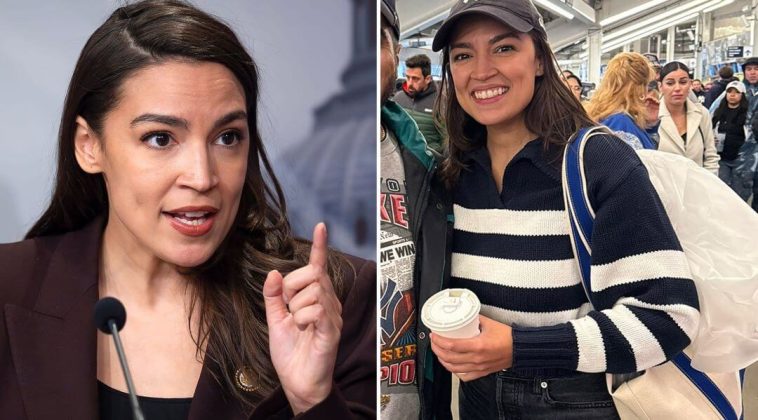
Amid this standoff, critics say lawmakers from both sides have failed to prioritize the immediate needs of federal workers. However, Ocasio-Cortez has become a focal point due to the optics of her public appearance during the crisis.

According to reports, she was not seen engaging with constituents or participating in negotiations during that time. Instead, she appeared relaxed in a premium viewing area, far removed from the financial strain affecting many government employees.
The situation has also reignited interest in proposed legislation aimed at addressing this exact issue. Senator Rick Scott has been advocating for the “No Budget, No Pay Act,” which would halt congressional salaries during government shutdowns.
The proposal is straightforward. If Congress fails to fund the government, lawmakers would not be paid. Importantly, the measure would eliminate any possibility of backpay once funding is restored.
Despite gaining some support, including a handful of bipartisan co-sponsors, the bill has yet to move forward in a meaningful way.
Critics argue that this lack of progress reflects a deeper problem in Washington. Those responsible for passing such reforms are the same individuals who would be directly affected by them.
For families impacted by the shutdown, the debate in Congress feels increasingly disconnected from reality. Some Coast Guard households are reportedly stretching limited resources just to cover basic needs, highlighting the real-world consequences of prolonged political stalemate.
Meanwhile, the broader issue continues to resonate with voters who are questioning whether elected officials are being held to the same standards they once championed.
As the shutdown drags on, the pressure is mounting—not just to reach a funding agreement, but to address the underlying accountability concerns that have once again come into focus.
