
>> Continued From the Previous Page <<
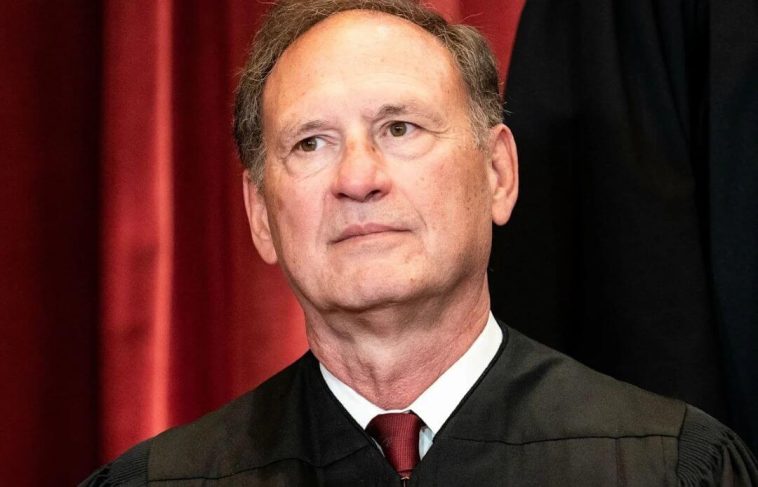
The respected jurist had traveled to Philadelphia to attend an event honoring his long-standing judicial career. Although he skipped earlier daytime panels, he did participate in a pre-dinner reception and later joined colleagues, including federal judges and former clerks, at the main evening gathering.
Earlier that same day, the Supreme Court of the United States issued opinions from the bench. Alito was not present in the courtroom during the public session, but sources confirmed he did attend the Court’s private conference afterward, signaling that he remained engaged in official duties despite the later health scare.

Following the dinner, Alito agreed to get checked out at the urging of his security team. Since then, he has returned to his responsibilities on the bench and has not experienced any additional health issues, according to those familiar with his condition.
The timing of the incident is notable. Alito recently marked his 76th birthday and remains one of the Court’s senior members, second in age only to Clarence Thomas. Observers noted that he appeared in normal condition during recent Supreme Court proceedings, including high-profile arguments surrounding birthright citizenship that were also attended by Donald Trump.
Alito, who was nominated by George W. Bush in 2005 and confirmed the following year, has played a central role in shaping the Court’s conservative jurisprudence. His presence remains critical as the Court navigates contentious legal questions that could reshape federal policy for years to come.

Meanwhile, the Court itself continues to deliver decisions that are already fueling debate across the political spectrum.
In a narrow 5-4 ruling, justices addressed a key immigration dispute in Monsalvo Velazquez v. Bondi, focusing on how the federal government calculates a 60-day voluntary departure window. The decision revealed an unusual alignment on the bench, with Neil Gorsuch and Chief Justice John Roberts joining the Court’s liberal bloc.
The ruling determined that if a voluntary departure deadline falls on a weekend or federal holiday, it must be extended to the next business day. Writing for the majority, Gorsuch leaned heavily on historical precedent and administrative consistency.
“When Congress adopts a new law against the backdrop of a ‘long-standing administrative construction,’ the Court generally presumes the new provision works in harmony with what came before,” Gorsuch said.
“Since at least the 1950s, immigration regulations have provided that when calculating deadlines, the term ‘day’ carries its specialized meaning by excluding Sundays and legal holidays (and later Saturdays) if a deadline would otherwise fall on one of those days,” Gorsuch added.
The majority opinion was joined by Roberts as well as Justices Sonia Sotomayor, Elena Kagan, and Ketanji Brown Jackson.
The decision overturned prior rulings from the 10th Circuit Court of Appeals and the Board of Immigration Appeals in the case of Monsalvo Velázquez, a Colorado resident ordered removed in 2019.
Taken together, the health scare involving Alito and the Court’s latest ruling underscore a pivotal moment for the Supreme Court. With razor-thin decisions and unexpected alliances shaping outcomes, every justice’s presence carries significant weight.
For now, Alito appears to be back on his feet. But in a Court where every vote can shift the direction of the country, even a brief hospital visit is enough to remind Washington just how much is at stake.

