
>> Continued From the Previous Page <<
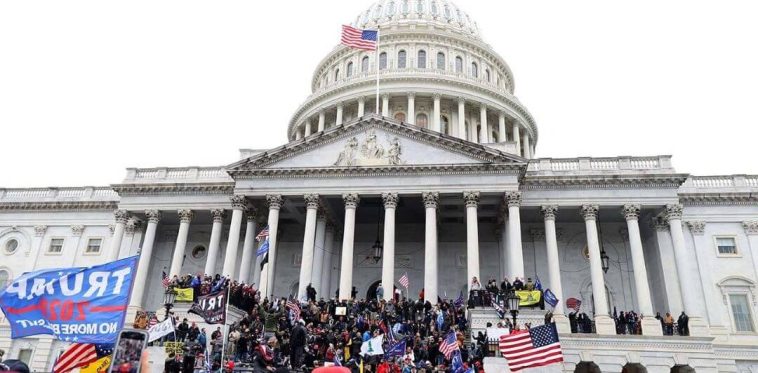
The transcripts also reveal a significant failure among Pentagon officials to act on Trump’s requests. Despite the president’s clear instructions, some top military leaders hesitated due to concerns about “optics.” Chief Steven Sund of the U.S. Capitol Police urgently requested the National Guard’s assistance as the situation deteriorated on January 6th. However, Sund’s requests were met with resistance from the Army’s representatives, who were reportedly concerned about the appearance of deploying military forces at the Capitol.
“The representative from the Secretary of the Army said, ‘I don’t like the optics of National Guard standing in a line with the Capitol in the background,’” Sund recalled in the transcript. This hesitation proved costly, as the delayed response allowed the unrest to spiral out of control.

Adding to the complexity, Acting Secretary of Defense Christopher Miller revealed that Trump had previously commented on the need for 10,000 troops to ensure security, but Miller dismissed this as “banter.” Miller said, “I interpreted it as a bit of presidential banter… and in no way, shape, or form did I interpret that as an order or direction.”
These damning revelations highlight the failure of the mainstream media and Democrats to report the full truth about January 6th. While Trump’s efforts to secure the Capitol were downplayed or ignored, this new evidence paints a very different picture of his involvement. General Milley’s testimony underscores Trump’s focus on maintaining law and order, while others in positions of power failed to act decisively.
The transcript from a witness, Deputy Chief of Staff Anthony Ornato, also adds weight to these revelations. Ornato revealed that Chief of Staff Mark Meadows had pressed D.C. Mayor Muriel Bowser to request additional National Guard support, emphasizing that Trump was prepared to authorize up to 10,000 troops.
Despite these proactive efforts from the Trump administration, the January 6th Committee, chaired by former Rep. Liz Cheney, failed to include this critical information in their final report. The committee’s narrative insisted that Trump “never gave any order to deploy the National Guard,” a claim that now appears to be disingenuous.
One of the most significant revelations in the transcripts is the role of political calculations in the decision not to deploy the National Guard. Kash Patel, Former Chief of Staff to the Secretary of Defense, admitted in a recent interview that D.C. Mayor Muriel Bowser declined thousands of National Guard troops offered by the Trump administration for political reasons. The refusal to deploy additional forces, paired with resistance from top military leaders, likely contributed to the events that unfolded on January 6th.
Further complicating the situation, an op-ed signed by 10 former Secretaries of Defense, published in The Washington Post, warned against the inappropriate use of the military during the certification of the Electoral College. This fear of politicizing the military weighed heavily on Pentagon officials, as revealed by General Milley and others.
In an interview with Sean Hannity, President Trump reiterated his stance, claiming he had authorized the National Guard to be present on January 6th. These transcripts back up his assertions and call into question the motivations behind the refusal to deploy the troops.
As these bombshell transcripts come to light, the narrative surrounding January 6th may be forced to shift. President Trump’s clear directive to ensure a safe event, alongside the Pentagon’s refusal to act due to political concerns, highlights a much more nuanced situation than initially reported. With top officials now on record confirming Trump’s orders, the blame for the Capitol unrest may fall more heavily on those who hesitated to act when it mattered most.

