
>> Continued From the Previous Page <<
The underwhelming jobs report activated the “Sahm Rule,” named after former Federal Reserve economist Claudia Sahm. This rule signals the onset of a recession when the three-month average unemployment rate increases by 0.5% or more compared to the lowest three-month average from the previous year. According to the Federal Reserve Bank of St. Louis, the current three-month average unemployment rate is 4.13%, a 0.63% increase from the twelve-month low of 3.5% recorded in July 2023.
In an interview with Bloomberg, Claudia Sahm pointed out, “That puts it up over its half-a-percentage-point threshold, noting that comes off of historical experience, that doesn’t necessarily tell us where we are right at this moment, saying a recession.” She emphasized the momentum seen in the unemployment rate recently. “This has seen way too much momentum in the unemployment rate in recent months. I mean, 4.3 percent, right? … So whether we are at that moment of a recession or not, this is your build into substantial weakening in the labor market,” she noted.

Despite the grim indicators, Sahm reassured that not all hope is lost. “All is not lost. The bottom is not falling out. We should never panic. There are policy tools, there are levers,” she said, advocating for a measured response. She also stressed the importance of not overreacting to a single data point. “I don’t overread one data point, but this isn’t one data point. So I think the case now for, ‘Hey, we’re normalizing,’ — We did need to slow things down some, probably, generally speaking,” she continued. “But now the question is, ‘OK, so we’ve had enough slowing here. What levels this out?’” Sahm concluded, “And that, I think — I don’t have the answer for that.”
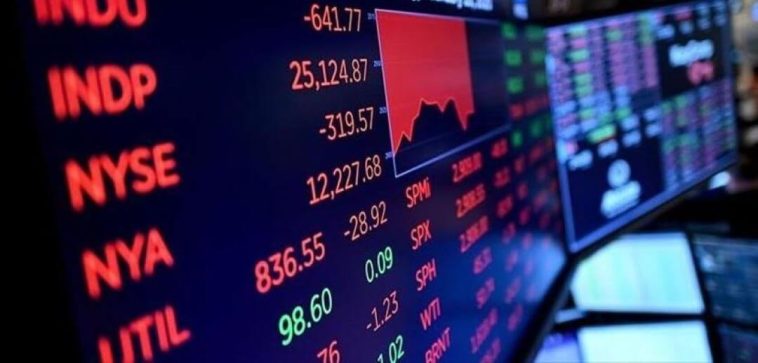
Beyond the U.S. stock market, the cryptocurrency market also felt the impact. Bitcoin fell 17.5%, dropping to $50,239 per coin. Meanwhile, the Japanese Nikkei 225 stock index suffered a dramatic 12% decline on Monday, marking its worst day since the 1987 stock market crash.
In a discussion on CNBC’s “Squawk Box,” Chicago Fed President Austan Goolsbee suggested that the current interest rates, which have been raised to combat inflation, might be too restrictive and could be stifling economic growth. He stated that if economic conditions continued to worsen, the Federal Reserve would take necessary actions to “fix it,” likely including lowering interest rates.
Carry 46 rounds concealed? (comfortably)
The economic landscape remains volatile, with numerous indicators pointing towards potential recessionary conditions. As policymakers and financial experts navigate these turbulent times, the focus will be on stabilizing the economy and mitigating further declines in employment and market performance.

