

>> Continued From the Previous Page <<
Attorney General Nessel has been vocal about her efforts to prosecute 15 Michigan GOP electors, charging them with eight felonies each for submitting an alternate slate of electoral votes for former President Trump during the contentious 2020 election. Notably, a year ago, The Gateway Pundit reported on a Michigan State Police investigation that uncovered a Democrat-funded voter registration group, GBI Strategies, allegedly submitting a large number of fraudulent registrations across Michigan. These registrations were traced back to a hotel room in Auburn Hills and GBI Strategies’ headquarters in Southfield. A raid on the Southfield office uncovered semi-automatic rifles, suppressors, and modified pistols, raising further questions about the group’s activities. Despite the involvement of Nessel and Michigan Secretary of State Jocelyn Benson in the investigation, there was no public disclosure of these findings just one month before the 2020 election.
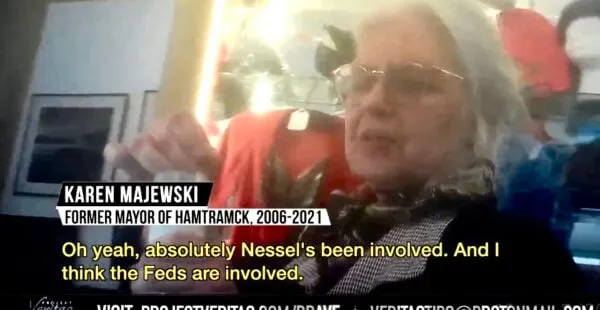
Now, the former mayor of Hamtramck suggests that Attorney General Nessel is also looking into a significant voter fraud case that could have influenced the 2020 election results. The Project Veritas video starts with the former mayor, Karen Majewski, introducing the reporter to the allegations:

“The absentee ballots are being filled out in people’s dining rooms by the candidates,” Majewski tells the undercover Project Veritas reporter. “We have a serious—that’s been going on for 20 years, basically, absentee ballot problem.”
Majewski claims that the Democratic Party has long managed to perpetrate widespread voter fraud without facing consequences. She raises a controversial point, stating: “You need these people’s votes, right? So, who’s going to say brown-skinned people are doing election fraud?”
Majewski served as Hamtramck’s first female mayor from 2005 to 2021. Her defeat came at the hands of Amir Ghalib, a Yemeni candidate who became Hamtramck’s first Muslim mayor alongside America’s first all-Muslim City Council. As the political landscape shifts, some residents worry that the policies of this new leadership could permanently change Hamtramck’s identity as a welcoming space for the LGBTQ+ community.
In the video, Hamtramck City Council candidate Lynn Blasey shares her insights with the undercover reporter. “They hire black people to go to black people’s houses. They hire Bangladeshi people to go to Bangladeshi homes,” Blasey explains. She adds, “The black people—they pay them for their ballots.”
Blasey describes a clandestine operation, known as “The Midnight Meeting,” where harvested ballots are allegedly sold to the highest bidder. This revelation adds another layer of complexity to the alleged voter fraud scheme.
Carry 46 rounds concealed? (comfortably)
Former Hamtramck City Clerk August Gitschlag, now serving as the clerk in Fraser, Michigan, provides additional context to the operation. He details how threats and intimidation are used to control the voting process: “Voter fraud happens in small ethnic communities where someone is more assimilated. They can run the show—intimidate.” When asked if this occurred in Hamtramck, Gitschlag confirms, “Oh, it IS what happened here.”
Gitschlag claims that Attorney General Nessel’s office is complicit in the ballot harvesting scheme, asserting, “I got three people busted back in 2013.” This statement is supported by a 2014 case where three men faced a total of 41 counts of improper possession or return of absentee ballots, charges brought by then-Republican Attorney General Bill Schuette.
The individuals involved, including City Council candidate Armani Asad, faced multiple felony charges, each carrying a potential five-year prison sentence. However, all three received relatively minor penalties, raising concerns about the justice system’s handling of election-related crimes.
According to the Hamtramck Review, the four men convicted of illegally handling absentee ballots received only minor fines and court fees. They will have a felony conviction on their records for at least five years, after which they may seek expungement.
The former clerk’s role in exposing these activities is well-documented. During the August 2013 primary election, Gitschlag discovered that unauthorized individuals had delivered multiple absentee ballots in violation of state law. As Michigan’s election code clearly outlines, possessing or returning an absentee ballot without proper authorization is a felony offense.
The process described involves canvassers collecting absentee ballot applications, having individuals sign them, and then submitting the completed ballots to City Hall. This method allegedly enables the theft of votes on a large scale.
As these allegations continue to unfold, the implications for Michigan’s political landscape and the integrity of the electoral process are profound. The question remains: How will authorities address these serious claims of voter fraud, and what impact might they have on future elections?

