
>> Continued From the Previous Page <<
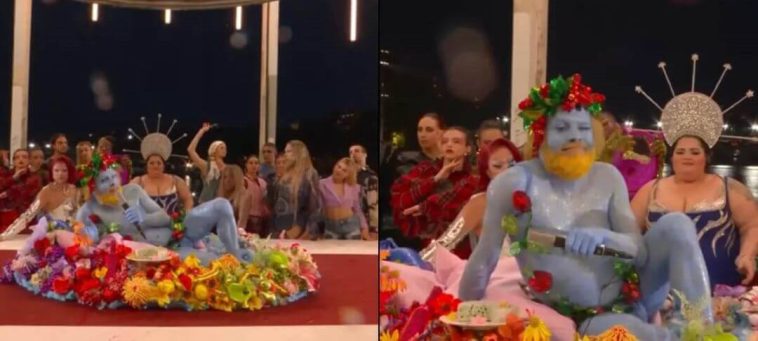
Political commentator Clint Russell took to X, formerly known as Twitter, to voice his outrage. “This is crazy. Opening your event by replacing Jesus and the disciples at the Last Supper with men in drag. There are 2.4 billion Christians on earth and apparently the Olympics wanted to declare loudly to all of them, right out of the gate… NOT WELCOME,” he wrote. His sentiments were echoed by many others who saw the performance as a deliberate insult to their faith.
The backlash didn’t stop at social media outrage. Some influential voices called for more drastic measures in response to the perceived blasphemy. The account “End Wokeness” suggested diplomatic actions, writing, “Countries should pull their ambassadors out of France over this. I’m 100% serious.” This sentiment reflects a growing frustration among those who feel that such displays should not go unchallenged.

Additionally, sports personalities like boxing superstar Ryan Garcia expressed their disapproval, calling for a boycott of the Olympics. “F**k the Olympics boycott it for the disrespect of Jesus Christ,” Garcia tweeted. Tristan Tate also chimed in, labeling the Olympics as “fake and gay” and advising his followers not to watch the event.
This controversy has reignited the debate over the boundaries of artistic expression and cultural sensitivity. Supporters of the performance might argue that it was intended to be a bold and inclusive statement, pushing the boundaries of traditional ceremonies. However, for many Christians and conservatives, the portrayal was seen as an unacceptable and deliberate provocation.
The imagery used in the ceremony, particularly the drag-themed Last Supper and the depiction of apocalyptic symbolism, struck a nerve with many who viewed it as an unnecessary and offensive spectacle. The inclusion of children in the performance further exacerbated the situation, leading to accusations of poor taste and insensitivity.
Carry 46 rounds concealed? (comfortably)
This incident at the Paris Olympics raises questions about how global events should navigate the fine line between creative expression and respect for religious and cultural values. While the intention behind the ceremony might have been to showcase diversity and inclusivity, the execution has clearly missed the mark for a significant portion of the audience.
As the controversy continues to unfold, it remains to be seen how the organizers of the Olympics will respond to the backlash. Will there be an apology or an explanation, or will they stand by their creative choices? The answer could have lasting implications for future international events and their approach to sensitive cultural and religious themes.
In conclusion, the 2024 Paris Olympics opening ceremony has sparked a significant controversy with its provocative performance that many see as a mockery of Christianity. The widespread outrage and calls for boycotts highlight the deep divisions over how such global events should balance artistic freedom with respect for deeply held beliefs. As the debate rages on, the impact of this event will likely be felt far beyond the duration of the games.

