
>> Continued From the Previous Page <<
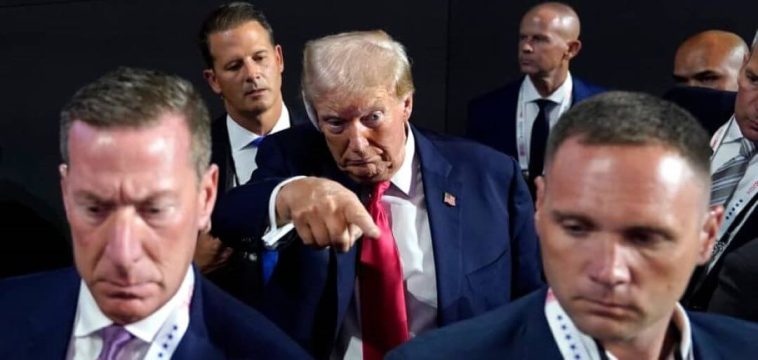
On the morning of July 14, less than 12 hours after the assassination attempt, Secret Service spokesman Anthony Guglielmi refuted reports of denied requests for additional security. “There’s an untrue assertion that a member of the former President’s team requested additional security resources & that those were rebuffed. This is absolutely false,” Guglielmi wrote on X (formerly Twitter). “In fact, we added protective resources & technology & capabilities as part of the increased campaign travel tempo.”
Despite these denials, sources told the Washington Post that the agency obtained additional information indicating that Trump’s security team did indeed request extra assistance, which may have been denied by Secret Service headquarters. This revelation has prompted a probe into the matter, highlighting the agency’s challenging mission of balancing personnel, technology, and operational needs.

Secret Service Director Kimberly Cheatle, who has faced calls for resignation from lawmakers in both major parties, repeated the denial of refused security requests in a meeting with Trump campaign leadership in Wisconsin. Following the assassination attempt, the Secret Service added a detail to protect independent presidential candidate Robert F. Kennedy Jr. and Republican vice-presidential nominee Senator J.D. Vance (R-OH).
A Secret Service official, speaking anonymously, stated that the agency has been plagued by limited resources since several scandals during the Obama administration. These shortages have significantly impacted the availability of high-level resources such as counter-sniper teams and uniformed officers for screening event attendees with magnetometers.
The agency is responsible for security details for over two dozen people, along with a few others who receive “door-to-door” protection from the moment they leave their homes. Secret Service veteran Bill Gage, who served on protection and counter-assault teams under multiple presidential administrations, told the Washington Post that the agency has long struggled with a high volume of protection requests amid limited resources and staffing caps. “A director has to finally come forward to say we are way understaffed and we cannot possibly continue with this zero fail mission without a significantly bigger budget,” Gage remarked.
Brutal “Pocket Weapon” Stops Hearts (discounted for next 78)
An example of a denied request involved Trump’s security detail asking for additional resources to cover a massive rally in Pickens, South Carolina. Due to the venue’s surroundings, which included commercial and residential buildings, Trump’s team requested additional counter-snipers to be stationed on rooftops. This request, along with others for additional tactical support, was turned down, according to sources.
Furthermore, Trump’s security detail requested magnetometers and additional screening help for sporting events, particularly wrestling matches and college football games, but these requests were also denied as they were not official campaign events.
In the wake of the assassination attempt, there have been calls from lawmakers, including House Speaker Mike Johnson (R-LA) and U.S. Rep. Brendan Boyle (D-PA), for Secret Service Director Cheatle to resign. The agency now faces intense scrutiny over its handling of security requests and resource allocation, raising questions about its ability to adequately protect high-profile figures in a dynamic threat environment.

