
>> Continued From the Previous Page <<
A significant element in this legal drama is Justice Clarence Thomas’ concurring opinion, which questions Smith’s authority as special counsel. Trump’s lawyers have seized upon Thomas’ argument, suggesting that Smith was unlawfully appointed since he was a private citizen at the time of his selection and has not been confirmed by the Senate.
Justice Thomas’ opinion has provided Trump’s defense with substantial ammunition. In his concurring opinion on the Supreme Court’s presidential immunity ruling, Thomas argued that Smith’s appointment was problematic. He pointed out that Smith, not being Senate-confirmed, might lack the proper legal standing to act as special counsel.

In light of these developments, Judge Cannon has granted a temporary stay on two critical deadlines: a July 8 deadline for expert disclosures and a July 10 deadline related to CIPA (Classified Information Procedures Act) litigation. This pause allows more time for the court to consider the implications of the Supreme Court’s ruling and the arguments raised by Trump’s defense.
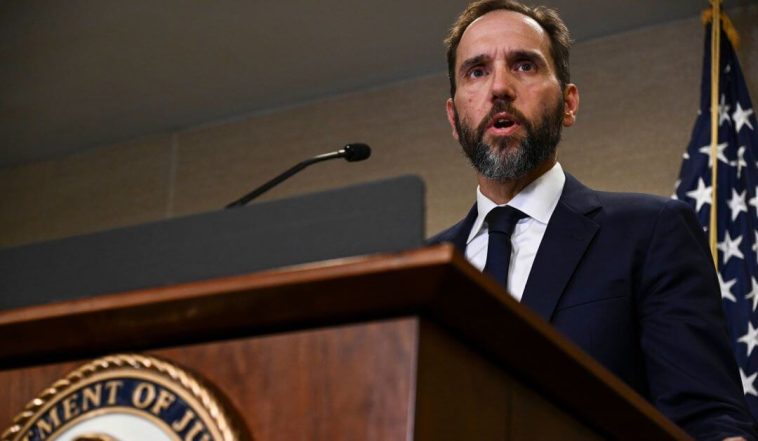
Special Counsel Jack Smith, however, has not taken this challenge lightly. He has agreed to a briefing on the Supreme Court’s immunity decision but has firmly requested Judge Cannon to ignore Justice Thomas’ concurring opinion. In a motion filed on Friday night, Smith’s prosecutors argued, “That single-Justice concurrence — addressing an issue that Trump did not raise, that the parties did not brief, and that was not relevant to the question presented to, or decided by, the Court — neither binds this Court nor provides a sound basis to deviate from the uniform conclusion of all courts to have considered the issue that the Attorney General is statutorily authorized to appoint a Special Counsel.”
Smith’s team contends that the critique from Justice Thomas should not influence Judge Cannon’s decisions. They maintain that the Attorney General has the statutory authority to appoint a special counsel, a conclusion supported by previous court rulings.
Carry 46 rounds concealed? (comfortably)
This legal tug-of-war is more than just a courtroom battle; it’s a reflection of the intense political stakes surrounding Trump’s legal troubles. The former president’s team is leveraging the Supreme Court’s ruling and Justice Thomas’ opinion to cast doubt on the legitimacy of Smith’s investigation. This strategy aims to paint the prosecution as politically motivated and legally flawed.
For Judge Cannon, the decision on how to proceed will be closely watched. Her ruling could set important precedents for how presidential immunity is interpreted and applied in future cases. It also has the potential to impact the broader narrative around Trump’s legal battles, influencing public perception and political dynamics as the country heads into another election cycle.
As the classified documents case against Trump unfolds, the legal arguments and counterarguments continue to evolve. Special Counsel Jack Smith’s plea to disregard Justice Thomas’ critique is a significant move in this high-stakes chess game. Judge Cannon’s upcoming decisions will be pivotal in determining the direction of this case and could have far-reaching implications for presidential immunity and the rule of law in America.

