
>> Continued From the Previous Page <<
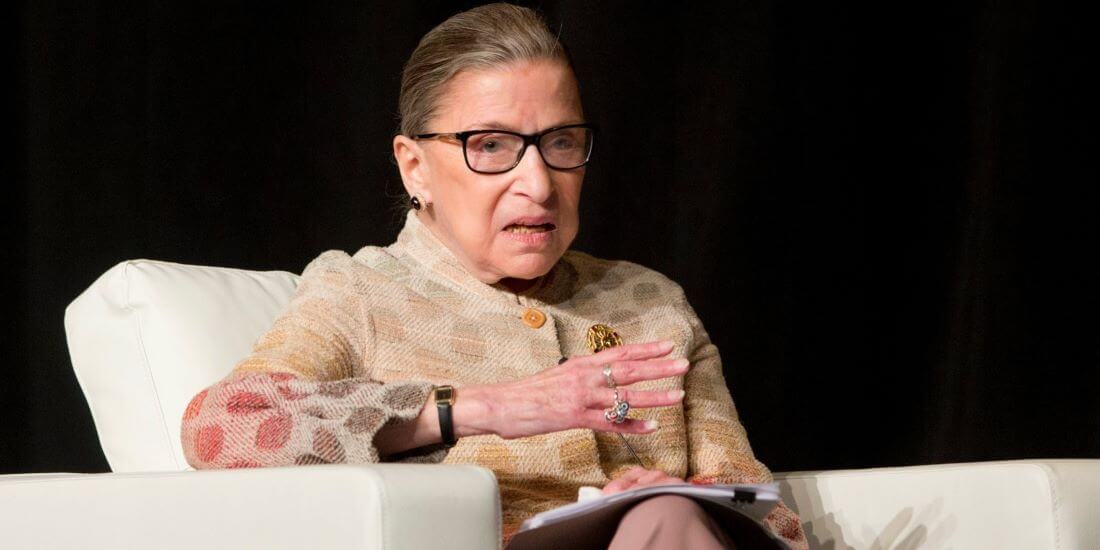
“The prohibition embodied in the Excessive Fines Clause carries forward protections found in sources from Magna Carta to the English Bill of Rights to state constitutions from the colonial era to the present day,” Ginsburg argued in the case. “Protection against excessive fines has been a constant shield throughout Anglo-American history for good reason: Such fines undermine other liberties.”
“They can be used, e.g., to retaliate against or chill the speech of political enemies,” she observed.

President Trump’s case, according to an AP study of 150 civil fraud cases during the previous 70 years, illustrates the “only big business found that was threatened with a shutdown without a showing of obvious victims and major losses,” as stated in the Western Journal.
Legal experts believe Trump has a good case, even though Democratic New York Attorney General Letitia James has threatened to take the Republican’s towers if he doesn’t pay the punishment. They contend that because there are no fraud victims in this case, the large verdict appears excessive.
“The key to dealing with New York’s attempt to legalize the stealing of President Trump’s property is the 8th amendment and the Supreme Court’s most recent ruling,” Mark Levin, a conservative professor, stated earlier this week on Fox News.
ALERT! Major Water Restrictions In Effect!
Justice Ginsburg, who sadly died in 2020, was a vocal opponent of President Trump and expressed worries about the dangers he presented to democracy.
“He has no consistency about him,” the justice told CNN. “He says whatever comes into his head at the moment. He really has an ego. … How has he gotten away with not turning over his tax returns? The press seems to be very gentle with him on that.”
When asked what direction the nation might go under a second Trump administration, Ginsburg said menacingly, “For the country, it could be four years. For the court, it could be — I don’t even want to contemplate that.”
She then apologized for using her position on the court for political purposes.
“Judges should avoid commenting on a candidate for public office. In the future I will be more circumspect,” She referred to her remarks as “ill-advised.”

