
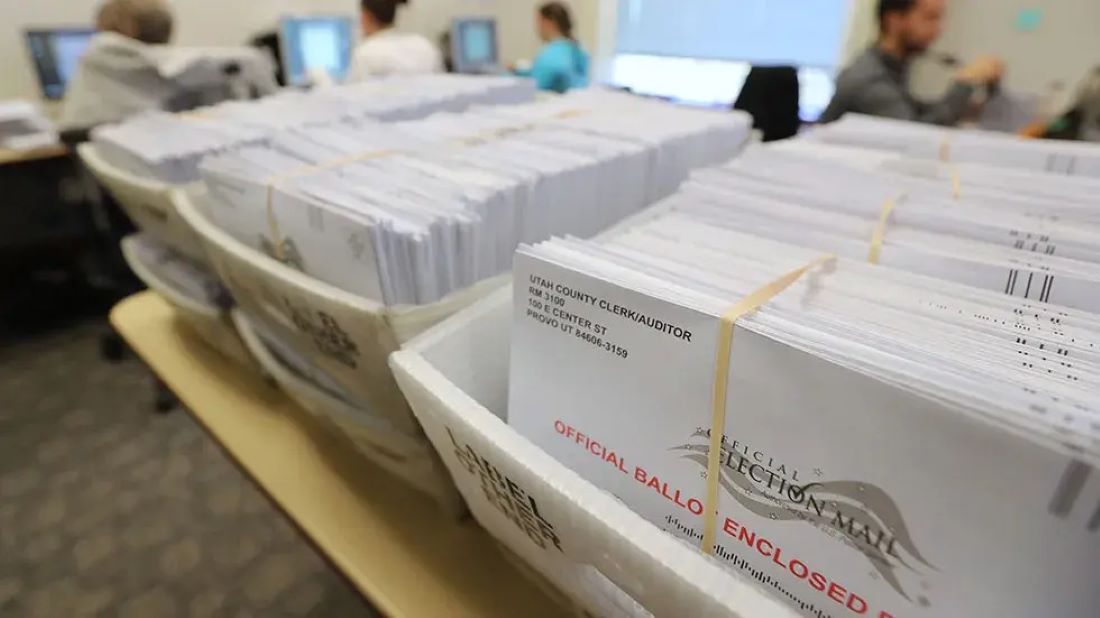
Prior to the 2020 election, the Cybersecurity and Infrastructure Security Agency (CISA) suppressed American criticism of mail-in ballots even though it was aware of the possibility of fraud.
DHS pushed to censor Americans who were illegally questioning mail-in ballots, despite knowing that they faced criticism, according to CISA records.
Don’t miss this! Carry faith with you everywhere with the Exclusive National Prayer Coin!

WATCH:
Legal watchdog notes that the following are CISA’s acknowledged problems with mail-in ballots:
- Following warnings from former President Trump and others about increased fraud, CISA confirmed that mail-in and absentee voting is less secure than in-person (i.e., verified voting). On the Friday before the 2020 election, CISA shared these concerns with mainstream media outlets during an unclassified “media tour.” The truth was concealed by the mainstream media, though, since they had mocked the idea that voting “by mail” was less secure than voting in person.
- CISA was aware that the assertion that in-person voting would spread COVID-19 was unfounded. However, it disregarded the facts and encouraged widespread vote-by-mail campaigns.
- For the purpose of monitoring and censoring social media, CISA relied on the accounting and consulting firm Deloitte to compile false “narratives” about vote-by-mail.
Mail-in ballot risks are acknowledged by CISA in its own documents.
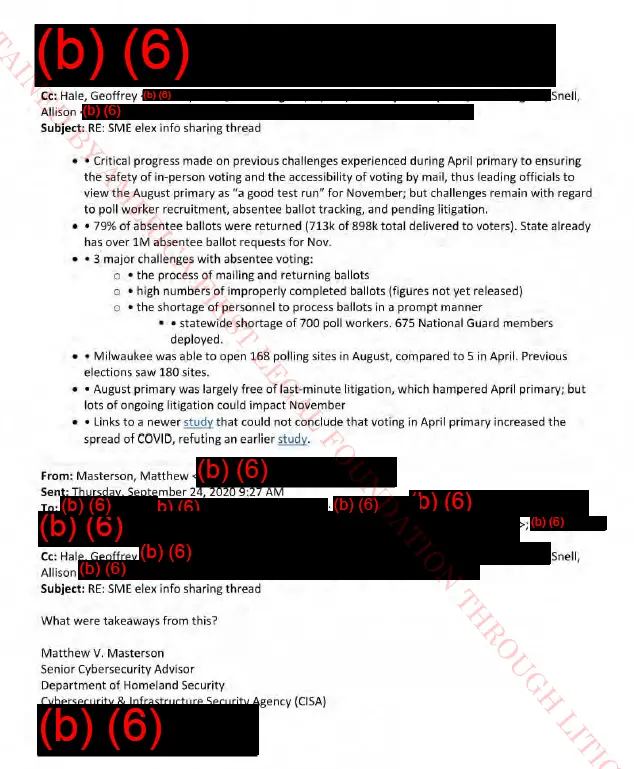
In an attempt to deduce from data that in-person voting did not accelerate the spread of COVID-19, CISA conducted a “test run” in September 2020.
“Links to a newer study that could not conclude that voting in April primary increased the spread of Covid, refuting an earlier study,” the document said.
The CISA recognized the challenges associated with mass vote-by-mail operations, mentioning issues like ballot mailing and return rates, a high percentage of incomplete ballots (exact numbers to be determined), and a shortage of staff to handle ballots quickly.
In a comprehensive chart, CISA highlights six salient instances of “mail-in voting risk”.
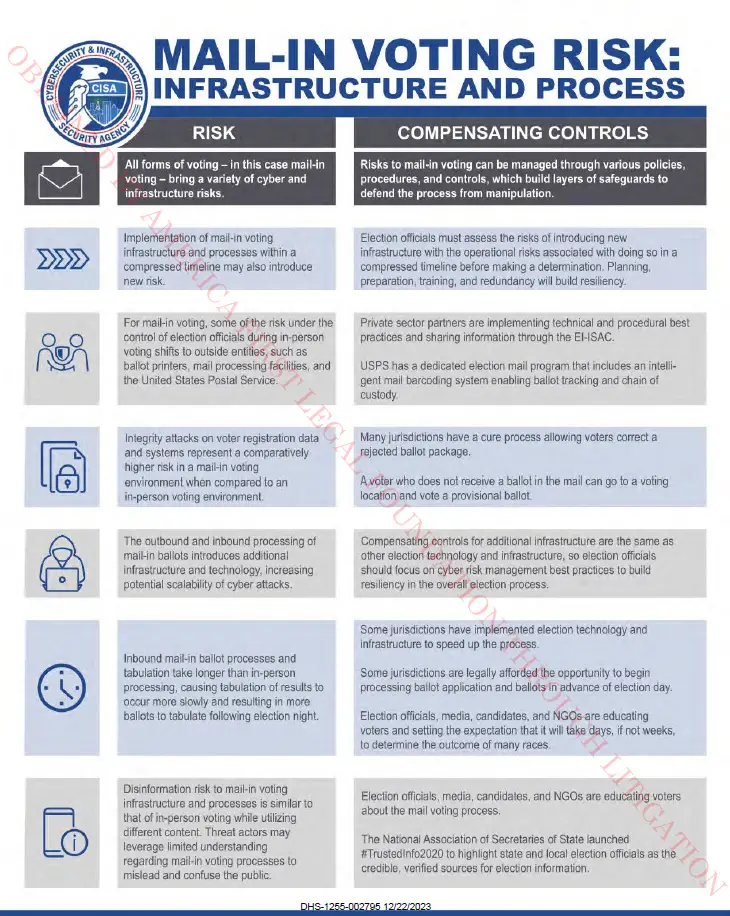
The AFL below provides a summary of this (emphasis added):
- “Installing mail-in voting procedures and infrastructure in a hurried manner could potentially pose new risks.”
- “With mail-in voting, certain risks that election officials controlled during in-person voting are transferred to outside parties, including ballot printers, mail processing facilities, and the US Postal Service.”
- “When compared to in-person voting, mail-in voting poses a relatively higher risk of integrity attacks on voter registration data and systems.”
- “More infrastructure and technology are introduced by the outgoing and inbound processing of mail-in ballots, increasing the potential scalability of cyberattacks.”
- “After election night, there will be more ballots to tabulate because inbound mail-in ballot processes and tabulation take longer than in-person processing.”
- “Disinformation risk to mail-in voting infrastructure and processes is similar to that of in-person voting while utilizing different content. Threat actors may leverage limited understanding regarding mail-in voting processes to mislead and confuse the public.”
CISA issues a warning about unconstitutional modifications to mail-in voting procedures in 2020 elections that are carried out without state legislature consent.
Days before Election Day, CISA conducted a “unclassified media tour” to share important findings.
ALERT! Major Water Restrictions In Effect!
Left-leaning media, including The Washington Post, ignored CISA’s alerts regarding the dangers of mail-in ballots, accusing Director Chris Krebs of making unfounded remarks that went against Donald Trump’s positions on the subject.

