
>> Continued From the Previous Page <<
“It’s just about God’s covenant and a promise that He makes to us that, you know, his faithfulness and his mercy,” Roupp said. “That’s just kind of something I believe in, and I stand firm in that, and I’m thankful we live in a country where, you know, we have the freedom to believe what we want and express what we want. There’s no hate at all. It’s just what I stand for, and what I stand in. I believe in God.”
His comments appeared measured and respectful. Yet MLB officials still concluded that the handwritten scripture reference violated league rules.

“The writing on the cap violates our rules, and consistent with normal practice, we have warned the players about future violations,” said Pat Courtney, MLB’s chief communications officer.
The league stopped short of issuing fines, but the warning itself immediately sparked backlash from conservatives and religious liberty advocates.
Critics were quick to point out what they viewed as an obvious inconsistency.
Just one year earlier, Los Angeles Dodgers star Clayton Kershaw reportedly displayed the exact same Bible verse reference—”Gen 9:12-16″—on a Pride Night cap. At the time, no public warning was announced, and MLB did not become embroiled in a national controversy.
That comparison has fueled questions about whether the league is applying its policies consistently.
For many observers, the issue extends far beyond baseball.
The debate now centers on whether religious expression is being treated differently from other forms of personal messaging that frequently appear throughout professional sports.
Conservatives have argued for years that athletes are often encouraged to promote approved social causes but face scrutiny when expressing traditional religious beliefs.
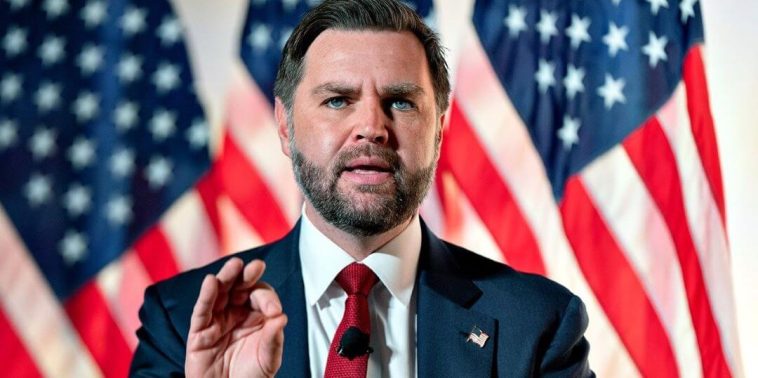
That frustration exploded online after Vice President JD Vance weighed in on the controversy.
Vance’s response consisted of just seven words.
“Trump won we don’t have to do this anymore.”
The brief statement quickly spread across social media and became a rallying cry for supporters who believe American institutions are beginning to push back against what they see as ideological double standards.
Actor and comedian Rob Schneider also entered the debate, offering support to players who may face punishment for public displays of faith.
“I will pay the fines for any MLB Christian player who wears a Bible verse on their uniform. MLB is ANTI-CHRISTIAN,” Schneider wrote on X.
Meanwhile, Florida Attorney General James Uthmeier suggested the matter could attract legal scrutiny.
“You’ll be hearing from my office soon,” Uthmeier told MLB.
The involvement of a sitting state attorney general highlights how rapidly the dispute has escalated.
What began as a uniform policy issue has evolved into a broader cultural battle over faith, identity, and expression in American public life.
Supporters of the pitchers argue that the players participated fully in the Pride Night event while simply adding a small expression of their own religious convictions.
In their view, the players demonstrated coexistence rather than confrontation.
Opponents maintain that uniform rules exist for a reason and should be enforced consistently regardless of the message being added.
Regardless of where one stands, the incident has touched a nerve well beyond the baseball diamond.
For millions of Americans, the central question is not about a hat or a Bible verse.
It is about whether expressions of Christian faith are welcomed in the same way other personal beliefs and identities are celebrated.
As the controversy continues to grow, MLB now finds itself defending a decision that has generated far more attention than the writing on three baseball caps ever could have.

