
>> Continued From the Previous Page <<
Court records indicate the knife blade snapped during the attack and remained lodged in the wound.
What allegedly happened next shocked investigators.

According to prosecutors, Canchola attempted to retrieve another knife to continue the assault.
During those terrifying moments, the victim told authorities that Canchola admitted he had previously killed his first wife in Mexico and buried her body behind their home.
Facing what appeared to be certain death, the woman managed to stay calm and persuade him to take their child to a nearby residence before returning.

That decision likely saved her life.
The moment Canchola stepped outside, she grabbed a towel, pressed it against her neck, and fled into the street seeking help.
A passing motorist stopped and assisted her before emergency responders rushed her to Tennova Medical Center in LaFollette.
She was later transferred to the University of Tennessee Medical Center in Knoxville, where doctors performed extensive treatment that ultimately saved her life.
Meanwhile, investigators say Canchola stole her vehicle and disappeared.
A Murder Warrant Waiting Across the Border
As detectives dug deeper into the case, they discovered something alarming.
Mexican authorities had already issued an arrest warrant for Canchola in connection with the killing of his first wife.
Despite that warrant, he had reportedly crossed into the United States, settled in Tennessee, and remained there for years.
During that time, he built a new life, fathered a child, and avoided detection.
Critics of the Biden administration’s border policies argue the case highlights a major weakness in immigration enforcement—foreign suspects wanted for serious crimes often do not appear in U.S. criminal databases.
As a result, local authorities may have no indication that an individual is wanted abroad.
Supporters of stronger border controls point to cases like Canchola’s as evidence that dangerous fugitives can slip through the cracks and remain hidden inside American communities.
Marshals Refused to Give Up
Following the attack, investigators had few leads.
The stolen vehicle was never recovered, and authorities struggled to determine whether Canchola had fled the country, assumed a new identity, or taken his own life.
Law enforcement officials say the victim told investigators that Canchola had threatened to kill both her and himself.
Despite limited information, the search continued.
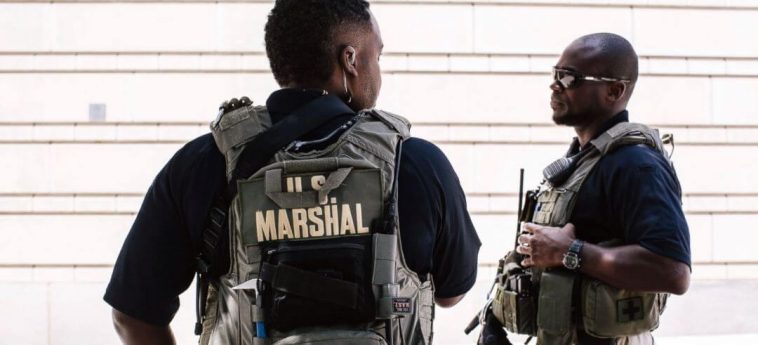
The investigation received support from members of the U.S. Marshals Service Smoky Mountains Fugitive Task Force, including Lt. Matt Forsyth of the LaFollette Police Department.
After becoming police chief in January 2025, Forsyth remained committed to bringing the suspect to justice.
For more than a year, federal and local investigators followed every lead they could uncover.
Finally, a breakthrough emerged.
Authorities traced Canchola to Indianapolis, Indiana, where investigators say he had been quietly working at an Indian restaurant while living in a nearby apartment.
On June 15, 2026, members of the Great Lakes Regional Fugitive Task Force moved in to make the arrest.
Officials say Canchola attempted to flee on foot when officers approached.
The effort was unsuccessful.
After being taken into custody, investigators say he initially presented a false identification document before ultimately admitting his true identity.
Federal immigration authorities quickly lodged a detainer against him.
He is currently being held in Marion County Jail while awaiting extradition to Tennessee.
Border Security Debate Intensifies
The case arrives as Tennessee lawmakers continue pushing immigration enforcement measures at the state level.
During remarks on the Senate floor earlier this year, Senator Marsha Blackburn cited crime statistics involving illegal immigrants and argued that stronger enforcement is needed.
State officials have also highlighted thousands of law enforcement reports involving illegal immigrants over the past year.
Governor Bill Lee responded by supporting additional immigration enforcement initiatives and cooperation between local authorities and federal agencies.
The Tennessee legislature has since approved measures designed to increase penalties for individuals who remain in the state after receiving federal deportation orders.
For supporters of those policies, the Canchola case represents a disturbing example of what can happen when violent offenders evade detection.
For the victim, however, the political debate is secondary.
After suffering catastrophic injuries, she survived one of the most horrifying attacks imaginable.
The U.S. Marshals who pursued the suspect for 18 months deserve recognition for their persistence.
The victim deserves recognition for her courage and determination to survive.
And now, after more than a year on the run, the man accused of carrying out the attack will finally face justice in a Tennessee courtroom.

