
>> Continued From the Previous Page <<
That legacy began to unravel in the late 1960s when Robert Uihlein Jr., a Harvard-educated executive and heir to the company’s leadership, took control. Facing growing competition from industry giants like Anheuser-Busch and Miller, he chose a cost-cutting strategy that would ultimately become infamous in business history.
Instead of protecting the product’s integrity, Uihlein began quietly altering the ingredients. Traditional malted barley was replaced with cheaper corn syrup. Fresh hops gave way to lower-cost pellets. Brew times were slashed in half through accelerated fermentation methods, dropping production from over 30 days to just 15. A stabilizing additive was introduced, but it triggered unexpected reactions, causing visible sediment to appear in bottles already on store shelves. The company was forced to recall roughly 10 million bottles at a cost exceeding one million dollars.

Consumers noticed the difference immediately. Loyalty faded. Sales collapsed. Schlitz, once the number two beer in America, rapidly fell to fifth place. The industry now refers to it as the “Schlitz mistake,” a textbook example of what happens when executives assume customers cannot tell the difference between quality and cost-cutting shortcuts.
The damage proved irreversible. By the early 1980s, the company was in crisis. Proposed layoffs at the Milwaukee brewery triggered a strike involving more than 700 workers. Months later, the historic facility shut down permanently. In 1982, Stroh Brewing Company acquired what was left of the brand, marking the end of Schlitz’s physical presence in the city it once helped define.
Years later, Pabst Brewing Company attempted a limited revival, even resurrecting an older formula in 2008. The effort gave Schlitz a nostalgic second life in dive bars and corner taverns, but it never fully recovered its former stature. Eventually, the brand faded further into obscurity. That decline reached its conclusion when Pabst announced this month that Schlitz production would officially end, citing “continued increases in our costs to store and ship certain products.”
One hundred and seventy-five years of history—ended, in the end, by logistics and economics.
But the story didn’t stop there. Wisconsin Brewing Company brewmaster Kirby Nelson recently received word through longtime distributor connections that something remarkable had surfaced: original Schlitz brewing logs dating back to before the company’s dramatic recipe changes. These were not altered formulas or modern reinterpretations, but authentic records from the brand’s peak era.
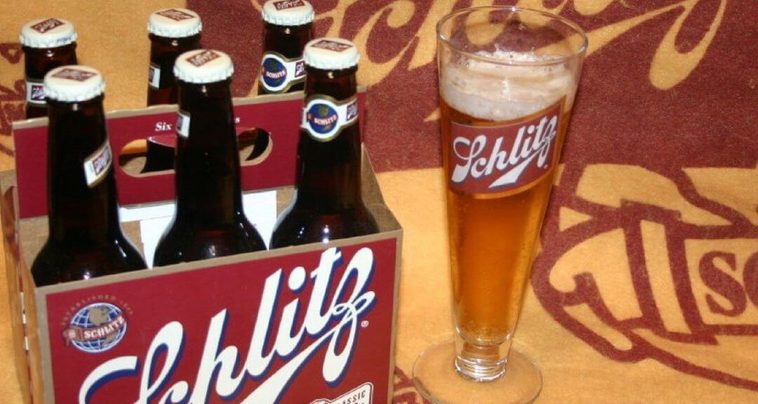
Nelson prepared one final batch using those historic specifications, centering on the 1948 formulation—when Schlitz stood at the top of the American beer industry. The recipe calls for six-row malted barley, yellow corn grits, and a blend of German Hallertau and Washington Cluster hops. It is, in essence, the beer that existed before corporate restructuring changed everything.
“This is back to Schlitz’s glory days,” Nelson said. The final 80-barrel batch is scheduled for brewing on May 23 at Wisconsin Brewing’s Verona facility. Pre-orders open the same day, with public sales beginning June 27. A special serving is planned for July 4 at Old World Wisconsin’s 50th anniversary celebration in Eagle.
For many, it represents more than just nostalgia. It is a reminder of what was lost when short-term efficiency replaced long-term craftsmanship. As one Milwaukee tavern owner put it, losing Schlitz feels like losing a piece of the city’s identity itself.
In the end, Schlitz didn’t disappear because people stopped drinking beer. It faded because decisions were made that slowly detached the product from the people who loved it. Now, with the original recipe briefly revived, Americans will get one last chance to taste what once made Milwaukee famous.

