
>> Continued From the Previous Page <<
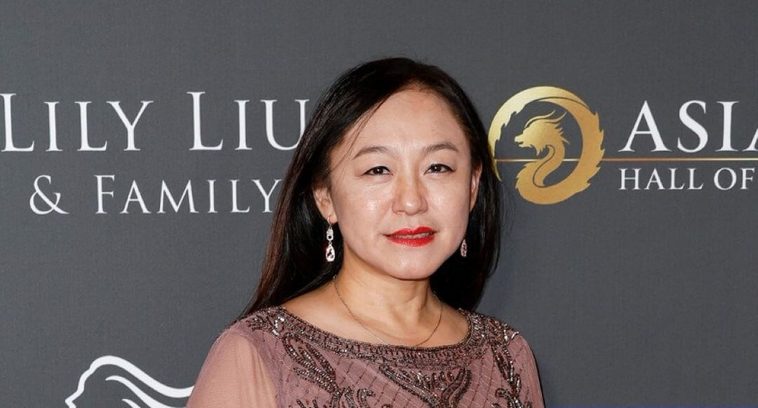
Court documents describe a coordinated flow of messaging from China to the United States. A Chinese official allegedly sent Wang pre-written propaganda articles through WeChat. Wang then published them online and reported back with performance metrics.
In one exchange, Wang sent a screenshot showing the article had been viewed 15,128 times. The official responded: “Great!”

Wang replied: “Thank you leader.”
Investigators say those messages are central to understanding the nature of the relationship. This was not framed as confusion or informal communication. Prosecutors allege it reflected structured direction and compliance with a foreign government’s messaging objectives inside U.S. civic infrastructure.
FBI Director Kash Patel was blunt in his assessment when the plea was announced. He stated that Wang “admitted to acting as a foreign agent from at least 2020 through 2022 – promoting PRC propaganda in the U.S. and acting at PRC’s direction to promote their interests.”
Wang now faces up to 10 years in federal prison. Her co-conspirator and then-fiancé, Yaoning “Mike” Sun, previously pleaded guilty and is already serving a four-year sentence for his role in the same case.
But federal investigators say the story does not end with political influence operations.
Authorities are now examining what they believe may be a parallel network operating inside the same California city — one involving birth tourism and surrogacy arrangements allegedly tied to Chinese nationals.
That investigation led to a startling discovery in Arcadia: a $4.1 million mansion where police reportedly found 15 children living inside. The property has since been linked by investigators to businessman Guojun Xuan, who is accused of coordinating a broader surrogacy operation involving at least 21 children born through surrogate arrangements across the United States.
Officials describe it as part of a larger system that raises serious national security concerns, especially when viewed alongside allegations of political infiltration.
Author Peter Schweizer, in his book The Invisible Coup, has estimated that between 750,000 and 1.5 million children of Chinese nationals have been born on U.S. soil in recent years through various birth tourism channels. He has referred to this group as the “Manchurian Generation.”
At the policy level, analysts point to long-standing visa and birthright citizenship frameworks that have allowed foreign nationals to give birth in the United States, securing automatic citizenship for their children under current law.
One frequently cited example is the Guam–CNMI Visa Waiver Program, which allows certain foreign nationals to enter U.S. territories without a traditional visa. Critics have described Saipan as a “Yankee factory,” where birth tourism has become a recurring issue due to its geographic proximity to Asia and relatively relaxed entry conditions.
Reports have also highlighted a commercial surrogacy industry operating in parts of the United States, with packages advertised to foreign clients that include medical coordination, housing, and travel logistics. Some investigations allege that individuals are coached on how to avoid scrutiny at entry points by altering travel behavior or concealing pregnancies.
Supporters of stricter enforcement argue that these systems create vulnerabilities that foreign governments could exploit over time, particularly if children born under these circumstances are later integrated into political or civic life.
Critics of current policy frameworks say the concern is not only demographic, but strategic: that long-term population and citizenship pipelines could be leveraged for political influence decades after initial entry.
The broader geopolitical argument being made by some lawmakers is that cases like Wang’s, combined with surrogacy and birth tourism investigations, may represent different components of a single long-term strategy — one involving infiltration of institutions, creation of legal U.S. citizens abroad or on U.S. soil, and eventual political activation.
As debate intensifies, policy proposals are now moving through courts and legislatures. A Trump-era executive order seeking to end automatic birthright citizenship for children of non-citizens is currently under Supreme Court review. Meanwhile, some states have moved to restrict or regulate foreign-linked surrogacy arrangements, while others have expanded them.
The contrast underscores a growing national divide over how the United States should handle citizenship, immigration, and reproductive law in an era of heightened global competition.
For now, the Arcadia case stands as a flashpoint — a former mayor accused of serving a foreign power, a suspected surrogacy operation under investigation, and questions about how deeply foreign influence may already be embedded in local American institutions.
And as one federal official put it, the concern is not just what has already been uncovered — but what may still be operating in plain sight.

