
>> Continued From the Previous Page <<
Back in 2021, staffers working under President Joe Biden reportedly lost jobs or had offers rescinded after disclosing past marijuana use during security clearance reviews. Some had used cannabis legally in their home states years before joining government service. It did not matter. Honesty on federal paperwork cost them their careers.
Yet now a sitting member of Congress is openly implying marijuana use is widespread among lawmakers themselves.

That contradiction is exactly why Omar’s comments exploded online.
Americans have spent years being told federal drug laws must be enforced strictly because national security is supposedly at stake. Young professionals seeking federal employment have faced background investigations, career-ending scrutiny, and blocked opportunities over marijuana use that occurred long before they ever applied for a government position.
Meanwhile, according to Omar’s own remarks, lawmakers inside Congress may be casually ignoring the very same laws they refuse to fully repeal.
The frustration is not difficult to understand.
Washington has developed a reputation for one set of rules for the political class and another for everyone else. Omar’s sidewalk comments only reinforced that image.
The controversy also revived memories of former Washington, D.C. Mayor Marion Barry, who was famously caught on FBI video using crack cocaine in a 1990 sting operation, only to later return to public office after serving prison time. Critics argue the political establishment has repeatedly demonstrated an ability to survive scandals that would permanently destroy ordinary careers.
Omar, to her credit, has consistently argued marijuana laws are unevenly enforced and disproportionately harmful. During the interview, she again pushed for broader reform, arguing that “it is not OK for us to spend the billions of dollars we do now in incarcerating people for smoking a joint.”
That argument resonates with many Americans across the political spectrum. Public support for marijuana legalization has steadily increased for years, and even many conservatives now support easing federal restrictions, particularly for medical treatment and veterans dealing with PTSD.
Under President Donald Trump, the federal government has also shown increasing willingness to revisit long-standing drug policy. Recent moves involving psychedelic therapy research and discussions surrounding marijuana reclassification have signaled a major shift in Washington’s approach.
Republican lawmakers like Morgan Luttrell and Jack Bergman have advocated for expanding access to alternative therapies for veterans suffering from combat-related trauma. Those efforts have gained bipartisan attention and reflect a growing recognition that some decades-old drug policies may no longer match medical realities.
But Omar’s remarks touched on something entirely different from policy reform.
What critics heard was not a serious policy discussion. They heard a member of Congress casually acknowledging that lawmakers themselves may already be ignoring federal law while ordinary Americans continue paying the price for violating it.
That is the part many voters find impossible to ignore.
The issue is no longer simply whether marijuana should remain federally illegal. The issue is whether the people writing America’s laws believe those laws apply equally to everyone, including themselves.
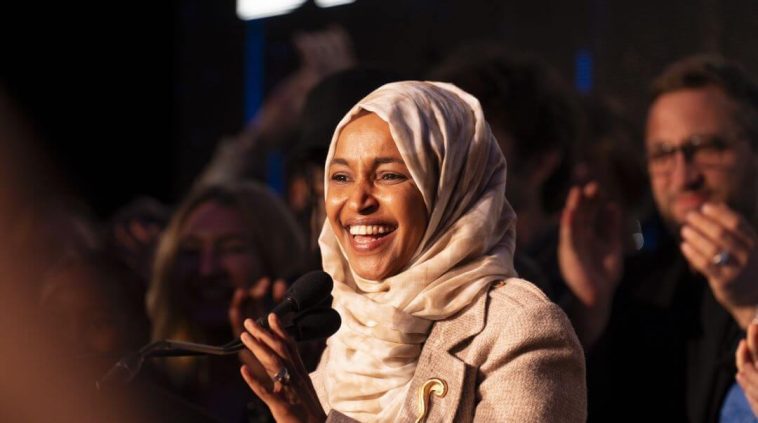
Omar may have intended the moment to come across as playful and harmless.
Instead, it reminded millions of Americans why trust in Congress continues collapsing year after year.
When politicians grin about behavior that can still derail the lives of federal employees, military recruits, or security clearance applicants, voters notice.
And when those same politicians appear confident there will never be consequences for them personally, voters notice that too.

