
>> Continued From the Previous Page <<
FBI Data Adds Fuel to the Fire
What makes the vote even more politically charged is the timing of a separate release from the FBI. The agency reported that assaults against law enforcement reached a 10-year high last year—marking one of the most dangerous periods for officers in a decade.
At the same time, other public safety indicators are trending downward. Nunn pointed to broader improvements, saying: “We are at a 125-year low for murder rates, 10-year low for drug overdoses. These are things that good community policing, that our law enforcement officers are doing every day, have had a really positive impact.”

That contrast is now at the center of the political fight: rising attacks on police officers alongside declining crime rates, and a congressional vote that refused to formally recognize the people many credit for those improvements.
Gabe Vasquez and the Political Pressure Point
One of the most closely watched “no” votes came from Rep. Gabe Vasquez of New Mexico, who represents a highly competitive district. His office did not respond to media questions about his decision.
The controversy surrounding Vasquez extends beyond Wednesday’s vote. In June 2020, during a Black Lives Matter protest in Las Cruces, a man wearing a hat, neck gaiter, and sunglasses told a local reporter he supported defunding the police and gave a false identity. That individual was later identified by the Washington Free Beacon as Vasquez.
He has also previously stated his position on police funding in blunt terms, saying: “If we don’t need those positions anymore, if we don’t need those budget line items anymore, then we need to get rid of them.”
While Vasquez now operates in a more politically sensitive environment, critics argue his record suggests consistency rather than contradiction—just not one he is eager to highlight during an election cycle.
Moderate Democrats Split or Abstain
Several Democrats who often present themselves as moderates chose not to vote yes at all, instead voting present. Reps. Maggie Goodlander, Chrissy Houlahan, and Johnny Olszewski all avoided taking a direct position in favor of the resolution, a decision that drew attention in itself given the subject matter—honoring fallen law enforcement officers.
Their abstentions underscored the political difficulty for Democrats trying to balance progressive criminal justice messaging with the optics of opposing a resolution centered on police sacrifice during National Police Week.
Vigil on the National Mall Highlights the Contrast
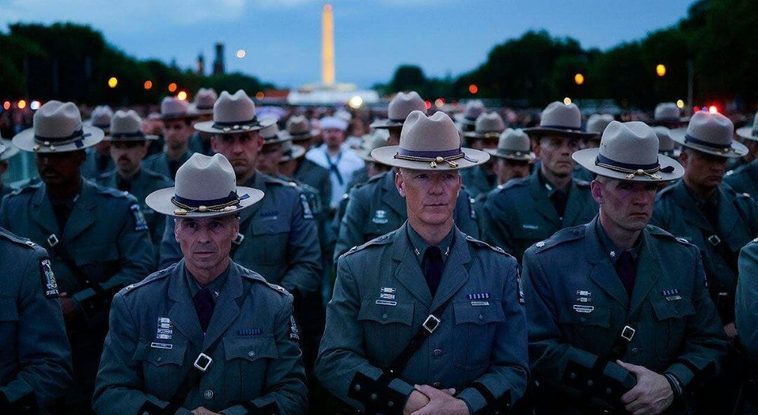
Just one day before the vote, House Speaker Mike Johnson attended a candlelight vigil on the National Mall honoring 109 officers who died in the line of duty in 2025. Families of fallen officers stood alongside lawmakers in a somber remembrance.
Johnson addressed those families directly, saying: “We have your back. We’ll continue to advance policies here that support law enforcement and bring justice to those who seek to harm officers.”
Yet within 24 hours, 173 House Democrats voted against a resolution that echoed that same sentiment in legislative form.
The Minneapolis Example Still Looms Large
Supporters of the resolution also pointed to past policy experiments as a warning. In 2020, Minneapolis city leaders openly embraced defunding the police, with council members appearing on stage beneath the words “Defund Police” and pledging major structural changes to law enforcement.
The consequences were severe. The city saw a 58 percent spike in homicides in the first year and lost roughly 40 percent of its police force. Officials later spent millions attempting to rebuild the department and restore staffing levels, with limited success.
For critics of the 173 “no” votes, Minneapolis remains a cautionary tale of policy decisions disconnected from public safety outcomes.
A Vote That Will Follow Lawmakers
As National Police Week continues, the political fallout from this vote is unlikely to fade quickly. Every member who voted against the resolution is now on record during a week specifically dedicated to honoring fallen officers.
And with FBI data showing rising violence against law enforcement, the debate over how Congress supports—or critiques—police work is only becoming more intense.

