
>> Continued From the Previous Page <<
The coalition reportedly includes a mix of ideological groups—from the Communist Party USA and Party for Socialism and Liberation to mainstream progressive entities such as MoveOn.org and Indivisible.
Critics argue this convergence reflects a broader shift within parts of the Democratic political ecosystem, where traditional party structures are increasingly overlapping with activist networks that embrace more radical economic and political agendas.

Following the Money Trail
At the center of the controversy is Neville Roy Singham, a former tech entrepreneur now based in Shanghai. Congressional investigators have alleged that Singham has directed significant funding—reportedly hundreds of millions of dollars—into activist organizations connected to these demonstrations.
Groups such as The People’s Forum, ANSWER Coalition, and Code Pink have all been cited in connection with this network.
Multiple congressional bodies, including the House Ways and Means Committee and Senate Judiciary Committee, are currently examining whether these financial flows violate the Foreign Agents Registration Act.
Meanwhile, FBI Director Kash Patel confirmed that federal authorities are reviewing “any and all monetary connections” tied to recent protest activity.
Rhetoric Under the Microscope
The debate intensified after details emerged from Allen’s manifesto, which reportedly included accusations labeling Donald Trump a “pedophile, rapist, and traitor.”
Observers noted similarities between that language and messaging circulated by certain activist groups involved in the May Day protests. While no direct operational link has been established, critics argue the overlap highlights the potential influence of extreme rhetoric in politically charged environments.
Allen’s reported attendance at prior protests organized by Indivisible has further fueled scrutiny, particularly as similar events continued in his hometown of Torrance, California.
Political Fallout and Internal Division
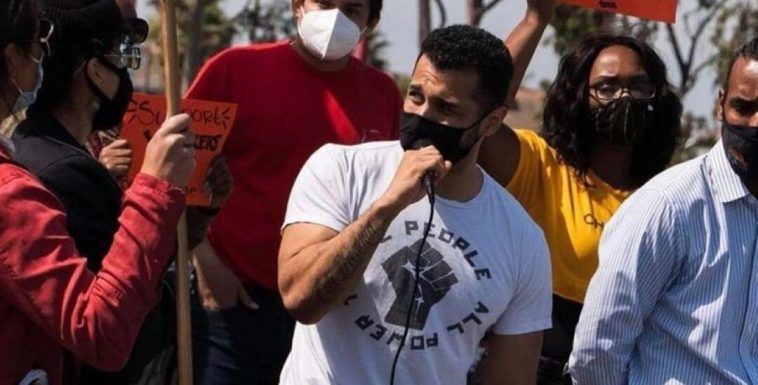
The protests themselves centered on economic and social demands, with slogans like “Workers Over Billionaires” and calls for expanded government programs, immigration reform, and reductions in military spending.
However, the involvement of teachers unions and student walkouts has drawn backlash. In cities like Chicago, local leadership—including Mayor Brandon Johnson—expressed support for the demonstrations, while opponents argued that pulling students from classrooms politicizes education.
Even some Democratic insiders have voiced concern. Veteran strategist Melissa DeRosa warned that the party risks alienating moderates, stating it is evolving into “a pamphlet for the Democratic Socialists of America.”
A Broader Historical Context
May Day itself has long been associated with labor movements, but its origins trace back to the Haymarket Affair and later became a prominent holiday in Soviet-era celebrations following the Bolshevik Revolution.
That history has added another layer of controversy, with critics arguing that modern political groups are invoking symbolism tied to revolutionary movements while advancing contemporary policy goals.
A Deepening Divide
As investigations continue and political tensions rise, the issue underscores a growing divide in American politics. Questions about foreign influence, ideological alliances, and the boundaries of protest are now front and center.
For critics, the concern is simple: whether mainstream political institutions are drifting too close to activist movements with radical ties.
For supporters, the demonstrations represent grassroots mobilization against economic inequality and government policy.
What remains clear is that the intersection of politics, protest, and global influence is becoming harder to ignore—and the fallout from this controversy is far from over.

