
>> Continued From the Previous Page <<
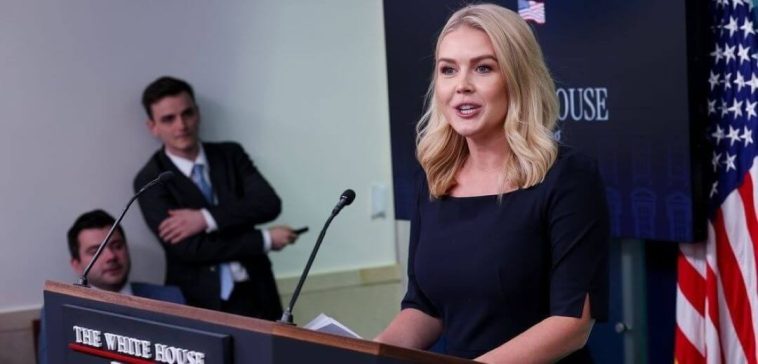
“There are thousands of outlets who have White House press credentials… Why should a single outlet have the privilege of being in that 13 person press pool every single day,” she said.
Rather than limiting coverage, Leavitt argued that the administration’s adjustments are designed to reflect the modern media ecosystem. Digital outlets, independent journalists, and emerging platforms are now being given a chance to participate in coverage that was once tightly controlled.

“And so the changes we’ve made have actually created more transparency, more accessibility, and greater access for a broad variety of outlets and a diversity of journalists, which I think is a good thing,” she added.
But the exchange didn’t stop there. Allen pressed Leavitt on concerns raised by the White House Correspondents Association, which warned that government influence over press access could undermine independent journalism.
WATCH:
Leavitt fired back, challenging the idea that a small, unelected group of journalists should control access to the president.
“Well, I think that a small group of journalists who comprise the board of the White House Correspondents Association should not dictate who gets to go into the Oval Office and who gets to ride on Air Force One. There should be equal access for all outlets,” she said.
She also dismissed claims that the administration is trying to shape favorable coverage, pointing out that even openly hostile outlets remain part of the rotation.
“And if we were trying, by the way, to create positive press for the president… we wouldn’t allow some of these fake news leftist outlets in. But we continue to do that.”
Yet perhaps the most striking moment came when Leavitt turned the conversation toward Biden’s record, drawing a sharp comparison that has reignited debate about media accountability.
According to a report from Axios, Biden conducted significantly fewer press interactions than his predecessors. By mid-2024, he had participated in just 164 press conferences and interviews, far behind Donald Trump at the same point in his presidency, who logged 468.
The numbers tell a story that critics say the media largely ignored. Even presidents known for being media-conscious, like George W. Bush and Ronald Reagan, exceeded Biden’s engagement by a wide margin.
For Leavitt, the issue is bigger than numbers. She suggested that the press failed to hold Biden accountable for what she described as a pattern of avoidance, while now scrutinizing an administration that is actively expanding access.
“We started this. I think you’re all still getting your news, right?” she said. “You’re still hearing about what the administration is doing every single day, because we have good journalists who are in that room covering the president every single time.”
Leavitt closed by tying the policy changes to a broader shift in how Americans consume information. With digital media reshaping the landscape, she argued that the White House must adapt rather than cling to outdated gatekeeping structures.
“It’s not about ideology. It’s just about increasing the wide variety of outlets that have access. And we live in a digital age, and we’re recognizing that at the White House,” she said.
As the media battle intensifies, one thing is clear: the question of who gets access to power, and who controls the narrative, is far from settled.


BIDEN IS THE DICTATOR WHO BANNED REPORTERS FROM OUR WH..even put one..Steve Baker..in JAIL..because he did not like what Steve reported..Baker, an investigative reporter for conservative news outlet Blaze Media, was taken into FBI custody on Friday for his reporting of the Capitol Riot on January 6, 2021.Free Press is dead in America when the government jails journalists who refuse to report the regime’s political agenda and lies,