
>> Continued From the Previous Page <<
But that lifeline has been severely disrupted.
Since fighting erupted earlier this year, maritime traffic has collapsed. Where more than 100 vessels once passed through daily, only a handful now attempt the journey. On some days, the number of ships has dropped into single digits, a stark indicator of the growing instability.

The slowdown is already sending shockwaves through global energy markets, raising fears of prolonged supply disruptions if the standoff continues.
Military Pressure Intensifies
The U.S. response has gone beyond rhetoric.
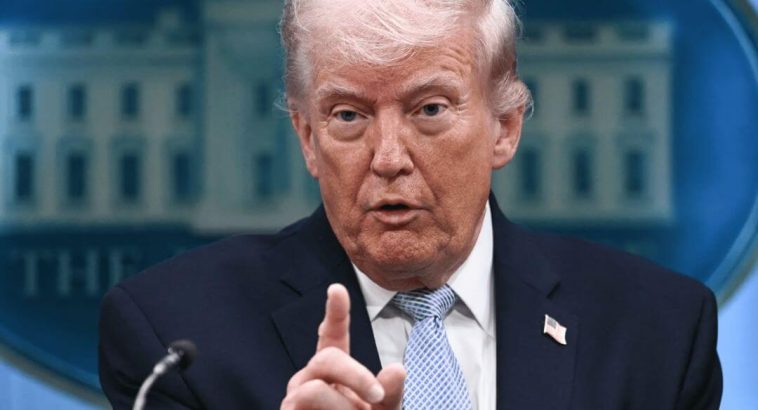
Trump revealed that American minesweeping operations have been dramatically expanded, stating they are running “at a tripled up level!” to secure the channel and remove any threats lurking beneath the surface.
At the same time, U.S. forces have reportedly enforced a hardline naval presence in the region. According to military updates, dozens of vessels have already been turned away or forced to reverse course under U.S. direction.
The message is unmistakable: the United States is asserting control over the waterway and is prepared to back it up with force.
Trump doubled down on that claim in a follow-up statement.
“We have total control over the Strait of Hormuz,” he declared.
“No ship can enter or leave without the approval of the United States Navy. It is ‘Sealed up Tight,’ until such time as Iran is able to make a DEAL!!!”
Ceasefire on the Brink
The situation comes at a fragile moment in U.S.-Iran relations.
A temporary ceasefire had been holding, but it was nearing expiration before Trump moved to extend it unilaterally. That extension now appears tied directly to reopening the strait, a condition Iran has firmly rejected.
Iranian leadership is signaling no willingness to back down.
Mohammad Bagher Ghalibaf stated bluntly that “reopening the Strait of Hormuz is impossible” while U.S. pressure tactics remain in place, including what Tehran views as an economic and military blockade.
That standoff raises the risk of further escalation, especially as both sides dig in publicly.
A High-Stakes Power Play
Behind the scenes, this confrontation is about more than just shipping lanes.
By tightening control over the Strait of Hormuz, the United States is attempting to force concessions from Iran without signing a formal agreement. Trump even highlighted commentary suggesting he may not need a traditional deal to achieve his objectives, amplifying it with a simple endorsement: “Very true!!!”
It is a strategy rooted in leverage and dominance rather than diplomacy.
But the risks are enormous.
Any miscalculation in such a confined and heavily trafficked region could ignite a broader conflict, pulling in global powers and sending energy markets into chaos.
For now, the world is watching as one of the most critical chokepoints on Earth becomes the center of a high-stakes geopolitical showdown, with the potential to reshape the balance of power in the region overnight.

