
>> Continued From the Previous Page <<
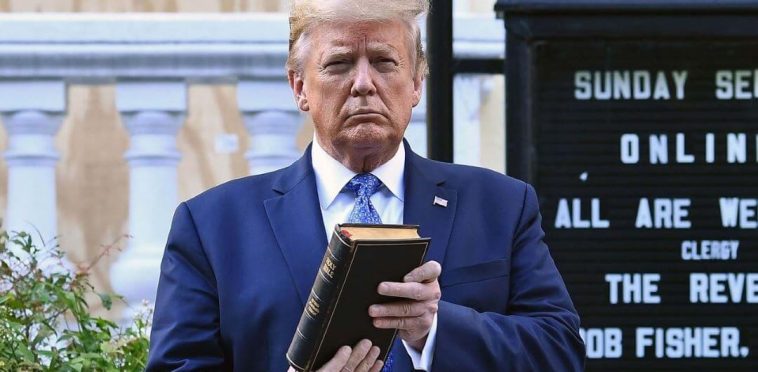
The reading was part of a much larger initiative taking place in Washington, D.C., where nearly 500 public figures—including lawmakers, administration officials, and cultural leaders—have gathered to read the Bible aloud in its entirety. The multi-day event, held at the Museum of the Bible, spans 84 consecutive hours, with participants taking turns reading from Genesis through Revelation.
Among those participating were prominent political and public figures, including Marco Rubio and Ben Carson, alongside other members of the administration. Organizers describe the effort as one of the most ambitious public Scripture readings ever attempted in the United States.

Behind the scenes, the event was spearheaded by faith-based organizers who modeled it after a biblical account found in the Book of Nehemiah, where Scripture was read publicly to guide a nation during a time of rebuilding. The historical parallel has resonated strongly with participants who view the current moment as one requiring reflection and moral clarity.
However, the response from critics was swift and intense. Some Democrats and commentators accused the event of crossing constitutional boundaries, raising concerns about the separation of church and state. Jared Huffman publicly criticized the effort, suggesting it blurred lines between government authority and religious expression.
Media outlets, particularly on the left, framed the moment as part of a broader ideological shift, with some commentators warning about what they described as the rise of “Christian nationalism.” The backlash echoes earlier controversies, including when Ronald Reagan declared 1983 the “Year of the Bible”—a proclamation that also drew legal challenges but ultimately remained in place.
Supporters of Trump, however, see the reaction as overblown. They argue that faith has always played a foundational role in American life and governance, pointing to historical references from early leaders. Trump’s remarks and messaging during the event referenced figures like John Winthrop and his vision of a “city upon a hill,” as well as writings from America’s founding era emphasizing the importance of morality and religion in public life.
As the United States approaches its 250th anniversary, the symbolism of the moment has only intensified debate. For critics, it raises concerns about the role of religion in modern governance. For supporters, it represents a reaffirmation of principles they believe have been sidelined in recent decades.
What is clear is that Trump’s decision to bring Scripture into the Oval Office—live, public, and unmistakably deliberate—has once again placed him at the center of a cultural and political clash that shows no signs of cooling down.

