
>> Continued From the Previous Page <<
Her comments quickly drew attention, especially as prominent figures joined the debate.
Megan Rapinoe and Sue Bird both voiced opposition to the Olympic policy. Bird dismissed the rule as “fearmongering,” while Rapinoe raised concerns about privacy and described biological verification as “invasive.”

Their stance has surprised many observers, particularly given their long-standing advocacy for women’s equality in sports.
Critics argue that opposing biological distinctions in competition undermines the very foundation of women’s athletics.
Meanwhile, scientific research continues to play a central role in shaping policy decisions.
Several international governing bodies have already acted. World Athletics introduced sex-based eligibility rules in 2023 after research highlighted lasting physical differences following male puberty. Similarly, World Aquatics implemented restrictions in 2022 based on comparable findings.
Studies published in journals such as the British Journal of Sports Medicine have pointed to measurable advantages, including differences in muscle mass, bone density, and cardiovascular capacity. These factors, researchers say, are not fully reversed by hormone therapy.
Supporters of the Olympic policy argue that these findings justify maintaining separate categories to ensure fairness.
Perhaps most notably, even voices from within the transgender community have acknowledged the issue.
Caitlyn Jenner, a former Olympic champion and transgender woman, has publicly supported the IOC’s approach. Jenner has stated that biological males retain advantages and that women’s sports require safeguards to remain equitable.
That perspective has added complexity to the debate.
While Turner framed her argument around inclusion, critics counter that inclusion must be balanced with competitive integrity. They point out that scholarships, roster spots, and medals are finite, meaning any shift in eligibility rules directly affects opportunities for female athletes.
The IOC’s current stance represents a significant shift from its earlier framework. In 2021, the organization introduced guidelines that largely left eligibility decisions to individual sports, effectively loosening biological requirements.
However, growing backlash from athletes and advocacy groups prompted a reevaluation. The updated policy for 2028 marks a return to stricter standards centered on biological classification.
For many supporters, the change is long overdue.
They argue that female athletes deserve a level playing field and that policies must reflect biological realities, not just social definitions.
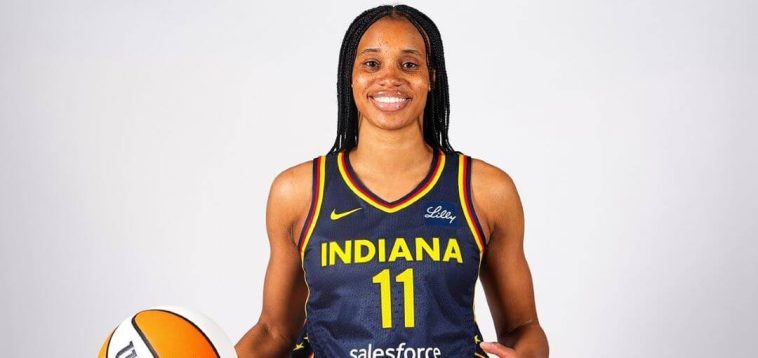
Turner, however, is urging the IOC to reconsider once again.
Her call to roll back the new rules has intensified an already heated global discussion, placing athletes, governing bodies, and fans on opposite sides of a deeply divisive issue.
As the countdown to the Los Angeles Olympics continues, the debate over fairness versus inclusion shows no signs of slowing down.
And for the next generation of female athletes stepping onto the track, the stakes could not be higher.

